
 Apple Podcasts
 Spotify
 Youtube Music
  RSS Feed
 Sprint Car Driver Natalie Waters Uses Racing to Fight Bullying
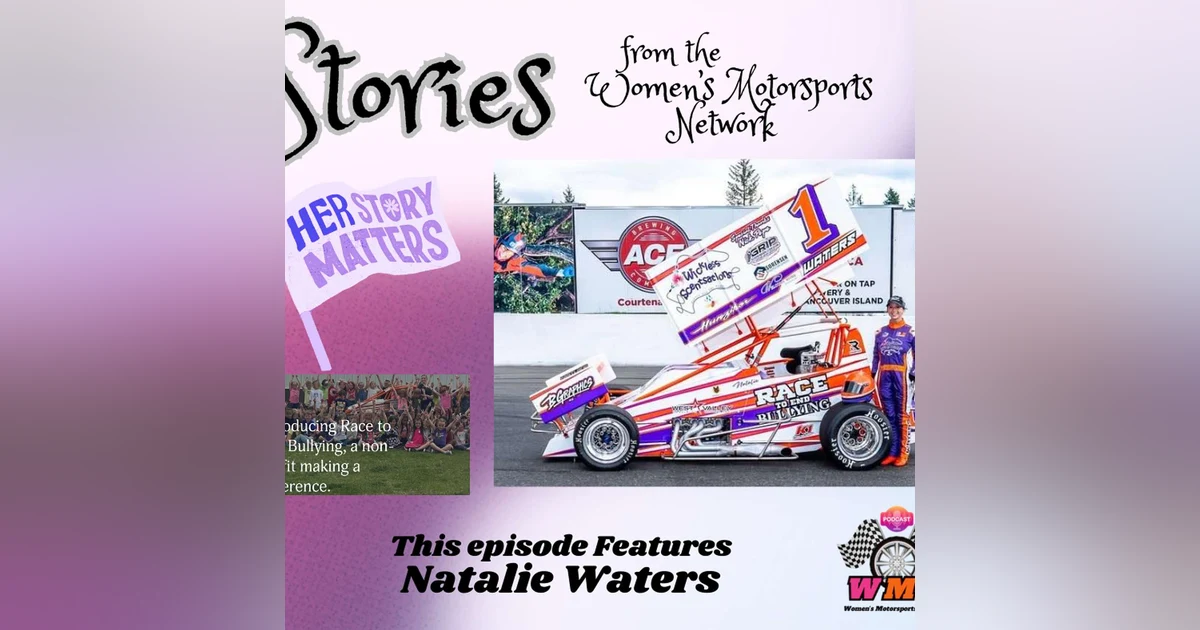

Send us Fan Mail A sprint car at 150 mph is loud, fast, and impossible to ignore and that’s exactly why Natalie Waters uses racing to start conversations most adults avoid. Natalie races 410 wing sprint cars on asphalt, grew up in quarter midgets, and now balances life on the road with a mission that reaches far beyond the track: preventing bullying before it turns into something tragic. We dig into how her racing journey was built through family, grit, and constant learning, from earl...
A sprint car at 150 mph is loud, fast, and impossible to ignore and that’s exactly why Natalie Waters uses racing to start conversations most adults avoid. Natalie races 410 wing sprint cars on asphalt, grew up in quarter midgets, and now balances life on the road with a mission that reaches far beyond the track: preventing bullying before it turns into something tragic.
We dig into how her racing journey was built through family, grit, and constant learning, from early ranks to touring big events like Race For The Million. Then the story shifts to the Race To End Bullying Foundation, created after heartbreak in her Utah community and fueled by a simple idea: show up early, tell the truth, and make kindness practical. Natalie explains why she speaks directly to the kids doing the bullying, how she teaches the difference between conflict and bullying, and why “mean friend” behavior in middle school can be just as damaging as the obvious stuff.
You’ll also hear how she makes school assemblies unforgettable by bringing the race car, letting students sit in it, and turning inspiration into action with backpacks awarded for being an ally and daily challenges like giving genuine compliments. If you care about women in motorsports, sprint car racing, youth mental health, bullying prevention, or building a culture of sportsmanship in competitive spaces, this conversation delivers real tools and a lot of hope.
Subscribe for more stories at the intersection of racing and impact, share this with a parent or educator, and leave a review so more listeners can find it. What’s one kindness habit you wish every school taught on purpose?
FACEBOOK:
INSTAGRAM: https://www.instagram.com/womensmotorsportsnetwork/
LINKEDIN: https://www.linkedin.com/in/melindarussell/
TIKTOK: https://www.linkedin.com/in/melindarussell/
https://www.patreon.com/posts/womens-network-144773298
X: https://x.com/IWMANation
FACEBOOK Personal Page: https://www.facebook.com/melinda.ann.russell
00:48 - Sponsor Message: Touchscreen Purse
01:26 - Meet Natalie Waters And Her Mission
03:44 - Growing Up At The Racetrack
09:45 - Touring In A 410 Wing Sprint Car
13:21 - Why She Started Race To End Bullying
18:14 - Making The Message Real With Cars
22:46 - Bullying Vs Conflict And Mean Friends
25:13 - Sponsor Message: Wheel Repair
27:58 - Sportsmanship In Racing And A Pit Bully
35:18 - Going National And Teaching Daily Kindness
40:26 - How Schools And Donors Can Help
43:32 - Helping Girl Drivers Plus Sponsor Thanks
45:06 - Final Thoughts And Sign Off
Sponsor Message: Touchscreen Purse
Melinda RussellLadies, are you tired of fumbling for your phone like a bad pit stop? Shift into gear with Save the Girls, the stylish touchscreen purse that keeps your phone in the driver's seat. No more digging through your bag during a caution lap. Text, scroll, and snap pictures without ever pulling your phone out. It's a track tested, fan approved, and built for women who live life in the fast lane. Head to save the girls.com and grab yours today. Because when life's at full throttle, your phone should be too. Save the girls. Gear up in style.
Meet Natalie Waters And Her Mission
Melinda RussellHello everyone. This is Melinda Russell with a Women's Motorsports Network podcast. And my guest today is Natalie Waters. And Natalie, I want to welcome you to the show. And I thank you for being on with me today. So why don't you start by telling us a little bit about yourself?
SPEAKER_04Yeah, of course. And Melinda, thank you so much for having me on today. I really appreciate it. Um, but I race 410 winks sprint cars on asphalt. I came from up from the quarter midget, so racing's kind of been my whole life since I was little. Um I also go, I just graduated from college just last week. So I have my bachelor's degree in marketing, and I use that to help kids, um, whether that's finding sponsors, doing their social media, any young drivers. I work for the quarter midget series out here where I actually came from. So I help them with their series as well, too. Anything to keep the next generation coming. And then I also run my race to end bullying foundation. And with that, we kind of just go around to schools and talk to a bunch of kids. I take my little PowerPoint in my race car, and I just go and kind of present what it means to be kind, what it means to be a bully, and what they can do to prevent and what they can do if they see a situation that looks like bullying. And I do that from K through 12. And we also host local events, we do golf events, we do um some go-karting events, we do stuff with the church, and it's just amazing all around to kind of turn and turn something negative into a positivity and bring those young kids that are feeling down and uplift their spirits through our foundation.
Melinda RussellYou know, that's amazing. Congratulations on your graduation. Thank you. That's that's been a lot of hard work for a few years, and I'm I'm proud of you that you pursued through and you graduated, and now you're ready to to step into the world and and be a huge help. And it sounds like you've already got your feet on the ground and you're running all kinds of directions. So um let's talk first about how you got interested in motorsports, and then we'll talk about the foundation.
Growing Up At The Racetrack
Melinda RussellSo, how did you get to become a driver?
SPEAKER_04Um, so when I was little, my uncles both raced. Um, my great uncles, so my my grandparents' brothers and sist brothers, I should say, they um they were racing out here in Salt Lake City at Rocky Mountain Raceways. And so I was always at the racetrack, whether it was helping in the pits, helping as I was like four years old trying to pretend I knew what I was doing. And or I would be up in the stands, you know, hanging out with my whole family. Used to have like three whole rows up in the stands, and and so it just felt like home, you know, running down to the pits or jumping in the pace car and getting a ride because we were best friends with all those guys, or you know, running up to the stands and stopping every 10 feet to say hi to someone we know. And and then my cousins were all involved in other things, they were all in dance and football, pageants, you name it. And I was always jealous as a little girl because I I never had anything like that. And I'd go over to my cousins' houses and they'd have all these trophies and and all this great stuff, and I didn't have anything. And so my mom would put me in dance or or cheer or anything, but we we moved a lot when I was little, and so every time we moved, she'd have to pull me out and put me on a different team. And and it was just like I never got to do anything with it. And so my grandpa he kind of noticed this, and and we were already always at the racetrack, anyways. So he got together with a couple other guys who had some kids that were either drivers or car owners or you name it in the pits. And so they got together and proposed a pitch to the racetrack to start a quarter midget series. And they said, if you can get this many cars, then we'll we'll put you down for one event and we'll see how it goes. And so they got all their kids and and their friends and everybody they knew to get a quarter midget. And we went to the racetrack and did a little endurance race, and they they thought it was pretty cool. I think we had like 30 cars, and and so we they signed us on to be part of the series or to be part of the racetrack and run our series. And and so I raced quarter midgets from the time I was six years old until I was 12, and just kind of went up the ranks from 120 restricted with a blue restrictor, 120 red restrictor, 120 open 160 opens, yeah, and and just kind of came up that way. And and then I jumped into a junior stinger, which was like so terrible. It's like a little hornet, it's a hornet for like young kids, and I hated it because you know, in quarter midgets, we're we're open wheels, so you touch wheels with someone and you jump, and and so I was always taught you do not touch when you're racing, and then I got this junior stinger, and it was like a demolition derby out there, and I hated it so bad, but they wouldn't let me race on the big track until I raced the junior stinger and got some experience that way. So I only did that for a year, and then I jumped into a focus midget and raced here at Rocky Mountain Raceways. Um, I we would go down to Las Vegas and run with USAC, and we did everything on asphalt, and then RMR shut down. Um, but but so I guess the year before RMR shut down, I also ran a limited wing sprint car. And so with that, they wouldn't let me run a big sprint car because I was only 14. But I ran the limited wing alongside the focus midget, and that was like the best year ever. We were traveling for the first time, we were going up to Idaho to race three different racetracks, going down to Vegas, and we were just always on the move. I think we raced more that year than I ever have in my racing career. We ended up winning the championship in the focus midget up in Idaho, and then I broke two track records up in Idaho in the midget, and then broke the track record at Armar in the limited wing sprint car, and then RMR shut down that year, and at the very last race, every every single class ran. And so I was racing the focus midget and the sprint car. And that night I won the main event in both cars, and cool. It was just it was so amazing. I actually, in the the midget, I only won me and my uncle, he jumped into my spare car because you know, it was the last night of racing, and and so we were all happy to run. And and so he got in my spare car, and and they're built exactly the same, you know. And so we were first and second, and we were running. He was he was leading the whole time, and I would get a run on him and and then just not be able to make it stick. And and so then we crossed the start-finish line side by side, and I beat him by two thousandths of a second, like point zero zero two. And and they they didn't even know who won. So they were like, and we were both number one because it was my spare car. So like we looked at the board to see who won, and it just said one-one. And so we didn't know, and so we had they told both of us to pull to the start-finish line, and then they they had to wait for the transponders to read, and then they came back and and told us that I won. And and it was just so cool to to share that moment with him in my spare car, and then 10 minutes later jump in the the limited wing sprint car and go out and win that main event, too. And so since then I've ran modifieds, I ran modified for four years or two years, sorry, and then I jumped into the sprint car, and this is my fourth year in the sprint car.
Melinda RussellAnd you love the sprint car.
SPEAKER_04Yes, I do, yeah. And then where are you racing
Touring In A 410 Wing Sprint Car
SPEAKER_04now? So, right now we're traveling more this year than I think ever. We're running um Race for the Million. So we actually just got back from Florida a couple weeks ago, and so that race was crazy. We hauled the car all the way down there. It was a half-mile racetrack, which is bigger than anything we've ever ran. And so we're full throttle the whole time. And a 410 open wing sprint car is it's about 150 miles an hour top speed, 150 coverage. Yeah, so we were we were really hauling, and I so that was kind of a big learning curve for me. Um, but then our next race for the million race is in Michigan. Actually, we have two in Michigan.
Melinda RussellUm, where's where are those gonna be, Dean? Um what town?
SPEAKER_04Um, I don't know for sure what the town is, but it's uh Wasso Speedway and Berlin Speedway.
Melinda RussellSo Berlin is is about an hour from me, so I'll have to check that out and see if I can't come and watch a race. That would be so fun.
SPEAKER_04Yes, we'd love to have you. Let me know if you come and we'll say hi. But yeah, so we're running we're running those two, and then the last one for the race for the million is in Colorado. Um, and then outside those four races, uh, we're running Idaho, so we um we have Twin Falls here, I believe, next weekend. It's May 16th in Twin Falls, Idaho, and then we run Diamond Cup um up in Meridian, and then we'll run Pink Lady up in Meridian, and then we have uh Fourth of July weekend in Colorado, and then we'll end our season in Las Vegas at the open little showdown. Sounds like a lot of fun. It is. If we had a track out here in Utah, it'd make it a little easier on us, but we enjoy the travel. Yeah.
Melinda RussellAnd and so when you say we, who who's your pit crew? Who goes with you? Who helps out? Because I know you're not doing this by yourself.
SPEAKER_04No, not at all. Um, so my grandparents own my car, um, John and Sherry Waters. So John helped he's my crew chief, and he was my uncle's crew chiefs, and and so he's he's been working on sprint cars for about 40 years, so he he knows what's up. So I he I'm very lucky to have him on our team.
Melinda RussellYes, you are.
SPEAKER_04Yes, and then my fiance Chase, he's crew chief in training right now, so he he's been helping us for five years in June, and so he knows almost everything there is to know on the sprint car at this point. So he's he's always right up in there making decisions and everything alongside my grandpa. And and then we have Buzz, my crew, one of my crew guys, and he's our little note taker. Um, we have a couple that just come to a race every once in a while. My uncle Sid, who was driving that spare car, and then some friends of ours, Kim and Heidi and Uncle Clinton. And so we we get a few that come and help us every once in a while, too.
Melinda RussellAnd it sounds like it's still a family affair, yes.
SPEAKER_04Yeah, we we have a running joke that you don't throw rocks at the racetrack because you'll hit someone that you're related to.
Melinda RussellI love that. That's really cute. Oh, that's really cute. I love that. So uh this year sounds exciting. I'm gonna try to make sure that um I get to uh Berlin and uh I have never been to a Wasso, but that's a great track. I'm I'm sure I know I've heard enough about it. So uh we'll see what how the dates work out, which one I'll try to
Why She Started Race To End Bullying
Melinda Russellget to. But um so Natalie, all this racing going on, you were going to college, you still have to probably do laundry and all those kinds of things, and then you start a foundation. So why why a bullying foundation? How did that get started?
SPEAKER_04Well, out here, I live out here in Twilla County, Utah, and it is the most prominent for suicide at a young age, and so I just thought that was, you know, I wondered why. And and so we kind of were kind of thinking about doing the foundation. And then a young boy out here, he was only 12 years old, and he took his life. Um, his name was Drake, and just due to bullying, and that was kind of the launch, like we were like that's enough, you know, and and we just we hurry and put everything together and and started doing some more with it. And so we started going around to schools, not really, not really knowing for sure what what we were gonna do or say, and and we just went and just you know, just like you and I, I just had a conversation with um some high schoolers, and it was actually it worked out really well because it was an automotive class, and and so I stayed in that class all day long and I talked to every every class that came in throughout the day. And so I talked for about 20 minutes and then just told my story. I I've had some bullies in my life and just told the the stories of others, you know, and it and made it feel real to them. And and then we after we were done talking about it, I had them come out and see the race car and and they got to sit in it and start it and and do all that stuff. And so it really, I think it really connected with them, and that's that was made me feel like we could really do this. And and so after that, we became uh 501c39 nonprofit, and we started going to more schools. We now we primarily do elementary schools, um, but I do the assemblies all by myself. It's like I was saying, it's just me and my my presentation, and my grandma comes with me and runs the clicker. So um it's a ton of fun. I love you know seeing the kids and and hearing their their stories. And you know, it's it's crazy. The more, the more I do it, you know, we I get more comfortable and and and tell more stories as we we go further along and get better ones that are more related to whatever county we're in and stuff like that. But when I'm done presenting, every time I have at least six or seven young second graders or third graders run up and give me a hug. And it's just it's so cute. It's it's like it makes it feel like we're we're getting through to them, you know. And and so outside the schools, we also we work with the racetracks and we actually sponsor some of the youth series so that they can spread that message when those kids are young growing up in the racing. It's really hard, especially for minorities. And so we really push it in the quarter midget series, the bandoleros. We've we sponsored a couple races there and and just really had a good talk with all the kids. And we do some stuff at intermissions. We'll have we'll take the car out onto the racetrack on the start-finish line. And I I give my little spill, and and then a ton of people come over after the races and and we just talk about it, you know, and and it's a ton, it's very rewarding. It's I would say would be the best word for it, to see how much the message has gone through and and people are starting to know about it. And and drivers, without even hesitating, will just come by and ask for some logos to put on their car. And and so we have so many drivers now that are running the race to end bullying just because they want to. And so it's really, really cool to see how far it's come. We do the events, like I was saying, with the we just had our first annual golf tournament, and we actually had some kids come from the boys and girls club and and come and golf and see the race car. And we've heard almost every other day we get a message from a parent that was just like that. They have not shut up about it. Like they they had so much fun, and and so it's really something we're looking forward to doing more um, more events, I think would be something because we're already in so many schools, we already do so much with the racetrack, but but the events where it feels local and personal, and you know, the donors come, the kids come, and it's just a great way to show the donors what we're doing, show the kids how we're here to help them, and all around makes it a great, a great cause.
Making The Message Real With Cars
Melinda RussellYou know, part of that, Natalie, is it's tangible. So when you were talking about the when you go to the school and the automotive club, and then you took them outside and they sat in the car and they started the car. Um, it's one thing to have a PowerPoint and show them, and you know, that's powerful as well. But when you put them in the car and they see that, um, first of all, an automotive class that they can relate to then the car, right? Yeah, but um also it's it's like oh, she doesn't just talk about bullying and talk about being a race car driver. She really is a race car driver. Here's her car. You know what I mean? Yes, it makes it more real, and so then I think your message becomes more real.
SPEAKER_04Yeah, I agree. And we, you know, it's so funny. Before we go out to the car, I'll have a bunch of kids raise their hand, and and you know, the younger they are, the like the questions are, you know, they're not really about what we're talking about, you know. So it's always fun to see what they're gonna ask. And and I'm pretty sure about four of the questions every time are are you really a race car driver? Yeah, you're gonna come see my car here in a few seconds. And yeah, and you know, it's really exciting. And I like you're saying, it it makes them listen. It it connects them and and makes it feel real. And I think that's that's the biggest thing that's that helps us really connect with them.
Melinda RussellYeah. So um I understand why you're starting younger because bullying starts at a young age, and then it becomes a habit, doesn't it?
SPEAKER_04It does, yes. We see all the time the racetrack, you know, and in any sport really, in any event. And so we definitely we want to start. I mean, we're still targeting up there, we're still doing the awareness and all that stuff up there, but when we go younger, it's preventative and yeah, more knowing what they're doing and understanding. And we target more, we talk more about the bullies themselves. We talk about if you feel like hurting somebody, or if you feel something inside you that tells tells you it's gonna make you feel better, you know, and and and I think that's an owl way that nobody has targeted before. They tell you that it, you know, to just don't listen to them, or you know, just tell a parent or whatever, but we never talk to we never talk directly to who's doing it and make them understand what they're doing wrong. And and so I think that's definitely been what's helped us a lot to get through to people.
Melinda RussellOh, I and I I've not heard of that approach, but you know, really that's going right to the core of the problem. You know? Um and and here's the other thing that I'm thinking about is that we don't know what their environment is at home. Yes, and we talk about so it might be that the dad is is a bully or the mom can be a bully, or they have an older sibling that you know can bully the younger ones. It happens, right? And so the fact that you're reaching out to those kids and saying, if you feel this way, you know, we can help you so that you don't don't. And and probably those kids are getting into trouble, you know, because they're pushing kids down on the playground and whatever they're doing, right? So I love that approach that you're you're reaching out. Trying to help the kids that are the bullies, not just the kids being bullied.
SPEAKER_04Yeah, we and like I said, we go both ways, but I always make it a point, at least three to four slides in my my presentations to talk, to talk to the bullies. And and you know, we we really make it feel we don't want to make them feel like like we're pointing fingers at them, you know. We we want to make them feel like we understand and that sometimes things are hard and you don't know what you're feeling, like your feelings you've never felt like this before, and you just unleash it on somebody and and then you end up feeling worse later. And and so we we kind of talk about different routes, and then we also go over because some of these kids are really young,
Bullying Vs Conflict And Mean Friends
SPEAKER_04right? And and so we go over what what is conflict and what is bullying, right? Because bullying is repetitive and it's purposeful, and but then they kind of confuse it with conflict. And you know, one kid one day won't let him have the red crayon, and and then they they go and tell their teacher that that that he's bullying them, and and so we try to kind of separate it a little bit, make them understand that we have conflict, but conflict we can, it's with people we have relationships with usually, and we work that out together, and usually one of us feels bad, and and we we go, we work through it, right? And and that's not being a bully. But if we don't say it or speak up about it, then sometimes it's we talk a lot about our friends sometimes feeling like our biggest bullies, and I think that's more prominent in junior high or high school, where girls, you know, it starts to become a competition and and they kind of are passive aggressive, and and so we talk about how those aren't true friends, friends that make you feel like your outfit was dumb today, and why would you wear that? And you can't sit with us, and and stuff like that. Those aren't friends, and and so we go over speaking up to people like that, just be like, hey, listen, I know you you maybe didn't mean it to come off that way, but that kind of hurt my feelings. And um, I I really enjoy being your friend if we can maybe cut back on that a little bit, or right, you know, I like we don't ever talk about it, we just say, Oh, sorry, I won't wear that, I won't wear that tomorrow. And and then we let it happen over and over and over again, and then pretty soon we don't want to be friends with them anymore. And we're like, why are my friends with her? You know, and right it's always that junior high to high school age, and and so we talk about that too, and and just speaking up for yourself when you feel comfortable, because those aren't, you know, those aren't bullies that are that are like throwing you down and and really trying to hurt your feelings bad. They're just it just kind of becomes that way in in that age group. And yeah, and so we're trying to make them see that and understand that. And even though we're friends doesn't mean that you should be able to talk to me that way.
Sponsor Message: Wheel Repair
Melinda RussellHave you recently hit a pothole? Did you end up with a bent wheel? The tire shop's gonna try to sell you a new one, but you don't need to drop hundreds of dollars. Call Mark at a cut above welding in Kalamazoo. He'll repair the wheel, sand it, paint it, and have it looking like new for a fraction of the cost. With over 50 years of welding and fabricating experience, a cut above welding gets it done right and fast. Call Mark at 269-760-1109. That's 269-760-1109. A cut above welding, no job too small, just big results. That's what I was just gonna say. Just because you're my friend, there's a difference between constructive criticism and being mean. So I'm thinking about mean girls, you know, and girls, oh gosh, I had three daughters, and thank goodness my three were amazing and still are. But I I remember, you know, my one daughter, the one of the girls on the basketball team, you know, they went in the locker room after a game or something one night, and she had taken all their belongings out of their lockers, and I don't know when she did it, but anyway, they figured out she did it, and had them just thrown everywhere and whatever, and just just for no reason, you know, and and as you get to know someone or find out their situation, it makes a little more sense usually. Yes, you know, they're being treated that way at home, and so they think that's okay. Yeah, and you know, I'm also thinking I I have a friend whose daughter went to college and is in a room with I think there's like three other girls in this room at college, and one of the girls just picks on my daughter, my friend's daughter all the time, just picks on her and about just all kinds of ridiculous things to the point where it was getting out of hand. And yeah, why you know you're stuck with her, she is your roommate for now, but but you gotta have the conversation, don't you? Especially at that age. You've gotta you've gotta be like, you know what? I'm not taking this from you. If you don't like me, you can you know move on. We don't have to be best friends just because we're roommates, but I'm not gonna allow you to talk to me like this. And Natalie, don't we even see that as adults? Yeah, see adults who allow someone to treat them badly, talk to them badly, whatever it might be. And and um, and they need the conversations as well.
Sportsmanship In Racing And A Pit Bully
SPEAKER_04Yeah, and I mean, especially we see it a ton more on competitive sides, right? And so I, you know, in football, after they're after a game, they're required to walk past and get and shake hands or whatever they do to every player that they pass by that they just played against. But in racing, we don't see that as often. Like, well, you know, there'll be the one guy that kind of walks around and and says hi and you know, and talks to you a little bit if you maybe raced hard against each other or whatever. And but we don't see that that sportsmanship like that, where it's more required, I guess, but but there's not that training that goes on when you're coming up through the ranks, unless the parents provoke it. Like, unless they're like, hey, you need, you know, races are over now, you need to go over and and tell everyone good job. And luckily, that's how my grandparents were. You know, they they taught me when the races are over that you need to go around and shake everyone's hand and and thank them for racing with you and whatever. And when I was racing modified, and I came from midgets, so racing a modified was like so hard. And you know, I just I was struggling so hard learning the throttle control and the big heavy car with the little tires and the big motors, and and it just was crazy hard for me to understand the first time out. And on my first race, I were we were having some brake problems. Um, because in the car, we can adjust our brake bias, whether we get give it more rear brake or more front brake. So when you go in the corner and you hit the brake, if you have too much front brake, it's gonna push, and you have too much rear brake, it's gonna want to spin out. And my brake bias was broken, so it was putting all the brakes to the rear. And so every time I even touch the brakes, the car would get all squirrely. And because these cars are so heavy, you can't really fix it as easily. That car is just you just gotta let it come around. And so on my very first race and a modified, and I've got my yellow rookie tape on the back, and I was, I think I was 17, and I was doing okay, you know, handling the car and everything, but just that brake problem made it so hard to get into the corners. And so this guy was on my inside, and I had to start in the back because I was the rookie, and the very first corner we went in and I touched the brake and spun out, but I was on his outside. So when I spun down low, I I hit him and I took him out with me, and he just spun out with me. And after we spun out, we were facing each other. And I gave it when we when I raced midgets, I raced with all my friends that I raced quarter midgets with. And so after a wreck or anything, we'd give a thumbs up asking, Are you okay? And they'd give a thumbs up back, you know, and and so I looked at him and I I just gave a thumbs up. I'm like, You you okay? And and he flipped me off, and and I was like, Okay, whatever. And and so we we keep, you know, get going again. And then after, and that was the only time I spun out, and we were good after that. And after the races, I he came walking down the pits and went to the guy next to me and was yelling at him about racing him like that and stuff like that. And he had no idea what he was talking about. And he was like, dude, I won the race, I was way out in front. I don't know what you're talking about. And he said, Well, who drives this number one car? And he said, That's not me, that's that girl over there. And he was like, Oh, okay, and he didn't have any problem with that, and you know, and he just he walked over and and pushed my grandparents, not like pushed them, but he kind of, you know, made his way through there and and he was yeah, just like came like got them out of the way and was pointing me in the chest and poking me in the chest, yelling at me. And he was like, You you don't race like that in the back of the pack, you're racing me for last place, and and you had no reason to do that to me, and all this stuff. And I kept trying to explain to him what happened, and he just kept talking over me and was like, No, no, there's no excuse for that. You don't do that, and and finally my grandpa kind of put his hand on his chest and he said, Well, wait a minute, she listened to you now. You're gonna listen to her. And and so I he stepped back and he said, All right, and I said, Listen, I'm so sorry that you were there, but we've been having a lot of issues with our brakes. This is my first race in a modified, and so when I went into the corner, every time I touched the brakes, it was all in the rear, so it just wanted to spin out, and so that that turn when you were on my inside, that's what happened. And I'm sorry that you were there when I spun out. And he just looked at me and he said, If you can't handle these cars, then you don't belong here. And he turned around and left. And so I yeah, sorry, you were on mute. What were you saying? Oh, you're still muted. Hold on.
Melinda RussellI don't know what to say there, but I said, so that is the definition of a bully for sure. You know, rubbing you in the chest, talking over you, all those things, you know. That's more than conflict.
SPEAKER_04Yeah, yeah, he was he was not having it. And it my grandpa, he said it took everything in him to just stand, just to stand there and not do anything. And and finally he'd had enough. And when he asked him to stop, but yeah, I had my whole family and my uncles that were I was racing modified against and everything, they were all standing around. They and I was like, this is not gonna go very well, but you know, it ended up being okay with what it was. And yeah, and then the next race, you know, we we figured our brake problems out, and um, I actually lapped him and I finished in the top three, and I asked, and he he was on this open trailer from I think he drove all the way down from like Montana or something like that, and he hurry and loaded up, drove up on his trailer and strapped it down and left. And I was I wanted to go down there, I was gonna go down there and just shake his hand and say, Thank it was great racing with you again, and I I do belong here. And you know, I and but but he had left and he I don't think he ever came back, so yeah, yeah, that's interesting, and you know what is it they say, kill him with kindness, yes, yeah. Yeah, we have many circumstances that are that way.
Melinda RussellWell, and again, you know, I always try to think where's that person coming from, right? So what's their home life like, what's their how did they grow up? All those things turn us into who we are. And everybody didn't grow up with wonderful parents or grandparents who taught you those things, and and and so not that it's okay for people to talk that way, but um uh they also need to learn how to compete with others and deal with loss and wrecks and all those kinds of things, and so yeah, and there's a lot of adults that need that training just as
Going National And Teaching Daily Kindness
Melinda Russellwell. So, Natalie, have you ever thought or or what's your hope for the foundation? Is it something that you think you might take United States wide?
SPEAKER_04Yeah, I mean, right now I've actually had a few schools reach out from Philadelphia, Pennsylvania, that would like me to come and just do a Zoom presentation. And and so that's been really cool to see that we've reached that far out. And so that's definitely the goal, just to get into more schools, more across the country. But what's really hard is that it's it's been a struggle to get into some schools, and I think it's because they don't want the publicity about it, they don't want people to think or parents to think that their school needs that, that they're a big bullying school or anything like that. So that's been kind of difficult to get them to allow us to come in because we do everything for free. It's no charge, we're a nonprofit. And so that's been our biggest struggle. But I think if schools can just see it through a different eye and not see it as, oh, they need to come because we're a problem, uh, instead be we're not a problem, but we don't want to one day become a problem. So let's keep the preventative. And and so I think if that dynamic can change, we'll have more success getting into more schools nationwide. Um, and I know that a few other um relay 12 is one that I know they've been struggling with the same things, schools just don't really want to talk about it, they don't want people to see them as a problem, and so I really hope schools will kind of change their way with that and we can get into more. But the goal is to do this full-time and along with racing, obviously. But my Monday through Thursday be able to go into schools and and go across the country and do it as well, too.
Melinda RussellYeah, and you know, uh, as I'm sitting here listening, you know, I'm thinking I know a lot of gals in Pennsylvania that race, and you know, if if if they would pay your expenses to fly you there with your PowerPoint, one of those young gals could bring their car, right? And so um that makes it a little more relatable even to the kids in that school, yeah, because it's like, oh, there's Sally, and I know Sally, and I didn't even know Sally raced, but Sally has a race car, you know, it kind of makes it relatable, and so I can see that with some more awareness of schools that are aware of what you do, and and yeah, you don't want to be the person coming in pointing the finger at the school, and yeah, I can't believe, I cannot believe that there isn't a school out there that doesn't have at least one bully, yes, right, right, yeah, and so it's it it doesn't have to be a a widespread problem, but you're a preventative preventative, okay. You know what I'm trying to say, preventative. I'm having a little problem this morning, a preventative measure for that school and and kind of like award kids for being kind, you know. I I've seen where schools gave out little certificates, uh I think it was called caught being kind. And you know, that could even maybe be part of your presentation that instead of being this way, if you're caught being kind, you get whatever it is you get, you know.
SPEAKER_04Yeah, and we've also done stuff like that where so we have these little backpacks and we fill them. We've done coloring books with the race cars and stuff in it, and so we have those in there, and there's like crayons, bracelets, and stuff like that. And and so we bring one backpack for every class and for the elementary schools, and we line them up across the stage so all the kids can see them. And then at the end of my presentation, I say, I have these backpacks that I brought for you, and I'm gonna give them to your teachers, and they're gonna watch this week and see who is the biggest ally or the nicest friend, and whoever they feel is worthy of the backpack, they're gonna award the backpacks at the end of the week. And and so we do that, and then I challenge the kids at the end of them as well to give at least one person a compliment every day. And and it, and I try to push them to do it to somebody that's not that they don't really talk to very often, and and just you know, spread the kindness because we don't know, maybe it's somebody's worst day, but then you said their shoes are really cool, and that's just that's the only thing they remember about the day is that is how cool you thought their shoes were. And so we do we try to push push the positivity as as much as we
How Schools And Donors Can Help
SPEAKER_04can.
Melinda RussellI love it, Natalie. That's amazing. So, how can somebody, you know, what if what if somebody in Kalamazoo where I live hears this and wants you to do something at their school or whatever? What's the best way for them to learn more or find out find how to reach out to you?
SPEAKER_04Yes, Race to End Bullying Foundation is on race toendbullying.com. And on there, you should be able to find the kind of events that we do, a contact us page and a donate now. And then you can also see what other businesses we have partnered with. Um, Relay 12 is one where they they're actually based there in Michigan, and they have a website platform where students, so they partner with schools, and then the students at that school can use the platform to report bullies. And and so we we partner with a few businesses like that. So if you're interested in becoming a partner, a donor, or want us to come to the school, or even just learn more information or be a part of the events, you can find all that information on the race toendbullying.com and all donations just help with our travel fees and all of the backpacks and all of that stuff when we go to schools.
Melinda RussellYeah. About how many backpacks have you given out? Do you know?
SPEAKER_04Oh, it's gotta be at least it's hundreds. Yeah, I mean hundreds. We do them at the racetrack at every school. We give, you know, to every single class, and you figure at least two to four classes a grade, K through twelve or k through six. So yeah, it's a lot. We've done a lot, yeah.
Melinda RussellThat's amazing. I I just I think what you're doing is gonna be so, you know, it's it's gonna affect even if it's one kid, Natalie, right? One kid that hears your presentation, um, it's worth it. And because we don't we don't know who they're bullying and and what you know what could happen to the person that's being bullied. We want to stop the suicides, and so it's all kind of a circle. It starts with this and then comes full circle.
SPEAKER_04So yeah, that's the whole goal at least to help one person.
Melinda RussellYeah, this is amazing. So, Natalie, I hope that being on here, you're gonna get some people to reach out and um and ask you to come to the school, whether it be, you know, they pay your travel expenses and you come because there's money in a there's money for assemblies, they can afford to pay for you to come out there, and it's so much more effective in person, it is, you know, and and to have the car there. So yeah, I encourage, I encourage school and PTAs and that to get on board and say we need to do this. So yeah, absolutely. Well, Natalie, thank you so much for being on. Is there anything that we haven't talked about, or is there anything that you want to share that we we didn't get to say before we hang up?
Helping Girl Drivers Plus Sponsor Thanks
SPEAKER_04Um, I would just want to say to any girl drivers out there or young kids out there, I'm always here to help. Um, you can reach me on any social media platform on Facebook, it's NatAtac, on Instagram, it's NatAtac underscore racing underscore one. And I'm always here to help. I'm actually shipping one of my old suits to a girl driver up in Canada to borrow for her first season. And And so I'm always I'm always open to help with anything tangible or intangible. If you just want advice, if you just want me to tell you you can do it. And so I'm always open for that. And then I just want to thank real quickly all my sponsors that help her watch the racetrack, uh Resurgence Automotive, West Valley Collision and Repair, Idaho Powder Coating, Nick Kepe, Griffith Suspension, B graphics, and sort of thin construction. And I I think we can't do what we do without all of our sponsors and go. So we really appreciate all of their help.
Melinda RussellYeah, I know you do. And I I really appreciate what you're doing because um it's important and and you're gonna change a lot of lives. And so I know a lot of times you don't know that you're changing lives, but um, in my experience of the 70 years that I've been living, um, a lot of times you'll never know, but um know that you are. Thank you. I appreciate it. You're welcome. Thank you, Natalie.
SPEAKER_04Yeah. I enjoyed our talk today. I really appreciate you having me
Final Thoughts And Sign Off
SPEAKER_04on.
Melinda RussellOh, you're welcome.
SPEAKER_03Start your engines.
SPEAKER_01This is the Women's Motor Fun Network Nights to the bright race lights From the garage to Victory Lane.
SPEAKER_02Women are dream With a boat Women's Mount Toys work to go to store them, like you never heard before.