
 Apple Podcasts
 Spotify
 Youtube Music
  RSS Feed
 SPECIAL MEMORIAL DAY WEEKEND PODCAST--RIDE SAFE FOUNDATION--What If The Most Dangerous Machine On The Farm Is The One That Feels Like A Toy
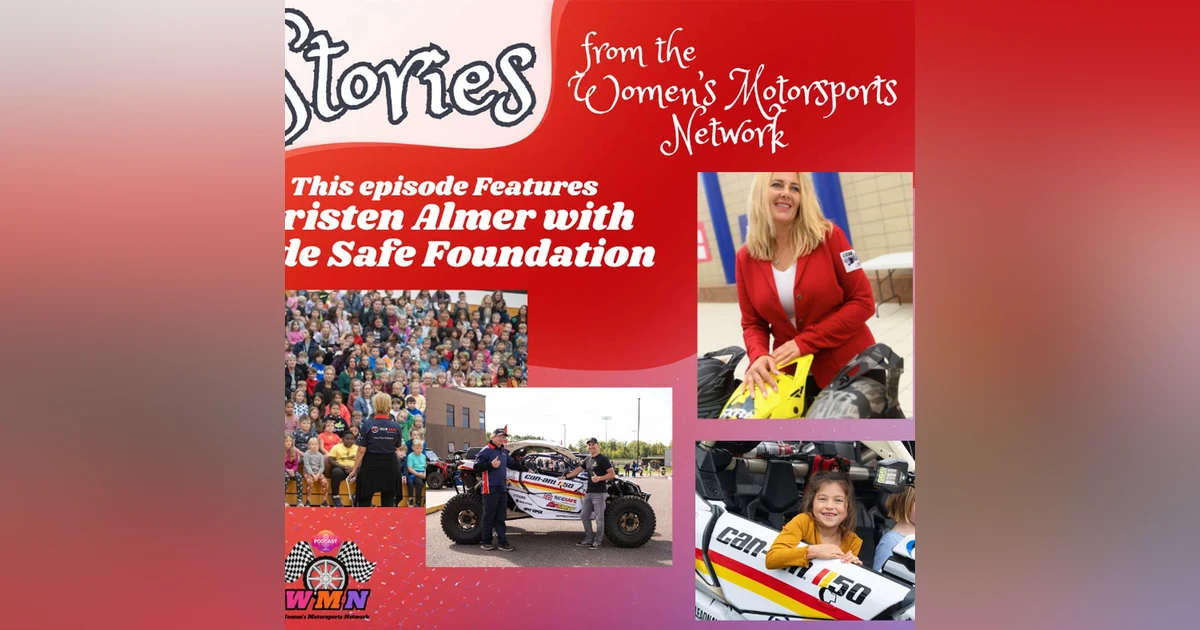

Send us Fan Mail A kid on an ATV can look like pure summer fun, right up until it becomes an emergency. We sit down with Kristen Almer of the Ride Safe Foundation to talk about the reality most families never see: the repeat patterns behind youth ATV and UTV crashes, the heartbreaking cost of “dumb luck,” and the simple decisions that prevent tragedy. Kristen shares the loss of her 11-year-old nephew, Logan, and how that moment led her to spend years researching fatalities, working with agenc...
A kid on an ATV can look like pure summer fun, right up until it becomes an emergency. We sit down with Kristen Almer of the Ride Safe Foundation to talk about the reality most families never see: the repeat patterns behind youth ATV and UTV crashes, the heartbreaking cost of “dumb luck,” and the simple decisions that prevent tragedy. Kristen shares the loss of her 11-year-old nephew, Logan, and how that moment led her to spend years researching fatalities, working with agencies and trauma experts, and turning data into plain-language safety rules families can actually use.
We dig into what Kristen calls the five red flag warnings, including adult-sized machines, lack of safety certification, no helmet, riding in the right-of-way, and rollover risks that make seatbelts and helmets essential even in side-by-sides. Along the way, we talk farm safety, holiday riding habits, why kids often ride without gear at grandparents’ homes, and why the danger spikes when people assume these vehicles are “just tools” instead of powerful off-highway machines. If you care about child safety, powersports safety training, and practical prevention, this conversation is for you.
We also focus on solutions, not blame: bringing kids to tracks, creating try and ride programs, learning from professional athletes, and using scalable tools like virtual reality training to teach the core risks early. Memorial Day weekend comes with an urgent reminder, and Kristen offers clear guidance on rules, key control, and modeling helmet use so kids copy the right habits. Subscribe for more conversations that protect riders and strengthen the motorsports community, then share this episode with one parent, coach, or track organizer and leave us a review.
FACEBOOK:
INSTAGRAM: https://www.instagram.com/womensmotorsportsnetwork/
LINKEDIN: https://www.linkedin.com/in/melindarussell/
TIKTOK: https://www.linkedin.com/in/melindarussell/
https://www.patreon.com/posts/womens-network-144773298
X: https://x.com/IWMANation
FACEBOOK Personal Page: https://www.facebook.com/melinda.ann.russell
00:00 - Sponsors And Show Welcome
01:54 - Kristen’s Life Beyond Motorsports
04:44 - The Loss That Started Ride Safe
09:44 - School Events That Reach Thousands
16:55 - The Five Red Flags Parents Miss
23:27 - Training Gaps And Roadside Danger
28:53 - ER Numbers And The “Just Fun” Myth
34:36 - Why Farm And Utility Riding Hits Hard
39:05 - Building Real Training Infrastructure
43:21 - VR And Kids Media Safety Tools
45:42 - Try And Rides At Tracks
50:45 - Michigan Data And Local Next Steps
57:27 - How To Get Data And Connect
01:00:39 - Memorial Weekend Rules That Save Lives
01:04:13 - Alcohol Warnings And Final Reminders
Sponsors And Show Welcome
Melinda RussellAre you racing through life with no time to waste? Then you need Save the Girls, the pit crew your phone's been waiting for. These stylish touchscreen purses let you text, call, and snap pictures without ever taking your phone out. Whether you're at the track, in the stands, or running errands like it's race day, this purse keeps you in control. No more drop phones or frantic digging under the seat. Visit Savethegirls.com and grab yours before the next green flag. Save the girls because real racers don't fumble their phones. This episode of the Women's Motorsports Network Podcast is sponsored by Breakthrough Travel Company. If you're ready for a vacation, but don't want the stress of planning it, Brittany has you covered because working with a travel agent is at no cost to you. Zero. Nothing. Nada. So call 602-291-5144 or look for Breakthrough Travel on social media.
Kristen’s Life Beyond Motorsports
Melinda RussellHello, everyone. This is Melinda Russell with the Women's Motorsports Network Podcast. And my guest today is Kristen Almer. And Kristen, I want to welcome you to the show. And as I always do, we always like to get to know you a little bit better before we talk about the topic that we're going to cover today. So would you share a little bit about yourself?
SPEAKER_02Well, that's always a hard topic. I don't know where to start there. I am a businesswoman. Of course, I, you know, I'm predominantly, that's what I focus on right now in my life. I'm a mom, I'm an auntie, I'm a sister, I'm a daughter. Um, my real uh passion outside of work is photography. I do a lot of uh I photograph a lot of Native Americans. I've traveled all over the country and um have been shooting photography for about uh 15, 20 years, and uh, you know, really love it. And I've got uh yeah, I've got a lot of experience. I've traveled, uh, seen so much of the country, uh, most of the national parks. I think there's just a handful of them that I haven't been to. So really passionate about the outdoors, you know, love the country, uh, love America, uh, love, you know, just really uh love to connect with nature. That's what's I guess most important to me.
Melinda RussellSo when you do your photography, is it more for just your own enjoyment? Or do you have like when you take pictures of, let's say, Native Americans, are you going to make a book of the photography? Do you share it somewhere? Because that's interesting. That's a lot of time over the years that you've taken a lot of pictures.
SPEAKER_02Um, you know, I I don't do it uh professionally. I don't do it uh for, I mean, I've had people that hire me to do it, and I've you know received a lot of compliments on my work. But really, what my heart is is to help people see the world the way that I see it. You know, I see uh sometimes, you know, when I look at something, I see it differently than other people do. And I and people will say that to me, you know, like how we were standing in the same spot. How did you get that photograph? And uh, I don't know, the Lord's just given me ability to see uh people and things in a way that I think sometimes uh we miss. So that's really my uh my goal. And I I I post it predominantly just on my personal Facebook page. I have an Instagram account that I I don't think I've paid posted anything there for a year, but um, but I have thousands and thousands of images, and uh I mean many of them are definitely gallery worthy worthy images, not because I took them, I just pushed a button, but because you know I've really been able to be in places that are incredible.
Melinda RussellSo yeah. Well, I'm gonna have to check those out. That's very cool. So,
The Loss That Started Ride Safe
Melinda RussellKristen, you are um we're we're gonna talk today about the Ride Safe Foundation. So why don't you uh give me a some history as to how that all got started? And uh I know you just came off the road of doing a lot of events. What kind of events are those? Just tell me, tell me what your life looks like with the Ride Safe Foundation.
SPEAKER_02Well, the Ride Safe Foundation um was really it it was birthed out of a family tragedy. Uh in 2013, my 11-year-old nephew was fatally injured in an ATV accident uh in Wisconsin. Uh we're coming up on the 13th anniversary of that accident this weekend. Um and, you know, I was the first family member to arrive on scene at my brother's house. Uh, you know, of course, his family was there, but uh external family, I was the first person to arrive.
SPEAKER_00And uh, you know, what we witnessed that day was I mean, it's just so awful.
Melinda RussellAnd I just it's still emotional for you 13 years later. It's still it's still hard to talk about, isn't it? I don't think you'll yeah, I don't think you'll ever get past that really because um he obviously meant a lot to you and and for this to happen, and now we're looking at the anniversary. It's it's very emotional, and and that's why that's why we're talking about this today.
SPEAKER_02I think um, you know, for for me, I had been involved in the power sports industry for 25 years at the time of Logan's uh accident, and I had been a consultant uh in in the motorsports and power sports industry, building professional race teams. And um I had been in, you know, I tell people virtually every form of motorsports and power sports you can imagine. I worked on the event side of things, I've worked uh, you know, with race teams, I've worked with corporations, both uh, you know, OEMs and aftermarket companies and you know, sanctioning bodies and media and all sides of things. And I had many great relationships and had experienced, you know, the thrill of that lifestyle and working with the world's uh top athletes and best programs. And so to have something so unbearably uh tragic uh happen to our family that really was power sports related came as such a shock because I didn't know it just never occurred to me that kids were getting hurt on power sports equipment. I I mean, you know, of course, we've all when you're in the industry, you you lose, you know, your own friends and um, you know, family members sometimes, but uh, you know, it just it just never occurred to me that it was children. And then uh, you know, when it happened, um, you know, we had to ask ourselves, you know, what exactly happened. And if we couldn't identify what happened, we were then going to be unable to prevent it from happening again. And so that led me on a long journey of um trying to figure out exactly um, you know, how frequent these uh you know incidents were, what were the common patterns. And so that's what I did. I spent the last uh 13 years of my life um you know digging hard into the research and uh working with I mean, every state agency, law enforcement agencies, trauma specialists, uh, you know, uh national medical organizations, federal uh agencies, the industry, the OEMs, the aftermarket companies, the families who've lost uh you know, children, and uh just really trying to get a handle on what is happening. And once we, you know, were able to establish, well, number one, how many children are being fatally injured on ATVs and UTVs, you can't not do something. And you know, the moment that I found out that Logan did not survive, I vowed uh to the Lord that I would we were not losing him for no reason. And that's how it really started. I didn't know what that meant, and it took me four and a half years to um, you know, really have uh a major epiphany of what I could do. And I had many people that that wanted to support me right away because people care about the issue, but none of us had any direction. And once we started to, you know, to determine that I guess what really happened is I I just you know decided one day that this message was something that children needed to read to hear and that they weren't gonna take it from you know me. Like who am I? They're not gonna take the message from me. And so we really um enlisted the effort of um you know professional athletes uh to lead and uh bring them directly to kids at school because uh we needed access to children, and that's what we what
School Events That Reach Thousands
SPEAKER_02we started doing. So, you know, the Ride Safe Foundation will um, you know, we um my last tally of numbers, I know we've added about 6,000 kids to this. So we're right now we're about uh 41,900 children that the Ride Safe Foundation has directly communicated face to face uh with in teaching uh power sports safety. That's ATVs, UTVs, dirt bikes, snowmobiles, watercraft, and we fit uh most children, not all of those children, um, with a helmet. And we work in partnership with all kinds of uh organizations that come and support what we do. Um but we're yeah, we're just uh about over um 41,900 uh children right now in the last three and a half years, and we've done that solely through the uh the partnership with uh BRP. Uh BRP is the one that uh funds us, and um so um you know through um their generous you know contribution to uh our organization that's equipped us to go out and and to do this. So um in the United States, we have lost over 4,000 children, uh 15 and younger, to ATV and UTV related uh incidents. We focus predominantly on children 15 and younger because children 16 and older are grouped into the adult category for the national uh numbers, and so they are very difficult to extract from the adult population and to get a really good number on. So I can't report on those with any degree of accuracy. Uh we know that in the last six years in the United States uh we have lost 711 children, 15 and younger. That is from January the 1st, um, 2020 to January or December 31st, 2025. And so that's 711 children that we're aware of. We track those fatalities nationally. We have a website, um, the RideSafe Foundation, and on it you can find the impact map, which is a digital map of all of those fatalities. We pin those fatalities to the national map, and on those uh pins, it allows you to go in and to read some basic details so that you can start to see the patterns yourselves. Um, you know, what we found as a family is that there's about uh 22, you know, after reviewing all the data, there's a cascade of fatal errors that people keep making. And once that was, you know, established, that is what allows us then to teach people how to prevent these things. So most accidents um, you know, involve multiples of those errors. Uh, and we focus at the Ride Safe Foundation on five right now. Over the last two years, we focused on the top five. Uh, and we teach people how um not to make those mistakes because we had to ask ourselves, you know, what did an I say and what did an I do? And um, that's really what we're all about. We're about equipping people to uh with that information so that they can make decisions uh in their own families uh to prevent these kinds of tragedies. They're entirely preventable, um, but not if you don't know and you don't want to uh learn it the way that we did. So um, but right now, you know, the 711 children that we've lost in the United States uh in the last uh six years, those children, um 49% of them are 12 and younger. So we are seeing uh, you know, large numbers of children that are very young that are operating ATVs and UTVs in the country. Um, I've been in front of you know thousands of children, and the very first thing I always ask them in large groups, and it we our age range is anywhere from four to 19. Um, I ask them to, you know, raise their hand if they've ever been on ATVs, UTVs, snowmobiles, or dirt bikes. And well over 90% of them have raised their hands. I mean, and and that that comes as such a shock to people because what we when we do our big school events, we'll go into a school district and some communities are gracious enough to bring all of their children to us in a day. We just did this in Dodgeville, Wisconsin. We did 1,600 children in a single day. Um, but we'll do a morning session, and that morning session is typically elementary school children, and you know, people just think they're not riding, and it's absolutely unequivocally not the truth. They are riding, they're either riding because they're operating them themselves, which a large number of them are, but um uh, you know, many of them are riding as passengers in vehicles and they do not have helmets. Uh the vast majority of them do not have helmets, some do. Um, and uh, but it's you know, it's far less than uh the majority uh that that uh that have helmets and they have no idea what they're doing. I mean, you know, unless they're involved in a Power Sports family, then they have access to the equipment, they're riding it without any training, they have no ability to make a calculated risk decision, and they're just relying entirely on dumb luck alone uh on machines that you know can weigh up to you know 2,500 pounds, some of them even more than that now, um, in the side-by-sides. So the machines, you know, weigh a lot, which is actually the leading cause of injury and fatality, is 97% of all the uh children in the country uh have died on adult-sized equipment. And so, you know, people are allowing their children to get on equipment that uh, you know, is just it's it's the weight. Um, you know, 97% of them. People think helmets are the leading uh factor, and I'm not saying that isn't right up there, uh, but you know, our data, it's anywhere from 80 to 90 percent of um, I mean, the recent data that I've seen is 80 percent uh from some reports, but our data that we've seen is somewhere in the neighborhood of 92% of all fatalities. There's no helmets, so we just say nine out of 10. Um, but it is literally uh the size of the machine, the weight of the machine, uh, you know, and you know, it's like I just try to get people to slow down and listen to me when I say that. And if I gave you a five-pound weight and I asked you to drop it on your foot, you absolutely would not do that because you know that you could break your foot. So why are we putting children on adult-sized machines that weigh 500, 600, 700, 800 pounds? And without any thought and with no gear and no experience, no training. Or or I hear um a lot of you know, children that that sort of you know say, oh, I ride these things all the time. I ride my uncle's ATV, I oh, I go with my grandpa, or I I drive the side by side, and people are proud of this, and uh, it's nothing to be proud of, I can tell you.
Melinda RussellSo
The Five Red Flags Parents Miss
Melinda Russellthat's really what about golf are golf carts considered? I mean, do they, you know, are there accidents on golf carts? Because just because I have neighbors, and when I was in the RV, we stayed in the RV park a couple winters, you know, it was nothing to see kids visiting their grandparents or whatever. And you know, kids that are eight, nine, ten years old driving the golf cart.
SPEAKER_02And I just we do golf carts. Um, you know, there have been fatalities in golf carts, but they're few and far between compared to ATVs and UTVs. ATVs are the leading cause of fatality for children on an American farm. Um, and so, you know, um the farming community, uh, the agricultural community is disproportionately affected by these accidents, and they are entirely unaware of this. Um, so I'm not saying that kids can't get hurt in a golf cart, but you know, one of the um the biggest factors, you know, is the side-by-sides, for example. We are seeing a rise in mass casualty events where you have children that are in our former day, we would get in a golf cart, perhaps. Now they're getting into side-by-sides, and they're packing multiple kids into side-by-sides, and they're eight, nine, ten, twelve years old driving side by sides with multiple children in the vehicles. And when an accident happens, it's not just the driver, it's everybody in the vehicle is either, you know, is injured, and usually uh in those cases, there's at least one fatality, two fatalities, sometimes three. And sometimes you're taking out multiple uh family members, multiple siblings in a single accident. And so this, you know, people don't think they need helmets inside by sides, they don't think they need seatbelts inside by sides. They are, you know, it's I mean, the disconnect is absolutely stunning. It's absolutely stunning. Um, you know, what we are looking for, you know, I'm I do a lot of uh talking about statistics and the problems and the issues that we see. Um, you know, but the important thing is to teach people like how do we stop this. Uh and so, you know, the five red flag warnings, uh, they are 97% of all fatalities are on adult-sized machines. Like I've mentioned, um 95% of all child fatalities, there's no safety certification. This is also uh true in adult cases, that 95% of all adult fatalities, there's no safety certification, which is why uh this has prompted states like Utah and Arizona to require uh mandatory certification, regardless of how long you've been operating vehicles uh in their state. And the third uh leading contributing factor is no helmet. So you have no helmet, you're on an adult-sized machine, you've had no training. Um, the number four uh leading contributing factor right now is 70% of these uh child fatalities are happening in the right-of-way. So, you know, we're seeing a large uh increase in these fatalities happening either on the surface of the road, on the shoulder of the road, or in the ditch. And um, you know, people are allowing their children to operate these vehicles. And I'm not specifically talking about asphalt, I'm saying uh in the right of way. So they are in the road. Um, we have, you know, as I've shared with many people, um it's not common for people to be struck by a semi, but I'm here to tell you it's not rare. Uh and that seems shocking. Like how how how how are you, how, how did you get hit by a semi and not notice it? Uh, believe me, it happens. And it um and it can happen uh with the the fatalities in a situation like that are it's a catastrophic event. And so, you know, I think it's important, you know, for us at the Ride Safe Foundation. Our objective is to is to help people make safer decisions. These machines are great, they're wonderful. Um, you know, there's a lot that we can be thankful for from the OEMs and from the power sports industry, which has helped to, you know, produce machines that are you know as technical as they are today. Um, they allow us to do great things, but they deserve our respect. And, you know, to be able to get this equipment to where it's at has taken, you know, 50 years of people's expertise and riding in different environments and changing things and modifying things and you know, creating more safety features and better gear and understanding all these different elements. And people just get on them like they think like all of a sudden, just because they bought one, that's all the information they need to know is to turn the key and be able to hit the throttle. Well, that's fine. I mean, you can choose to do that, but if you're gonna choose to do that, then expect to uh you know pay the consequences in a Way that is so inconceivable that uh not only emotionally but financially uh that it's it's just unbearable. So um I, you know, my heart really is to redirect people's attention back to the power sports industry because the power sports industry are the experts on the equipment. The athletes are the best people to receive your instruction from. The racing environment is where people ought to learn. You should be bringing your kids to the track so they can learn the fundamentals of safety before you put them on an adult-sized machine on your farm uh and just act like it's no big deal. Uh, it's it is a big deal. And so um, you know, I know that uh, you know, adults don't listen, to be honest with you. No, and people will say that to us, like, hey, you know, we should be talking to adults. Well, great, but the industry's been talking to adults for 50 years and people are ignoring it. So um, so I don't talk to adults necessarily. We our heart is to go to kids, my heart is to go to kids. I just ask myself, you know, what it what didn't I say, what didn't I do? And that's what I tell kids.
SPEAKER_00Yeah.
SPEAKER_02And we literally look right at children right in the face and we tell them, um, you know, what if Logan were standing in front of me, what would I have, what would I say to him to prevent him from doing what he did? And um, that's what I say to every child that I, you know, have an opportunity to be in front of.
Training Gaps And Roadside Danger
Melinda RussellSo I've I have a couple questions for you. So when you say that um, like Arizona, my daughters live in Arizona, so we'll we'll use Arizona for the example. Before they can purchase an ATV, UTV, etc., they have to be certified. No, before that work.
SPEAKER_02Oh, Arizona, I'm I'm not an expert on Arizona law, uh, but in the state of Arizona now, they are requiring certification for, I believe, I well, as I understand it, it is on public uh in the in public use. Um, you can't enforce things on private property, of course. And the vast majority of situations don't happen on the trails. Uh, and people kind of have that in their mindset. Now, Arizona is a different thing entirely. You have a large Hispanic population that's deeply impacted by uh ATV and UTV uh incidents in the state of Arizona, and of course, you know, 75% plus of the state is federal land. So it's a whole different riding environment out there. Um and every state has its own rules and regulations. Um, I'm in Wisconsin right now, which is where Logan was fatally injured. We have 538,000 registered ATVs and UTVs in the uh in the state alone. Uh Minnesota has over 500,000. So between our two states, uh we have over a million uh riders. And so um, you know, the the rules and regulations, you know, it's all um managed by the Department of Natural Resources in the states of Wisconsin, Minnesota, and Arizona, that's the case. Uh, there are some states where uh the off-highway vehicle rules and regulations are managed by the state patrol. Um, so every state is a different uh situation. But I do know that uh, you know, in terms of certification, the issue is is you know, people just flat out don't have any training, whether it's online or otherwise.
SPEAKER_01Yeah.
SPEAKER_02And they again, you can't make a calculated risk decision unless you know what the risk is. And if you are like engaging in the activity and then you make the mistake, uh it's too late to like then later on go and you know fix that. So, you know, again, for me, it's more like uh, you know, as opposed to relying on dumb luck, you know, you're better off like seeking experts. I had a really interesting conversation with a guy uh here two weeks ago, uh, was at an event, and you know, he walked up to me and he said, you know, he goes, it's great what you're doing and all. But he goes, I gotta tell you. He goes, you know, he goes, parents are just gonna buy adult size equipment for their kids anyway, right? Like, you know, like, hey, if you got a 12-year-old, like they're gonna buy an adult-sized machine. And I'm like, Yeah, I know that because actually, uh, you know, the average age of an ATV writer is 12. Okay, so we know that. But um, so yeah, I get it. And he's like, So, you know, I mean, I, you know, you're not really gonna convince him because it's the money. And I said, really? I'm like, Yeah, I get that, because that's the situation we're in. I said, but let me ask you this. I said, uh, you know, when your 12-year-old wanted to go to Hunter Safety, did you hand him an AK-47 and said, hey, go have fun? No, you didn't. Okay. Even though you might think he might eventually uh, you know, develop into automatic weapons or whatever, right? Like, are you joking? Like, why is it that we have this disconnect with Power Sports when you know you'd like you say that related to anything? Uh people are like, oh, I get it. Like you wouldn't put your, you know, you wouldn't put your eight-year-old uh on a uh on a dual sport bike and send them down the highway. You wouldn't put them in your Ford pickup truck and say, hey, you know, like hey, run down to the grocery store or ran out of some coffee. You wouldn't do that. Uh and not not because it's not illegal, you just wouldn't do it. But what is this disconnect where all of a sudden people are looking at this equipment as though it's fun, there's nothing fun about an injury. And I will say that, you know, according to the American Academy of Pediatrics, there's between 40,000 and 55,000 children that are going to the emergency room every single year that are 15 and younger because of ATVs and UTVs. Now, um, a lot of the agencies that we work with, uh, and including hospitals, hospital administrators, uh, law enforcement officials, emergency first responders have told me they think those numbers are two to three times too low. They think that there's far more than that going to the emergency room because of ATVs and UTVs. Now, you know, so for a second, uh, if people slow down for a minute and don't just go, oh, 40,000 kids going to the emergency room. Like if you have a child and you've ever seen your child slam their finger in a door uh and what they go through, that's pretty painful. So, you know, like seriously, they're going to the emergency room because they're hurt. And so the question is, is what burden of responsibility are we putting on kids that they're not equipped to manage? And then now they're enduring tremendous pain and suffering as a result of it. So, you know, I mean, we've got a lot of partners, the conversation has really uh grown.
ER Numbers And The “Just Fun” Myth
SPEAKER_02And, you know, I'm thankful for opportunities like this to wake people up. Like, this is not a joke. Uh, you know, kids are getting hurt and they're dying. And the reason for it is is because people are thinking, like, yeah, not my, I'm not gonna talk, I don't want to talk about it. Like, I don't want to talk about it. I don't want to say, you know, you can't run around and tell people people are dying. Like, I hear that all the time, too. It's like, oh, really? Well, guess what? They are so um, so let's talk about it so that it doesn't happen. I mean, and and and I think you know, it's important to point out too like a lot of people will say, Well, we need to ban, we need to ban ATVs, we need to ban, we need to ban it. And then, and then, and then I'm like, That's not the answer. No, because the thing of it is is is that position that people take that that we should ban these things is exactly the counterintuitive thing that causes the problem. You don't need to ban them. What you need to do is you need to get children involved at a very young age, teach them, hey, this is a ATV, see that big one over there? You don't belong on it. Like there's little ones, and let me show you how to operate it on a little one, and then teach them how to operate a little one and make sure that they understand. There's gear, there's rules, there's the way that you operate, there's things you do and that you don't do. And then little by little by little, the more experience they have, they're gonna gradually grow into machines that they're able to handle as adults. That seems reasonable. That seems reasonable. Uh, it's I'm a little frustrated with uh the schools, to be frankly honest with you, because like schools are really good at making sure kids have helmets for you know, baseball, for football, and all the gear and every all the you know, oh, get all the rally clubs together and everybody's raising money in the booster clubs and all oh yay, good for you. What about all the kids that are going to your schools that are riding equipment with no helmet and nobody's talking about that?
Melinda RussellWell, and nobody thinks it's gonna happen to them. That's just life, isn't it? None of us think that the the horrible things are gonna happen to us or our family, and there's no guarantees, you know. Something my husband rides a motorcycle, yeah. I'm not worried about him, I'm worried about all the people texting while they're driving, and somebody's gonna hit him. So, you know, could it happen to my husband when he's driving? Absolutely. Is he gonna stop riding wear a helmet?
SPEAKER_01No, does he wear your husband?
Melinda RussellYes, and Michigan is a no helmet, you don't have to wear a helmet, but we always have always worn a helmet. He doesn't go anywhere that he doesn't put his helmet on.
SPEAKER_02See, and that's this is that I mean, you're hitting on a really good point. And what the issue is is first of all, your husband is an adult and he's allowed to make calculated risk decisions. That's his choice. It's America. Do whatever you want, okay? Go ahead. Uh, and so if he wants to live, you know, like and take high risk without talent or experience, that's probably not a good idea. But because he's got experience, he goes, Yeah, this is probably too big of a gamble and I don't want to do that. And you know, there's this sort of misconception that wearing gear somehow is like this like awful thing. Uh, when you talk to athletes and professionals, they love their gear. They actually think like their gear makes them cool. They love their helmets, they love to be able to communicate uh inside of their helmets with their uh the you know Bluetooth headsets that they have. Yeah, they can have music in their head in their helmets, they like the look of their gear. People appreciate that, they respect them for, you know, being uh somebody that is part of the club. It's like how you identify yourself as being part of the club. And so, you know, this cavalier attitude of uh, you know, people that have utilit, you know, vehicles for utilitarian purposes, they um this is really where the vast majority of these injuries are happening. It's people, you know, and I hate to tell you this, but uh the vast majority of these uh child fatalities are happening on a grandparent's farm or in the care of a grandparent. Uh it's people, you know, literally one-third of all the nation's fatalities for on ATVs and UTVs are 50 and over. Vast majority of those are males. Um, so you know, yeah, uh, why is that happening? Well, because they're the ones who can afford them, they're the ones that have the equipment, they're the ones who have the land uh that you know that you might be operating these machines on. And they're also the ones, like me, uh, you know, I'm over 50, uh, that grew up riding machines that were far less in weight, they didn't go as fast. And, you know, like we, you know, the machines we were on, if they if it rolled over on us, it wasn't gonna crush us. Like it didn't weigh 200 pounds. And so, you know, this is one of the things that people I think aren't factoring in. I think the motorsports and power sports community um is frustrated, just like I am, because they know they know how to operate them. What where the disconnect is, is that you know, the 65% of all people on ATVs and UTVs own them for utilitarian purposes. They buy them because they're using them to haul firewood or plow snow or you know, or you know, go trail riding because they're you know bird hunting or whatever, they're not considered power sports enthusiasts. And because they don't consider themselves a power sport uh enthusiast, they disqualify themselves as needing power sport information.
SPEAKER_00Yeah.
SPEAKER_02And uh, and I think you know, my hope is that communities start recognizing that these machines are now
Why Farm And Utility Riding Hits Hard
SPEAKER_02everywhere, they're very prolific. It's a matter of time, whether you think your kids are riding or not, that they're going to encounter this equipment. They are there at some point the child is going to either choose to get on a machine themselves or be invited to get on a machine. It doesn't matter whether you live in the city or it doesn't matter. Right. There, that is something that is a high probability. And if you live in an agricultural environment, just know, like we didn't understand, you know, all the things that we warned Logan about. You know, I'm his auntie, uh, you know, he's you know, I've got two sisters, and you know, Logan had three aunts at the time that he uh was fatally injured. You know, he's um got uncles, he has cousins, he has grandparents, he's got a whole community. Everybody loves Logan. He's super lively, bright, happy, super smart, high energy, talented, you know, all those things. And uh, but you know, the all of us, like, hey Logan, you know, uh don't play in the road. Hey, uh Logan, yeah, you know, don't play with the strange dog. I mean, he even had a deer attack him once in the in the uh front yard. And so we had to warn him about staying away from you know does when they are when they had fawns. And you know, there's just all these little things that you're trying to do to keep the child safe. Nobody thought about. I mean, I'm not saying it never occurred to us or that nobody ever had a conversation with with Logan about an ATV, but obviously nobody realized that the thing most likely to kill Logan was an ATV. Nobody realized that. No, that's what nobody realizes. They don't realize if you live on a farm and you have an ATV, what's in your head is, oh, you know, I have tractors, better tell my kids to be careful around a tractor. Great. Yep. There are some years where um where you know tractors uh are are um more frequently involved in a child fatality than ATVs, but year over year, it's ATVs and now UTVs. So, and not only that, uh forget the child. Let's say it's the father or the grandfather. All right, if you get hurt or you're fatally injured in an ATV and U TV accident because you're not paying attention or doing what you should do, that's gonna affect your children. So chill to me, it's the children that um people are just have completely gone, eh? I don't know. Yeah, not I don't know. And it's the numbers are shocking. The numbers are so the numbers are so shocking. Yeah, you know, I I don't say this very often, but I'll say it here. Uh you know, in the United States, um, based on the latest data that I've seen, uh children zero to 19. Remember, we only talk about children 15 and younger, children zero to 19, there's about uh 15,000 children every year in the United States that are diagnosed with cancer. Okay, 15,000. Of those, it's my understanding, somewhere in the neighborhood of you know, 1,200 of them or 1,300 of them don't make it. That's awful. It's an awful statistic. It's far more than uh kids that were losing uh to fate fatalities and ATV and UTV injuries. But I will say this of the 15,000 kids that are diagnosed every year in the United States with cancer, and you have a fatality rate of 1,300, it's great what you're all are doing, raising money for child cancer. But who's raising money to talk to kids about power sports safety when you have 40,000 to 55,000 kids, 15 and younger, going to the emergency room every year because of it? Yeah, and nobody's nobody's doing anything about that. And you know, how many organizations, how many businesses in the power sports industry that are creating fundraisers for kids with cancer? And I'm not saying that's not a great thing to do. Good, it's right, but why in the same token are we doing nothing to talk to kids? We're leaving it to a bunch of you know, uh retirees uh in yellow safety vests to figure out how they're gonna raise money so they can print some brochures and go talk to third graders in their local communities, and that's the extent of our brilliance in not creating a national campaign to address this issue. It's very frustrating for me. Um, you know, I I mean, I can tell my story a thousand times, and and I have told it perhaps a thousand times or more. And
Building Real Training Infrastructure
SPEAKER_02the thing is, is um we're just one family, you know. Yeah. There's 4,000 families in the United States that, you know, since the early 80s uh that have lost their kids to ATV and UTV uh related incidents. Again, they're highly preventable. How do you prevent it? Training. Where are you gonna get training? Uh, the industry. Um, we have no facilities, there's no tracks anywhere in the country, there's no trainers that are out there um able to consistently train. There aren't, you know, people think that they don't need youth-sized machines, so they're buying adult-sized machines, to my point earlier about the guy, like, yeah, they're not gonna buy, yeah, you're right, you're not, but is that the right thing to do? It's wrong in every other area. Why are we doing it here? Right that aren't doing things to try to equip their students that are in power sports. It's a sport, but because it's not a team sport, nobody thinks anything about it. Why are we not doing anything to help these kids that are engaged in independent sports and try to, you know, figure out ways that we can equip them with helmets as well? So many kids we talk to, they I'll be like, always wear a helmet. They'll be like, okay. I'm like, Do you have a helmet? No. So what are they gonna do? They're gonna go to their grandparents' house on Memorial Weekend and they're gonna be asked to go riding, and they're not gonna go, I can't go riding because they don't have a helmet because they don't have the money to go buy the helmet. It literally has to be the adults. So it's this, you know, I I mean, I I it's a vicious cycle.
Melinda RussellIt's a vicious cycle. Most those little kids that have never learned how to be safe grow up to be teenagers and in their 20s, 30s, and and then adults, and they still don't know. And then then they have kids and and they still don't know. So it just keeps going on and on and on.
SPEAKER_02Yeah, you bring you you bring up something so important. So back to my point about you know, this idea that you know children shouldn't ride. Okay, like I get that. I get that. I mean, I I again see, like, oh yeah, that sounds like a great idea. Except the problem is if you don't teach children how to ride when they're young, then when they're 16, they're gonna get on an adult-sized machine because now they're big enough and they still don't know how to operate it. Right. So now all you're gonna do is you're gonna move the injury and fatality numbers from the young kids who you didn't train when they were young, okay, uh, into the uh 16 and over, you know, right? So remember, children 15 and younger represent one in every five ATV or UTV related fatality. That means that there's five times that number of kids that are uh, you know, of people that are being fatally injured in ATVs and UTVs. Uh, those people are 16 and older. So they're not any safer. The point is, is there's no uh, you know, there's no national uh infrastructure to provide access to training. And it's not because people don't want to do it. Um, I think most people, you know, there's two things that people do. Number one, they look at people and they're like, oh, it's their fault, you know, like they find somebody that they can blame, like, oh, it's a lot of dumb parents out there. You know many times I've heard that. Um it's like it has nothing to do with whether somebody's smart or not. Like, how do people don't even know? And so they want to blame somebody. But the other thing is is that then the other thing is they'll be like, well, that's the responsibility of the ATV Safety Institute, or that's the responsibility of the Recreational Off-Highway Vehicle Association. Okay, but hey, they've got limited staff and they have limited resources. And so isn't it all of our responsibility? Shouldn't we all be talking to all kids about something that we know is something that's going to put them in a risk situation? It's pretty simple. Uh, know it outsized machine, make sure you got safety certification, uh, always wear a helmet, do not operate them in the road, and be cognizant of the fact that you could likely roll one of these things over. It's possible, so be prepared for it. Meaning, wear seat belts in side-by-sides and a helmet in a side-by-side. Um, those are just the five. Uh, but you know, we have on our website um information that's available. Um, and I invite people to contact me if they have questions they want to talk about. It we are here to equip people. We currently are working with a company out in New Zealand that has produced a virtual reality training program with the five red flag warnings that is now available for distribution anywhere in the United States. My recommendation
VR And Kids Media Safety Tools
SPEAKER_02is that school resource officers access these headsets and put children through these five red flag warnings. It's not a game, it is literal training. Uh, there are companies that are producing games, and this is not a game. So that's a real resource that is currently available that allows a mass distribution of this message, as opposed to you know, waiting for the Ride Safe Foundation to show up in your community because we have people that are angry because we can't get to their communities. It's like, I know how many, how many of these things do you think I can do a year? And so it's a resource that they can have. And then the other thing that we have is there's a production company uh out of uh Uh, New York that has produced a pilot uh animated uh program. They've developed all the characters. Uh they want to produce 12 episodes for children four to 12 on Power Sports. But again, this needs to be funded. Um we are, I think, you know, organizations could sponsor one episode and it could be crafted literally to whatever environment that they choose. And then now we would have something that would be available, you know, 24 hours a day, seven days a week to be able to communicate to children. Those are two things that are resources that we're aware of that are that do not belong to the RideSafe Foundation. We're just here trying to find things that help people to start the conversation and help them have this difficult conversation with their communities and their children. And so those are two things that exist. Uh, apart from that, you can go to the ATV uh safety institute's website, you can seek uh training programs for children. Uh, and usually those uh certification programs, the child has to be 12. That's a problem. Uh, I'm not saying there is no programs for kids under 12, but they're very few and far between because a lot of those certified instructors do not have insurance to cover training for kids under 12. And so that's to me, it's like, how can we in the motorsports community come together and share the knowledge we have, open up our facilities, invite kids to come in and start talking to them uh as though, you know, it's it's that that's the answer, the literal answer. It's like the experts are the people who ride, and so you know, invite them to come in, invite, show them how to ride, give them a consistent place to operate, and uh let them learn, just like anything else.
Try And Rides At Tracks
Melinda RussellAnd um, so it reminds me kind of like you know, I'm involved a lot in racing, and so you know, a lot of um kids start in quarter midgets, and so a lot of quarter midget tracks have try and rides. Okay, so you come, you can you put on a helmet and a Hans device and all the stuff, and they let you run 10 laps or something around the track, and somebody's there to help, and there's parents and older kids and whatever, and they do try and rides.
SPEAKER_02That's how they keep the sport going because you I love that Melinda because and that's yeah, right there, you've solved the whole problem. I'm telling you, that's the answer. And you know, meanwhile, we have all these sanctioning organizations and all these racetracks bemoaning how they have fewer and fewer people coming out to it. Meanwhile, we have a serious national crisis with a number of children that are being injured on power sports equipment. Why? Because they have no place to ride, there's no training, nobody's inviting them or welcoming them to come out. Dealers are struggling with this issue. Are dealers supposed to manage dealerships and be running safety clinics? They can't do it all. So, uh, so where should it be? It should really to me, it's like how many people in the motorsports industry that have to retire because you know they thought they were gonna be like the you know number one guy, you know, hey, I'm the the greatest of all time, uh, you know, Ricky Carmichael, uh, you know, like there they want to be him.
Melinda RussellAnd uh but Kurt Bush, Kurt Bush had to quit racing because he had a wreck and he, you know, there there's there's hundreds of them that at some point they can't do it anymore.
SPEAKER_02And so why don't we give them an opportunity to keep doing what they love and but do it because they're now helping the next generation come up because we're creating mentors for them. So the shocking thing to me is, you know, I mean, communities all across the country are trying to close racetracks down. Oh, it's too noisy, it's too this. It's like, hey, do you realize that the uh, you know, that your cars that you're driving, that the safety features in your cars were developed because of what happened on the racetrack that you're trying to demand now? Like there's a serious disconnect with people understanding the value of what our athletes bring to the table in terms of not just discipline from the time they're very young, the skill that they have, the training that they have, and the trajectory of the equipment that they're constantly pushing to the complete limits. And when that happens, there's a new product that's developed. You know, um, I say a lot, you know, never in the history of the world have we ever had better gear. That gear has come at the sacrifice of our athletes. Our athletes have bled out and some have died on the racetrack to produce the gear that now you just can go into the store and just be like, you know what? Hey, I got you know 175 bucks. I'm gonna go buy that helmet right now because it's right there. You didn't have to manufacture it, you didn't have to go get the components, you didn't have to find distribution, you didn't have to hire attorneys, get patents, do all that, figure out, you know, DOT certification. You have to do all that. You just walk into a store and be like, oh, you know what? That's gonna protect my head, and I'm gonna go ride now. Okay, so go buy it. Because what it took to get that there, I don't think people appreciate that. And that's very frustrating for me. I I, you know, I mean, I've dedicated my life to the power sports industry because I love the people in motorsports and power sports because they always do what they say they're gonna do and they go above and beyond, and no matter what you throw in front of them, they're gonna continue to push, even if it seems insurmountable. I love that about motorsports and power sports people, and I, you know, it it is uh, I mean, it's shocking to me how people just completely disregard it. Like there's no yeah, there that you know, to not respect the knowledge that they're but in the same token, I think as an industry, um, what we're good at is we're good at locking arms around people who need help. It's one of the things that we're that the power sports and motorsports industry is most beloved for because we care about community. So I'm just saying that in you know, forget waiting for somebody else to do it, do it at your own track. Yeah, uh, you know, don't wait for the Ride Safe Foundation to show up. You know, whatever numbers I just gave you affect every child that you ever laid your eyes on. Uh they are at risk. And so, you know, how can you help? Well, call up six-year buddies and be like, hey, you know what? Maybe we should start doing these try-and-rides at the local uh track.
Melinda RussellWho can bring that's what I was just I was just thinking, you know. So Fox Power Sports, uh Ziegler, Ziegler Motorsports, they're all big here in the Kamazoo area, Grand Rapids. And and I'm sitting here thinking, if we do try and rides for quarter midgets, you know, and again, it maybe it'll have to go back to the dealerships because they're the ones that sell the machines and really um maybe have the benefit if somebody gets interested to buy something, but why don't they work with local racetracks? You've got Martin, which is a drag strip, you've got Kalamazoo, Galesburg, Berlin, they're all over. Michigan's full of uh racetracks, and but you have a try and ride for quarter mids perfect.
Michigan Data And Local Next Steps
SPEAKER_02I will talk to I will I will get in front of every driver's meeting you want to put me in front of. I will do uh you know, PA announcements, I will do podcasts, whatever. You know, the thing is, is I don't think number one, people don't realize how big of a problem this is. In your in in Michigan, I had a conversation with a woman uh just a couple of weeks ago, and she told me that in 2025, I'm gonna get these numbers a little wrong, but I'm gonna try to get them the best as I can. She told me, best as I can recollect, that in the state of Michigan in 2025, that you had 103 children, 15 and younger, that were admitted to the trauma center because of dirt bikes, and 60, I'm gonna say 63, I think it's 68 uh children, 15 and younger that were in uh were um admitted to the trauma center uh because of ATVs and UTVs, just in the state of Michigan. So here you have this massive, you know, you got Detroit. Okay. I mean, the the best minds in the world are right there in Michigan. And hello, it's like, who are we? Are we waiting for the Consumer Product Safety Commission to solve this problem? Are we waiting for the ATV, UTV industry to solve this problem because it's your children or your children's friends that are at risk? And so if you know, hey, it's important to wear a helmet, then you should be looking at people in your community that are cruising around on ATVs and UTVs without helmets, like, hey buddy, what are you doing? Like, when are we gonna start doing that? Okay.
Melinda RussellSo I can I'm sitting in my office and I have a window right here. And that direction on a day like uh in the evening or on a Saturday, I can hear the the little dirt bike track that Ziegler Motorsports has. And I and I would venture to say if I went over there when they're riding, um, you know, a percentage of them probably don't have helmets on. I you know, I don't know. I don't know if they require it. I I have no idea.
SPEAKER_02Usually if it's a usually if it's a track, they do because their insurance requires it, number one.
Melinda RussellBut so but and then they built one between me and Grand Rapids, they just built a big track. Is there those are popping up all over the place, but we're not not in most parts of the country, they're not.
SPEAKER_02So it's good to hear that it's happening in Michigan. Um, we've been asked to come to the state of Michigan and to do an event there. I know that we're looking in 2027 to do an event in Marinette, Wisconsin. So it's right across, you know, Michigan's right there. And so I'm happy to coordinate with Michigan and do like one day in Wisconsin and then go to Michigan uh and to bring a ride safe event there. But I think um, you know, the hard part is people, number one, they don't have the data. I have the data. Email me, Kristen at Ride Safe Foundation. If you can't remember that, just go to the Ride Safe Foundation website and just hit subscribe and I'll get an email and I will and just say put in the comment, you know, hey Kristen, I need some data. I have the reports, I have all the statistics about, you know, how many children are being injured, how many children are being fatally injured. We have the maps, I have all the, I've got a nine, I think a nine-page document that I wrote that completely outlines why we are here, what has happened. The reason we're here is because um we literally have no certified safety instructors in the country. We have an aging population, there's no infrastructure, so who's the answer? It's the power sports industry. And uh in the and why? Because they're the experts, but they also don't have the funding to my earlier point. Like, well, dealers aren't gonna be like, oh yeah, here, let me run a safety clinic on top of everything else they're doing. Right. They want them. So then my question is well, if you're running a racetrack, hasn't it ever like, oh chick, hey, I got an idea. Maybe we should invite some kids to come out to the racetrack and ride. Because if we don't, they're gonna get hurt, which then cause puts pressure on your EMS, it puts pressure on your law enforcement, your fire department, who, by the way, um, you know, apart from the financial load, the emotional toll on those individuals who have to show up on the scene of those accidents is really high. Um, every time I go into a community and am organizing an event, every time I have ever done that, without me into inviting anybody, the sheriff, the chief of police, and the state law enforcement officers will be there in those meetings without me requesting it and they will stay for two hours without ever taking their phone, never getting up. And my question is is like, why are these law enforcement officers giving so much time to listen to me talk about ATV and UTBC? Because it involves them, because they have they are desperate for solutions themselves, they are completely overwhelmed with the number of vehicles, the inability, and this is the hard part. It's like it literally is uh they are desperate for the platform, and so when we come in, it allows them to be able to speak about or they're just running around telling everybody, hey, don't do this, don't do that, and they kind of disregard it, but they're the ones having to deal with the issues. So, how can we help? That's my question. Hey, how can we help? Yeah, let people know, and then also be like, Hey, why don't you come out? Let's like instead of you know pointing your finger, how about put your hand out to help them into it so they learn? Because that's how they're gonna that's how they're gonna do well, and then we'll all do well in that regard.
Melinda RussellRight. Exactly.
SPEAKER_02And so um, you know, we do a lot at the Ride Safe Foundation. Um, like we've traveled all over the country. Uh, you know, I've put uh I don't know, 5,500 plus miles on my vehicle in just the last uh four weeks. Um I mean, I've been all over the place, I've been to dealerships, I've been to racetracks, I've been to the Future Farmers of America conference in Oklahoma, I've been to major expos in Wisconsin, Minnesota, we've done whole school districts. I was at a big health uh conference yesterday uh for children, the safety days for children. And um, but you know, we need more people to pick this message up and to reach, just reach your handout, share it with children in your community, all children, four to 19, share it with them. But instead of just telling them what they shouldn't do, go, okay, well, if you don't have what you need, how can we help you get started? Yes, that's what we're really lacking. So, and I thank you for the opportunity to share it with you and your audience because motorsports is to me, we're the hey, we solve every other problem.
Melinda RussellYeah,
How To Get Data And Connect
Melinda Russellthis so what's the best way for somebody that's listening to this to I I know you said to reach out to you if I wanted you to come to Kalamazoo to do something or wherever, what's the best way to reach out to you and get that, you know, get that going? Or what can I do as a single person to help?
SPEAKER_02Uh thank you for the question. So um the the best way, I think, so people don't have to remember all the details, just go to the ridesafefoundation.org, go to our website, and you know, there's a button on there where you can subscribe. When you send that uh subs to subscribe to our newsletter, it drops an email right in my email and I'll read it. And you can just say, Hey Kristen, we're interested in talking to you about whatever. Um apart from that, I you know, I think um follow us on Facebook because you know it's not fun to like hear about child injuries and fatalities, but when I see trends developing nationally, I post about it and then it allows you to go like, oh shoot, I never even thought about that. And then it allows you to just kind of like not have to go run around digging all the information up, it's just gonna show up once in a while and maybe remind you, oh, okay, yeah. Well, we've had mass casualty events, uh, you know, like numerous ones outside of Dallas Fort Worth. Maybe if you live there and you saw that, you'd be like, Yeah, I'm probably not gonna let my kids be, you know, cruising around and uh, you know what I mean? So um there's things, and then so social media can contact us there, and then um, yeah, I'm happy to discuss it. If you want us to come to an event, uh then you know, just at a time and we'll chat about it and what it takes to do it and how we go about doing it. What I want to do is I want to teach people how to do it themselves. Yeah, I just want to here, let me show you how to do it. I don't like let me just I got I got I we're doing a big one in Kansas uh in uh October, October 7th. We're doing one uh in just southeast of Kansas City, and then we're doing um 3,000 kids in Apache Junction, Arizona, November 9th and 10th.
SPEAKER_01And of course, any fundraising effort, we would greatly appreciate that because we can do a lot with that.
Melinda RussellYeah, yeah, that'd be great. Well, Kristen, we could talk for another hour. I mean, there's just so much to share, and and you know, really we should probably have you on again like in a few months as a reminder because people are gonna listen to it and they're gonna they're gonna get, you know, like I don't want to say excited, but they're gonna get like like, yeah, we need to do something, and then time goes on and we get busy with other things and we don't do what we always say we want to do. So we should have you on again, you know, in a few months. You you need to reach out to me or I'll try to remember and and see kind of where where you're going. And I'm sure that it shows on your website as well, like where you're gonna be, like your events.
SPEAKER_02Uh yeah, we're in the process right now of doing a major rehaul uh on the website.
Memorial Weekend Rules That Save Lives
SPEAKER_02So uh just a critical reminder um this weekend is Memorial Weekend. It is the deadliest weekend of the year for ATV and UTV related incidents. Um May the 24th uh is the day we lost Logan, and that happens to be the second deadliest day of the year. Um, most accidents happen in the afternoon, they happen uh during a celebration or you know, birthday parties, they happen uh during holidays, they when people's guard are down. Um it is it used to be predominantly males. We now see 50-50. It's 50-50 males and females. So don't believe that if it's your that their girls are not gonna get hurt.
SPEAKER_08Right.
SPEAKER_02The deadliest day of the year is 4th of July. So um prepare for those. A lot of you know, make sure you know where the keys to your machines are when you're block them away. Um, make clear rules and instructions for your children to never operate the vehicles without permission. Do not, my recommendation to you as an adult, do not approach your vehicle without a helmet.
Melinda RussellRight.
SPEAKER_02Okay to do that.
Melinda RussellRegardless, your kids are watching.
SPEAKER_02That's all they're gonna do what you're doing, they're going to do what you're doing, and you don't want to be that parent who thought, oh, it's no big deal. I'm just going to the steer barns, I'm not not putting my helmet on. And then, you know, someday, you know, when your child has an opportunity to get on the machine and you're not there, they're not gonna wear the helmet and they're gonna make the mistake. And then uh, if they would have had a helmet on because you wore yours, then you're not going to have to deal with the awful tragedy of what 4,000 families have had to deal with. Yeah, you know, it is it's not a pain that goes away every Christmas, every Thanksgiving, every Easter, every birthday, all of that stuff. You have to relive the nightmare that your family member has been tragically injured, and you know, fatally injured in uh something that was entirely preventable. Please just say something. And if you don't know what to say, call me. I'll tell you what to say.
Melinda RussellOkay, that's awesome. Kristen, you're amazing. Uh, I don't know how you have so much energy today after being on the road for how many weeks. And but I appreciate it. And the timing couldn't be any better. We'll make sure this show gets put out there within the next couple days, though people are thinking about this uh as Memorial Day weekend is coming up. So uh I just want to tell you thank you for everything you're doing. You know, it takes somebody I think maybe who's been affected to have the passion to do what you're doing, and so thank you for that and and for your family. And I know it's gonna be a hard, hard few days because when we lose someone, that day is embedded in our mind forever. Um thank you.
SPEAKER_02I just you know, the last thing I'll say is you know, just take care of the people that you love and like if you don't know, find out and yeah, just say what say what should be said. Say it before, don't say it after. Don't wonder, you know, hey, oh, why didn't I wish I would have? I I want to just remind everybody, uh, you know, I've talked to many mothers and many grandmothers who are so brokenhearted, and they they always say, you know, why didn't anybody say something to me? Why didn't anybody say anything? Yeah, say something, right? The state it's preventable, it's
Alcohol Warnings And Final Reminders
SPEAKER_02preventable. And please, uh, if you're in the states of Wisconsin, Minnesota, Michigan, whatever, do not drink and drive on these things. We had 41 fatalities last year in the state of Wisconsin, 21 of them were all so you know. I mean, come on, you know, like let's not do that, okay? Like, stay home. I mean, okay, go somewhere, fine, go have fun, then drink. Do not drink and drive. Please do not do that.
Melinda RussellSo, yeah, absolutely. Well, Kristen, I hope that the next few days you can share with your family and be together, and and that you know, you're reaching a lot of people. And and I here's what I'm gonna tell you you're reaching people that you're never gonna know because you're talking to a lot of kids, and and on those days when you might feel discouraged or you think, I don't know if I need to keep doing this, I don't know how I'm gonna keep going. Just remember that you've touched lives that you'll never know. And so um just keep just keep moving forward and and trying to change those kids. And maybe they can go home and tell their parents, I need a helmet for Christmas or whatever it might be.
SPEAKER_02Yeah. Well, thank you. Thank you, Melinda. It's very kind of you, and uh, and I thank you for the opportunity to to to be here today and to share what we've gone through. The little bit of a ramble, uh, you know, no, it's good. Wasn't you know super finely organized, but I'm happy to come on and uh and give more data. But please go to our website, find the five red flag warnings, um understand what the patterns are, and just don't do those things. Just don't do those things, and you're gonna be fine. Yeah. Okay.
Melinda RussellAll right. Thanks again.
SPEAKER_02Thank you so much. I think that's going to be the first place to start start your engines.
SPEAKER_07This is the women's motor for that drag nights to the bride race lights from the garage to victory lane Women all rising Chasing the dream with horse power running through the women's motors, voice network, hear those engines roar stories of courage, speed and heart like you never heard before. Full heart future, fuel dreams. Every lap we celebrate Women's Motors, Boys Network.
SPEAKER_06Let's hit the track, Women's Motors Voice Network Connect, Sverbray and Women in Motors. One story at a time.