
 Apple Podcasts
 Spotify
 Youtube Music
  RSS Feed
 Jasmine Salinas: She Didn’t Start Racing Young… Now She’s Driving 300+ MPH
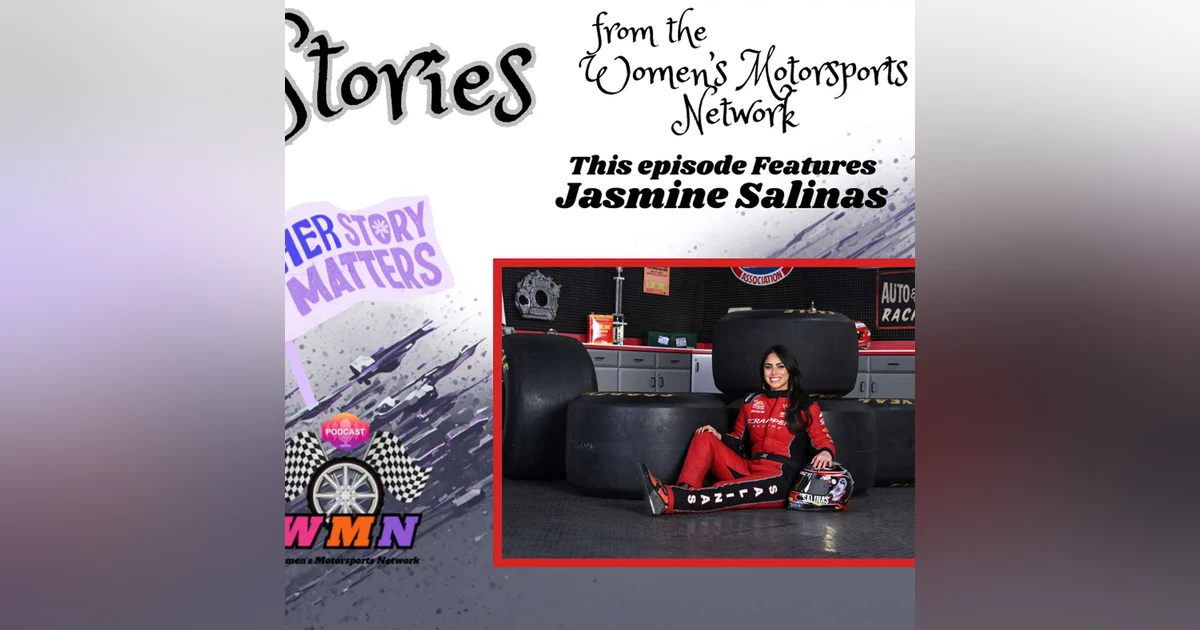

Send us Fan Mail A lot of people picture an NHRA Top Fuel driver as someone who grew up with unlimited passes and a polished pipeline to the pros. Our conversation with Jasmine Salinas tells a different story, one built on work boots, family pressure, and a scrap business in San Jose, California that taught her how to grind long before she ever went 334 miles an hour. We talk about what it really feels like to enter drag racing later than most, then have to “fast track” your learning in front...
A lot of people picture an NHRA Top Fuel driver as someone who grew up with unlimited passes and a polished pipeline to the pros. Our conversation with Jasmine Salinas tells a different story, one built on work boots, family pressure, and a scrap business in San Jose, California that taught her how to grind long before she ever went 334 miles an hour. We talk about what it really feels like to enter drag racing later than most, then have to “fast track” your learning in front of fans, sponsors, and competitors.
Jasmine walks us through the moments that changed everything: discovering Top Fuel for the first time at an NHRA national event, realizing women were already winning at the highest level, and deciding to climb the ladder the right way. We get into the unglamorous but essential steps, from licensing and Top Alcohol Dragster seat time to learning how a race team functions day to day. She also shares why she turned down an early Top Fuel opportunity, and how patience can be a competitive advantage when you’re building confidence, consistency, and control.
We also go deep on the business reality of motorsports funding. Jasmine explains how Scrappers Racing mixes NHRA and IHRA events, why eighth-mile racing can be a smart strategy for part-time teams, and what fans often miss about the cost of putting on a show. If you care about women in motorsports, drag racing sponsorship, or the mindset behind elite performance, this one delivers. Subscribe, share with a racing friend, and leave us a review with the biggest risk you’ve taken for your dream.
FACEBOOK:
INSTAGRAM: https://www.instagram.com/womensmotorsportsnetwork/
LINKEDIN: https://www.linkedin.com/in/melindarussell/
TIKTOK: https://www.linkedin.com/in/melindarussell/
https://www.patreon.com/posts/womens-network-144773298
X: https://x.com/IWMANation
FACEBOOK Personal Page: https://www.facebook.com/melinda.ann.russell
00:00 - Sponsors And Local Shoutouts
02:19 - Meet Top Fuel Driver Jasmine
03:56 - Growing Up In A Scrap Business
05:16 - Starting Drag Racing At Fourteen
09:29 - Discovering NHRA And Top Fuel
10:50 - Learning The Team And The Car
13:49 - Licensing Path Toward Top Fuel
19:17 - Moving To Indiana And Sacrifice
28:17 - Role Model Pressure And 334 MPH
31:15 - Crash Recovery And A Breakthrough Win
35:12 - Schedules Funding And IHRA Strategy
39:52 - Where To Follow Jasmine Online
41:36 - Respect For Part-Time Racing Teams
43:45 - Wrap-Up And Future Live Hit
45:06 - Full Interview Replay Begins
01:27:57 - Closing Theme And Sign-Off
Sponsors And Local Shoutouts
Melinda RussellThis episode is sponsored by Snyders Lawn Care and Property Maintenance in Kalamazoo, Michigan. If storms leave branches, debris, or damage in your yard, including down trees, their team offers reliable storm damage cleanup services. Reach out to Bob or Andrew at 269-775-1275 or their website is Snyderslawn Care.com. That's 269-775-1275. Have you recently hit a pothole? Did you end up with a bent wheel? The tire shop's going to try to sell you a new one, but you don't need to drop hundreds of dollars. Call Mark at a cut above welding in Kalamazoo. He'll repair the wheel, sand it, paint it, and have it looking like new for a fraction of the cost. With over 50 years of welding and fabricating experience, a cut above welding gets it done right and fast. Call Mark at 269-760-1109. That's 269-760-1109. A cut above welding. No job too small, just big results. And my guest today is going to be a very familiar name if you follow racing at all. Jasmine Salinas is with me today. I've been following Jasmine for quite a long time. So, Jasmine, I'm excited to have you on the show. Welcome. And would you please share a little bit about yourself so my listeners can get to know you better?
Growing Up In A Scrap Business
SPEAKER_27Yeah, of course. Thank you for having me on the show, Melinda. I mean, first of all, I guess to introduce myself, I'm Jasmine Salinas. I'm a top field driver racing for our family team, Scrappers Racing. But you just beyond the racetrack, I'm, you know, the oldest of four girls, and all of us, our names start with the letter J. And so, yeah, I'm a really big, you know, we have a big family, and I was really fortunate to kind of grow up around racing. My dad started racing kind of as a hobby, and then my sisters and I got involved in it. But beyond racing, you know, it's kind of something that we got into later than life. We have a family business that we still have, it's for over 30 years, based in San Jose, California, and it's called Valley Services and it's a transfer station. And so, you know, my parents started the business when they were younger, and it was, you know, kind of hauling junk cars and then like metal and transferring it to the landfill. And so we kind of joke that, you know, we're race pro drivers, but we're also kind of like trash babies. Like we grew up, you know, like playing, you know, in like literally trash piles and like scavenging for things. And so my first thing that I actually drove before anything, I was four years old, and my dad put me in a caterpillar excavator with my little car seat, gave me a walkie-talkie, waited till like the business shut down for the day, all the comp customers had left. He's like, Okay, Jasmine, I want you to drive over there, go pick up that red car, move it over here. And so I feel like that story just kind of like fully embodies just how I've, me and my sisters have all grown up. Like, we were very fortunate, you know, we went to school, and you know, all the kids that went to school with their parents were lawyers and doctors, and we were the trash kids, and my dad would come pick us up, you know, in this like dirty truck with his work boots on, and we always kind of like always felt like we were living in these two different spaces and doing all these really crazy things that all these other kids didn't get to do. And I feel like it's almost natural that we ended up finding our way into end up doing, you know, motor sports later on in life.
Starting Drag Racing At Fourteen
Melinda RussellThat's a that's a crazy but fun story. And and you know, there's nothing better than a family that works hard, yeah, and you know, gets their boots dirty because that my dad was a farmer, and so my dad's boots were always dirty, and he drove he drove big trucks and all the same, and so I can I can relate to that. But I lived in a farming community, so a lot of the kids' parents were involved with farming, so that was that was the norm instead of the unusual for sure. Yeah, that's that's a fun story. So you got you got interested a little bit in motorsports there. How did you end up being a top fuel in NHRA?
Discovering NHRA And Top Fuel
Learning The Team And The Car
Licensing Path Toward Top Fuel
Moving To Indiana And Sacrifice
SPEAKER_27Yeah, so like I said, so we I guess I started racing when I was 14 years old. And I feel like if you talk to a lot of a lot of other race car drivers, they're like, oh, that's old for you know, old to get started in. And a lot of that was because, you know, we were working family. And every single summer, even you know, before we were legally allowed to be working there, like we literally grew up at our family business. We worked there every single summer, every day after school, we had to be there. So I didn't really get to do that many, you know, school activities, didn't get to do a lot of sports. It was always, you know, learning the family business from the ground up. And, you know, even when I went off to college, I still have to come home on the weekends and spend time at the family business. And so I think a lot of that our whole, the way we understood the world was like, we don't go have fun, we go and work, you know, and that's how that's my dad's perspective and mindset. And then I think as we got older, I think in his like his 40s, one day he just came home and he had this old, like nostalgia dragster, just like rolled up on a trailer, and we're like, what is that? And then he's like, Oh, it's just something I cool, I saw at a junkyard. And then he's like, I think I just want to put it up in our barn and just like look at it. And then the next thing you know, a couple months later, him and his friends are tinkering around with it. And one of the ladies that worked for our family worked out our family business, she was actually in competed in nostalgia drag racing. And so she kind of like taught my dad a lot about it and was like, like he knew about it. He he grew up watching it and would go to the racetracks, but didn't know how to work on the cars or race them or anything. And so she really kind of went and like would come and teach my dad and his friends how to do it. And so eventually, like I think a year later, him and his friends started bringing it to our local racetracks in Sacramento and Bakersfield. And, you know, they were trying to race it there. And so he'd bring my mom and all my sisters out, and we're like, what is this? Or like we're in the middle of nowhere. We're like, what's happening? It's loud, it's it's kind of dirty. And we started like meeting some of the other kids. And so we were there and we were present watching, but we didn't really know what was going on, and we didn't understand that this was the much larger sport that was you know happening all over the world. And I think, you know, like my dad was like trying to focus on racing as something to do as like for fun, like his outlets. He never he didn't go to sports games, he never had like fishing, he never had anything that was like his thing to you know turn his mind off from work. And so he wanted this to be his thing was racing. And I don't think it was that relaxing when he had four girls, you know, running around the racetrack. And so then one day he brought us over to the starting line and he's like, I want you girls to come see this. And that's where we saw our first junior dragsters, and we're like, What are those? And we saw kids getting in them, and then around that same time, that's when we saw the Disney Channel movie right on track with the Ender sisters, so we were like connected the two. We're like, wait, like that's the movie we saw, like that's what these kids are doing. And so my dad asked us, like, do you girls want to race these? And we're like, Yeah, we'd love to try it. And so we had, you know, got drag strips for all of us, and we were all doing it, and you know, I didn't even know that it was something that I my whole understanding of drag racing was just Sacramento and Bakersfield. I had no idea that there was a professional thing, I had no idea. So I didn't know that there was kids traveling around the country for racing until I got older, and we were so busy working, I only did maybe two or three races a year, and I still don't really know what I was doing. So I started in this, but I didn't really understand that you could, you know, go do this and you know, compete for money, you can compete for points, you compete for I didn't know any of that. And then as I started aging out of the class, and I was like, I raced until I was 18, and I remember telling my mom, like around my senior year of high school, I was like, I want to keep racing, like I love this, I want to do this forever. And I'm like, I need to look for colleges in your racetrack. So I started looking for colleges in Sacramento and Bakersfield because that's all I knew. And then my mom's like, there's a whole other world out there, and she's like, There's so many things like focus on college, like don't, you know, don't just get caught up on this. And then around that same year, that's when my dad finally took us to an NHRA race at Sonoma Raceway. And I remember then that's where I discovered like top fuel cars, and I was like, what the heck are these? And we saw the race, and I remember, you know, seeing like we're sitting in the grandstands, and then you see like a dragster go down, and there's like Britney Forrest. I was like, Brittany's the guy's name, and they're like, No, that's a girl. I was like, what? And then we started hearing that there was these sisters, you know, and this family of racers. And I was like, wait, they're like us, like we're sisters that race. And I think that connection like right there just really made me be like, whoa, like, cool, like there's something, another step to do this, and there's something else that you can do. And I ended up focusing on college because I was like, okay, like my mom was always like racing will always be there. And I'm really grateful, you know, in the long run that she ended up, you know, kind of putting that in my mind. So I went off to college. My dad ended up actually getting his professional license during this time and tried to, you know, race professionally part-time for a couple of years. 2011, he made his debut in top fuel. And I was in college, and then I think like right after I graduated college is when he decided he wanted to try to race full-time, and we had no idea what that would entail. And it was a whole process of, you know, really just learning what it takes to turn something that was a hobby and something that was, you know, we were just fun and like excited to into this is now a business. And so after college, I worked, came back and worked for our family business for a little bit. And then I was like, not really, you know, this isn't my thing. I'm not really excited about it. I've been doing it my whole life. And so then around that same time, my dad, you know, had his race team going, and we were based in California at the time. And so then I like asked my dad, like, is there a position for me where I can work, you know, in the administrative side of our race team's office and learn? And he's like, Yeah, like I we we don't have anybody really to manage all that. And so I went in kind of just very fresh, trying to learn the business side of racing. And as I'm slowly in the shop, you know, learning about the paperwork, I'm watching the guys work on the cars, and I was like starting to get curious. And I was like, I don't have any mechanical background, I've like not mechanically inclined whatsoever. And I remember just asking them, I was like, what does this do? What does this do? And at first they would kind of laugh and they'd be like, Oh, that's cute. Like she, you know, she's interested. And I'd be like, no, really, like, what does this do? And by the end of the year, the guys that taught me how to work on every single part of the race car and all the different positions. And I think for me, that was like, whoa, look, this is, you know, it's really cool. It's exciting. I only kind of understood it really from an outside perspective. I really didn't know that much about racing or the race cars. And then by the second year, I decided to travel on the road with the team, still handle the office administrative side, but then also I wanted to work on the car as well. So I travel with the guys, I would do setup of the entire pits, everything. And then by that end of that year, I was turning around the car with the team, rebuilding superchargers, tearing everything down. And like, you know, my parents would go off and be like, okay, bye, we're leaving going to dinner. I was like, you know, at the track with the guys, and I was like, holy cow, like this is so much. I'm like, but I fell in love with it, which is so funny because I was like, I didn't have any, you know, like ever like engineering or mechanical background, like that wasn't me. I was the liberal arts kid. I love painting and arts, like theater, and like so the idea of me, you know, getting my hands dirty and trying to learn this stuff was really funny, but I loved it, made me fall in love with drag racing in a way I never knew I could. And so I did that for a couple of years, and then my dad, I was like, ooh, like I'm kind of getting the bug. Like, I kind of misraced, like, you know, driving the cars, but I never said anything to my dad. And then my dad ended up bringing me over to Ashley Sanford's top alcohol dragster. And then he's like, Come look at this. And so I like sat in her car, I was like, What is this? I was like so naive. I was like, I didn't know really, you know, all the different classes. And then he's like, This is a top alcohol car. He's like, This is the stepping stone if you want to go race top fuel, the car I race. And I was like, Oh, okay. I was like, I had no idea. And I was so naive about it. And so I asked Ashley, you know, like, what was your process with it? And, you know, she got licensed in Supercomp and then like went through kind of the learning processes of that and then took her time really with the alcohol class. And so I was like, okay, that's what I'm gonna do. And I went to Frank Hawley's and then got licensed in Supercomp Dragster. And then we ended up finding a team where I could rent their top alcohol ride. And so I spent a whole year kind of like licensing and taking my time and getting, you know, my feet wet and learning before I ever came out and competed. And so then in 2019, Gianna, my other sister who races, she curly races pro stock motorcycle. She was kind of going through the same process because around the year before, when I was like licensing and kind of working my way up and figuring out top alcohol dragstar, she decided she wanted to try Pro Stock Motorcycle. And then we were all confused. We're like, we all have motorcycles, we rode before, you know, but we're like, she never raced anything. Like, what do you mean you want to get on two wheels? Like, we're four-wheel people, like we like roll cages, we like seatbelts. And she's like, No, I want the freedom of the bike. We're like, understand it. We're like, okay, sure, cool. Like, try it out. And she's loved it ever since. And like, I've tried to get asked her, you know, like, do you want to come try my dry stir? Like, you know, do a warm-up. Do you want to do something? And she's like, nope, I like my two wheels. And it's it's really funny because I'm like the total office, and I was like, I would never want to get on two wheels. I love seatbelt, I love being tight and restrained. And she's like, I love the freedom and not being tied down and restrained by something. But we basically went through our licensing process together, which was really awesome and exciting. She's the third, yeah, she's a third sister. So there's myself, and then we have one Jacqueline, she's in between us, Gianna, and then a youngest one, Janae. And so Gianna and I, I think because she was like the third, you know, child, and I think by the time she was getting older, I'd gone off to college already. I didn't really get to connect with her that well. And so now racing's kind of been like our second phase of like sisterhood where we've gotten to grow and do so much together. And so we did the licensing process 2019, Gainesville, we came out and made our debuts in NHRA drag racing. And she had her professional debut in Pro Stock Motorcycle. I came out on Top Alcohol Dragster. And it was, I think, that moment for me, which, you know, like I will say, like I was really behind, you know, in comparison to a lot of other kids' journeys and experiences and understanding of drag racing. And I really came into it really blinded. And I had to really like pick up really fast and learn, you know, there's so many different classes, there's so many different steps, there's so many different journeys, and there's so many different, you know, levels that people have taken and the process to be able to get to into the sport. And so my journey definitely was not very normal compared to a lot of other kids. But I think because I we was in it, and once I was in, I was like, I know this is what I want to do for as long as I can. And so I've really had to like step up and learn really fast, you know, kind of like kids have grown up in this their whole lives and had years and years and years of understanding the sport. And I've had to fast track it in only a couple of years. And so I went through the process of top alcohol dragster, and it was a lot of learning and learning of, you know, I think it took several years for me to just learn how to drive the race cars. And then after a couple of years, I finally learned, okay, now there's a whole other side of learning competition, learning how to race other people. And I think it was such a valuable experience for me. And I remember, you know, only a couple of years into top alcohol dragster, my dad's like, you should come do top fuel. You should do come do top fuel. And I was like, I'm not ready for that. I'm not ready for that. Like, I've been competing, I'm racing right now against people who've been doing this for 20, 30 years. And these are, you know, adults. And I'm like, I there's so much more I need to learn. There's so many more mistakes I need to make. And I'm grateful that I had that hind hindset, hindsight, and like mindset of like, okay, like there's so much more I need to do, you know, this level and take my time with it and go at my journey and my pace. And you know, I I was getting I had an opportunity to go race top fuel with another team. I got off and I was gonna replace another driver. And I was only two years in a top alcohol dragster, and it was really the team. And sometimes I still look back on it now, I was like, what would have my life have been had I taken that opportunity? But I'm so glad I turned it down because I was like, I'm not ready for this. Like, I don't want to embarrass myself. And I'm so glad that I, you know, turned it down because I think by the time I decided to finally license in top fuel, same thing. I took a year, made sure I could get as many passes, you know, that we could within the budget and the time frame that we had, and then got into the first year of top fuel. And it was, I was as much as I tried to prepare for, I still was not prepared for it at all. And I think the biggest thing for me, like I said, was a lot of kids have had so many years of racing all these different classes and learning. And for me, just learning how to be competitive, how to, you know, the class, the sport, the mindset, but then also like who I was as a competitor, that was something I never really got to truly explore. I didn't really do a lot of sports growing up. And so I didn't know, you know, like, am I a competitive person? Am I, you know, an energetic person? Am I a compet? Like all these little things, like, how do I handle, you know, losing? How do I handle failure? How do I handle all of these challenges when I'm, you know, pushed against the wall? And those are things I've had to learn publicly, especially really in top fuel on a platform where a lot of people are watching me, you know, for the first time trying to navigate this for myself. And it's been such an incredible journey, and I'm so grateful for this opportunity. But yeah, I think now I moved to Indiana because I was living in California when I started racing Top Alcohol Dragstar. And I remember everybody would tell me, they're like, oh, like everybody who wants to race, you know, and be a professional race car driver, they moved to Brownsburg, Indiana. And I remember visiting the first time and it was like for PRI, and it was like December winters, like 10 degrees. I'm a California girl. And I was like, if it's below 70, like that's miserable. And I show up and everything's flat and gray, and I was like, there's no way I could move here. And then COVID hit and everything in California was shut down. I was working in San Francisco for a design firm while trying to balance, you know, racing full time, and it was crazy and hectic. And we were remote, and then I was like, maybe this is the moment, maybe this is like an opportunity where I can go try it out for a couple months, see how I like it. And worst case scenario, just come back to California. So I told my mom, I was like, I think I'm just gonna go try it out. I like packed up like two suitcases, and she's like, Yeah, like go find a place or something. It's okay, like everything's open. Our race team was based out of there by then. So I had a community out there, and then I came out with two suitcases, and now five years later, I'm a homeowner and I never left. And I think it's like another layer to like my journey of realizing that you know, this was something where I was introduced to it as a hobby, but then there had to be a switch for me where I was like, this isn't just a hobby. I don't want to be here just to have fun. Like, I want this to be my life. And I think for me, that was a huge, huge moment for me where I was like, I'm leaving behind all my friends, I'm leaving behind my family. And we're the kind of people where I was home every single Friday night for family dinner. Like, even if I lived in college, I still drove home. And you know, now sometimes I don't see my family for like five, six months at a time now. And there's a you know, a lot of people, if you know, if you want to make your journey or your dreams work, you know, you have to come up with a sacrifice, especially in racing, especially for you know, even the crew members as well. Everyone's leaving something that they love and their comforts behind to go and make their dream a reality. And I was like, okay, I gotta make it happen. I gotta do it. And yeah, it's been really great to be. I'm nine minutes away from our race shop. And it's like any like I'm actually after this, I have an appointment that I'm gonna go pop in the shop and you know, check on my race car, talk with the crew chief. But it's been really great to be able to be in this position where you know, I I want to make this happen, and now I'm surrounded by like a group of like minded people and people made the same sacrifices, people who understand what I'm going through and all trying to do the same thing.
Melinda RussellOh, Jasmine, I could just sit and listen to you talk. That's an amazing story. And Know two suitcases and you move. I hear that more often than you think that you know people want to move. I ha I have another gal that moved from California to Charlotte. She was 18 years old by herself, knew nobody because she wanted to work on the pit crew of an ASCAR team, and and now she is. And so, you know, just the thought of letting my daughter move away. Now you were a little bit older, you were out of college. And you know, I think maybe starting, it's great to start young, don't get me wrong. There's hundreds of little girls and boys that start young. But when you started a little older, you have some maturity and some things to your benefit that they don't have when they're little. And so yeah, and the fact that you're, you know, that's your dad, he kind of had that like as a hidden, hidden something in his heart, didn't he? About racing. Yeah, because otherwise that that dragster in the junkyard wouldn't have meant anything to him. Yeah. But when he saw that, something something triggered that, didn't it?
SPEAKER_27Yeah. So he his family grew up. They had a similar business where you know they were calling junk cars and scrap metal. And his him and his friends and family, they would go to different places. And at the time there's a lot of racetracks still open in the Bay Area, and they would go to the racetracks and pick up scrap metal and scrap parts for food, money for food. And he'd sometimes go work at the concession stands trying to make some money so that he could feed himself. And so he grew up really seeing this place where he's, you know, his family couldn't afford to go racing. He couldn't afford to go racing. And it was always something where he dreamed of doing it someday, never thought he would be able to. And so, and he always tells the story that I, you know, he got to sit in Don Garlet's race car and just like picked him up and popped him in there. And he said, you know, like it made him feel seen as a kid who, you know, went through a lot and you know, bad home environment. And I think for him, like this drag racing world was always this place where I want to be a part of it someday, but I don't know how to. And him and my mom worked really, really hard. And, you know, like I said, he didn't get to start even dabbling into this until he was in his like late 40s. And it was supposed to be something just you know for fun for him. And never in a million years did he think you know, he'd be get to be able to be a team owner, race professionally, and then get to compete and be so successful as he's been so far at the highest level of drag racing. And so him being able to pass down that opportunity to us if we wanted to, you know, because I like I said, a mom was always, you know, drag racing is always gonna be there. I also met a lot of kids where they were racing even though they didn't want to, their parents were really pushing them into it. So I was really grateful that I was allowed to kind of like find my own way into racing and find my way back. I am really grateful that I spent a lot of my 20s, you know. I gotta go to college, I gotta travel the world after college too. And I've got to live, I've lived in I think 18, almost 18, 20 different cities, you know, all over and throughout my 20s. And I was moving a lot and I gotta have a dog and I gotta have all these relationships and you know, learn and make mistakes, you know, in the real world. Because I don't really consider like sky racing, you know, I want to make it the real world for me. I want to make it that my life, but it's not the real world. Like, and I'm really grateful that I gotta spend my 20s, which I think are really big, you know, foundational moments through your growth into adulthood, and I gotta spend that, you know, being messy and like not having like this other side. So, you know, there are moments where I definitely look at, I was like, man, you know, I wish I had, you know, this extra eight to ten years, you know, where would I be now in my career? But then I also look at other drivers where they spent those, you know, fundamental years of their 20s racing, and they never, you know, now they're just starting to experience life. And so it's one of those things where it's if you know, you you pick your poison, you're gonna have to sacrifice something, but you might get something else. And I think for me personally, the path that I chose, I think worked out the best for my situation and what I wanted in life. And so I'm really grateful that I had that.
Melinda RussellI have to laugh when you say, you know, you went to PRI and it was snowing and blowing. And I was probably there that year, and I can remember I stayed a couple blocks away from the convention center, and and the wind was so bad that one year that you know how they have those like signs that sit outside on the sidewalk. Yeah, they literally were blowing into the street and stuff. It was so bad. So I can't even imagine, you know, a gal from California, you're like my daughters that live in Arizona, you know. I go out there and it's 70, and I'm like, oh, this is wonderful. And and they have on their boots, their jeans, and their flannel shirts. I'm like, what's the what's with you guys? But I'm used to living in Michigan, and so yeah, I'm used to that, you know, and and so I I bet you were thinking, oh yeah, this is not for me, but yeah, you get used to it, don't you? It it just you learn how to deal with it.
SPEAKER_27Yeah, you do. It's really wild. And it's funny because so when we were there for PRI, I learned this the next year that those buildings connect, you know, at the be at the tops, and there's some tunnels. Crosswalk. I learned about the tunnels later, but that year we're like walking, and I asked my dad, I was like, Can we like take an Uber? He's like, No, we gotta do what real Indiana people do, and we like walked like the whole way outside, and it was like a 20-minute walk, and he's like, This is what people do, and I didn't see any other person walking around outside. I was like, I'm pretty sure this is not what people do, and then the next year tunnels.
Role Model Pressure And 334 MPH
Melinda RussellNo, it's really not, and we and you got to remember that the people at PRI 90% of them don't live there, they come from somewhere else, and so no, I I walked because I could go way to the end of the convention center where there really wasn't anything, and go caddy corner and a couple blocks, it wasn't bad, but I have stayed where I've Ubered because it was there was no way I was walking. And I'm from Michigan, so there you go. Oh gosh, Jasmine. This has been such a great story. I I'm gonna ask you a few questions. What's your favorite thing about being involved in in drag racing?
SPEAKER_24Oh gosh, my favorite.
SPEAKER_27There's so many things, but I I think I'll tell myself my favorite thing because when I'm struggling or when I'm having a really you know bad day at the track where I'm you know questioning, going through the ups and downs of can I do this, should I do this? And I always think back to seeing these other little girls, especially little girls, you know, that you know, look like me or you know, like have you know same curly hair like me, and seeing the way that their faces light up. And it's like I remember, you know, getting that same feeling. I remember being on the other side, waiting for the autographs from Britney and Courtney and you know, Erica and all these other women out there. And I feel like that little moment right there for me is like, hey, like right now there might be another girl looking at you. And so I think for me, my favorite part is just like the platform being able to connect with people, being able to travel all over the country and meet so many incredible people and hear their stories and hear how you know they resonate with like the most silliest things for me, where I'm like, oh, like, you know, I have a Pomeranian and the like cult following that my dog has had because of so many people that just like I love, you know, they're like, I love the fact that you race, but I love your dog more, you know, or just like being able to share my struggles and being vulnerable, vulnerable about it with other people and seeing that it's also connecting and you know, helping them get through their things. I think that's an an added part and bonus where I never considered that when racing. I was like, oh cool, I just gotta drive a race car. But then seeing that you have the potential to impact and influence people's lives in a positive way. I think so far for me, that's been my most favorite part.
Melinda RussellYeah, and that's that's something that you know, a lot of times we think that the the best thing about being involved in racing is something involved with when you're in the race car. And more times than not, it has nothing to do with being in the race car, it has to do with, like you just said, how you can influence little girls, how you can stay motivated or or help somebody that's younger be a mentor. Those are the things that really matter. And you know, yeah, it's great to be able to go down the track at how how fast and what's the fastest you've ever gone?
SPEAKER_27334 miles an hour. We're trying to get to 340 this year, we're working on it.
Melinda Russell334. Yes, I cannot even imagine what that feels like. Now, I love speed and I would ride behind you, but I don't want to drive it.
unknownYeah, for sure.
Melinda RussellYeah, for sure. So, Jasmine, if you quit racing today and you looked back, what's your what's your biggest favorite memory of maybe a race win or an experience that you've had, what would you say would be the one that you know really sticks out?
SPEAKER_27Probably more than one, but yeah, I mean, there's so many. I definitely say though, I think my first win in top alcohol dragster when I won Gainesville, that was the year before I had crashed my car in Gainesville. And, you know, I went through this whole, it was a really big moment for me as an individual, driver as well, but really just as an individual to, you know, see what I was capable of, see what I was made of, be able to prove not really so much everybody else, but really to myself, you know, what I could accomplish, work through my fears, my doubts, and then to come back and win the exact same race the following year was so special. But then to have my whole family there with me. My family used to come out, you know, they come out to the races all the time. And so it was that was kind of like another way of like our family spending time together was like through racing. Two years ago, my dad had to step out of his race car for a medical condition. He had to have heart surgery, and he hasn't been able to come back since. He's still working on it, but right now it's just my sister and I out at the racetracks. My boyfriend works on my race car, so he's there with me. But it's kind of, you know, racing was always this thing where my whole family was always there. And I always knew they were there. And so just remembering that win with my family being there was so special. I'm hoping, you know, my other sister has two kids now and our family business is growing. So, you know, life gets in the way. And I don't know if my whole family ever is gonna get back to the point where they're all at the track with us again. I really hope they do, but I think looking at it now and just like reminiscing on that moment that was so special where there was a point where, you know, my whole family was there for racing. I think that's really great and special because I know a lot of people, you know, they don't have they don't have their families coming out all the time and their families aren't there. And the fact that was my first win and everybody was there for me. I think it's always going to be a really special moment to me.
Melinda RussellYeah, I think so. And it's interesting, you mentioned Ashley Sanford. I know Ashley, I met her when I very first started this, probably it was probably 2018. And it's funny because I had a booth at PRI for the Women's Motor Sports Network, and I did a bunch of interviews during the weekend. So, like you would have come and we'd have done, you know, an interview. And so she was one of those gals. And so we met and and and you know, I we did the interview, and then fast forward, and I don't even remember if it was January, February, when it was, but my husband and I went to Florida and we were going on a you know vacation, and we were gonna go meet my niece for dinner and different things. So we walked from our hotel to this bar restaurant that they had recommended to us, and so we were sitting there, and of course, you know, 10 TVs up on the wall behind the bar, right? So we're sitting there, and every TV had something different on it, and I'll be darned it was the I don't know what channel it was, because it was wouldn't have been speed channel that was gone. So whatever the racing channel was, there was somebody had recorded her and I when I was interviewing her. And that was around the time I think they did like some kind of story on her, this channel or whatever. And that was part of the story. And I was sitting at the table, just happened to be there in that restaurant at that time, look up, and there I'm on the television with Ashley Sanford. It was like so surreal, and I went, oh my, you know, people probably thought I was crazy, but it was so fun, and so I have that memory with her that that her, you know, interviewing her got me on television. Yeah, that's amazing.
SPEAKER_27I love that. Don't you just love there's like just you can't explain it, but just like things just happen like that in life. It's our fault.
Schedules Funding And IHRA Strategy
Melinda RussellYeah, absolutely. So tell me now, what where where are we in the schedule? Where are you gonna be? And and what are you looking forward to this year?
SPEAKER_27Yes. So this year we have 10 NHR August 9 now, because we've done Gainesville, but we're doing a total of 10 NHR RA races, and we're also gonna do a mix of IHRA. And we just finished up in Benson, North Carolina. Two weeks we're gonna head over to Virginia for another IHRA race, and then we'll head back out to the Charlotte Four Wide. We are trying to, we're kind of playing things but here to be honest. Um, we know which races we'd like to do. We are gonna do Maryland with NHRA, we're gonna do Bristol, we just added Bristol, we're excited, we're trying to add Sonoma, but my goal is ultimately to be able to be spread everything out so that we're kind of racing consistently throughout the season versus taking large chunks of time off like we did last year. And so we're playing it by year. We're also trying to see how we do with the IHRA races. My ultimate goal is to be racing full-time in MHRA. But while we're still, you know, trying to build up funding, the IHRA is a great opportunity for part-time teams like ourselves to go out there, make some money, and you know, save some of our parts. So we don't have to run it so hard at the eighth mile. We were runner-up at the last race. And so we're hoping if we do really good at this Virginia race, um, I don't know, maybe we'll run for the IHRA championship this year, I think is what the goal is. We aren't able to run for either the of the regular season or the championship countdown NHRA championships. I don't think we'll be able to secure the top 10 position. So we'll see. I it's all a lot of it's just, you know, we're trying to see how we do points-wise in two different two different series, which is you know something I don't we haven't, I've never had to do before. I've only I came into NHRA and understood the whole, you know, space of NHRA drag racing without IHRA really existing. I'd heard about it before, but didn't really understand it. And so us trying to navigate, you know, what is it like trying to compete in two different series is really interesting. It creates a lot of opportunities, I think, for us while we are still trying to work on a full-time program. But either way, I'm just really excited to continue building on our race car, um, the progress that it's making, fine-tuning a bunch of things, getting our team really dialed in. This year we have a majority fly-in group of guys. They're all really great seasoned guys. So nobody's brand new to working on a top field car, but it's just kind of getting everybody used to our routine. And so what I'm hoping is if we're racing consistently, you know, every two weeks or so with some back-to-backs throughout the entire race season, it'll really get us all well rounded with each other and get myself, you know, the consistent seat time that I've kind of been missing since my rookie season. So I'm really excited for that. And yeah, um, like I said, we're hope working on trying to get full-time funding to come out and race top fuel in NHRA. My dad is working on trying to come and maybe do a race with me this year. Um, that's something that we've been talking about for a long time. So he's working on it on his end, and then we're trying to pull some funding together and maybe do like a couple races together, and that would be really exciting for us.
Melinda RussellOh, that would be memory making for sure, wouldn't it? Yeah. Absolutely. Yeah, absolutely. And what was the goal? And you know, we talk about funding. I mean, that's that's just such a key to anybody's racing team. And the more you race, the more eyes are on you. And so that's better too. And the cons, like you said, the consistency. I know there's a there's a lot of gaps in in the racing. And so it's nice if you can figure that out and and do that because it's seat time, isn't it? I don't care how old you are or how many years you've been racing, you gotta keep that seat time, you know, going. And so yeah, I'm gonna I'm gonna look up the schedules to see if you're gonna be anywhere close to Michigan.
SPEAKER_27So um, I know NHRA has the Martin, Michigan racing. That's close to me. Okay, yeah, I'm that's a half hour from me. I don't know if we have it on our schedule yet, but if we do, I'll let you know.
Where To Follow Jasmine Online
Melinda RussellYeah, absolutely, because I can be there in a heartbeat. Yeah, that would be awesome. That's a really nice facility. Is it? I've never seen it or I it is and and it's beautiful, it's beautiful in Michigan in the summer, um, you know, and so yeah, be sure to let me know because I would be sick if you were there and I didn't come. So, yeah, for sure. Jasmine, is there anything we haven't talked about that you want to share or that we want to we want to let my listeners know?
Respect For Part-Time Racing Teams
SPEAKER_27No, if anybody's interested in following along with my journey, I'm really big on Instagram. I'm trying to get back into TikTok, but I think I'm just an old millennial at this point. So Instagram, Instagram is my thing. Yeah, if you guys want to follow along, my handle is J-A-S-S-A-L-I-N-A-S-S. Okay, um, and it should be the same across most platforms. But yeah, I appreciate if anybody's coming out to the races, NHRA, IHRA, either one. You know, I did the IHRA race, and like I said, my ultimate goal is to race full-time in NHRA. That's where I want to race wherever I can build a career off of, but at the same time, until I get to that point, you know, people were questioning about the eighth mile racing. And I have to say, like it it's pretty fun. It's pretty fun. I had a blast doing it. I mean, anybody that is, you know, hesitant or doesn't think that it's worth it to go out and watch there, I would say come out and watch. Oh, yeah. It I, you know, I don't think people can really notice the difference unless you're standing at the finish line. So it's still fun to watch. Come out and support all the other teams, you know, who, you know, are part-time racers as well, and you know, trying to have a place to race, you know, in between them saving up their money to go to an NHRA event. Um, there's a lot of great cars out there. The competition's really good. You know, people were saying that those are cars that can't qualify for NHRA races. And I don't know, I almost got beat in my first round. So it's it's it is they're different spaces that provide different things for different racers, you know, where they are in their journeys. But I think just being able to support everybody in the drag racing community as a whole, I think it's really great. And as a fan, you know, I recommend you try, you know, an I tray race if you've never come out. Come on and watch.
Melinda RussellYou know, it it reminds me, it's like it's it's it's based on money a lot of it, isn't it? Really? And I don't know as much about NHRA cost and funding, but I can't imagine, I can imagine how expensive it is. I'm a I'm a huge NASCAR fan. That's how I started. But you know, you also see there's a lot of talented people that race at the lower levels, short track racing, grassroots racing. And it's not that maybe they don't have the talent, it's the funding. And so it's the same here. It's not because those people in IHRA are good enough, it's funding a lot of it. And or they have to work a job and then do this part-time. And so we shouldn't look down on that because that's just as important to them and to the IHRA, you know, organization. And so we have to we have to support even the little junior dragsters that race at Martin, right?
SPEAKER_27Yeah, absolutely. I think, you know, it I think I tray is a great stepping stone into people whose ultimate goal is trying to race full-time in NA tray.
SPEAKER_30But I mean, if you look at you know, the drivers that are in competing in NA tray, most of the people have those multi-year million-dollar contracts. We pay out of pocket, we know what that's what most people out here are doing.
SPEAKER_27And so I think when fans kind of understood that perspective, that you know, these are guys that they have jobs, they have companies, and they're still willing to spend their money to come out and race and put on a show for people. I think that alone should be something that I think deserves the respect of people to come out and you know pay the ticket to come and watch and support them.
Wrap-Up And Future Live Hit
Melinda RussellI totally agree, totally agree. And and you know, even just to to race locally, it's expensive. And so we have to we have to attend races and and support the companies that support those racers and and do all of those things so that the sport continues to grow, right? Absolutely, yeah. Yeah. Well, Jasmine, I like I said, I could just listen to you and your story, but I know we I promised you not not 42 minutes, but 30, but it's okay. I love I loved hearing your story. I I wasn't aware of how How you got up into it, but I have watched you for quite a few years here since you started racing. I appreciate that you took the time to be on the show. And I just want to thank you for being there, being here. And I want to wish you every bit of luck for this year.
SPEAKER_27Thank you so much. I had a great time being on the show. I'd love to be back on.
Melinda RussellMaybe I'll maybe do like more things and I'll have more to talk about. But I would do something live from running the races. That would be fun.
SPEAKER_21Yeah, I like that. I like that a lot.
Melinda RussellOkay. You put that you put that on your list of things to remember. And let's do something, you know, it could be just a short little thing from wherever you're racing and and and say, you know, this is what it looks like when I'm at an IRJ IHR race. I can't even say it. Uh race. This is what I do. This is, I think that would be so cool. We should do that. I like that. Okay. Yeah. I'll I'll write that down and I'll I'll let's make that happen.
SPEAKER_27Let's make it happen. Okay, let's make it happen. All right. Thanks again for being on. Yeah, thank you. I appreciate your time.
Melinda RussellHello, everyone. This is Melinda Russell with the Women's Motorsports Network podcast. And my guest today is going to be a very familiar name if you follow racing at all. Jasmine Salinas is with me today. I've been following Jasmine for quite a long time. So, Jasmine, I'm excited to have you on the show. Welcome. And would you please share a little bit about yourself so my listeners can get to know you better?
SPEAKER_27Yeah, of course. Thank you for having me on the show, Melinda. I mean, first of all, I guess to introduce myself, I'm Jasmine Salinas. I'm a top field driver racing for our family team, Scrappers Racing. But just beyond the racetrack, I'm, you know, the oldest of four girls, and all of us, our names start with the letter J. And so, yeah, I'm a really big, you know, we have a big family, and I was really fortunate to kind of grow up around racing. My dad started racing kind of as a hobby, and then my sisters and I got involved in it. But beyond racing, you know, it's kind of something that we got into later than life. We have a family business that we still have, it's for over 30 years, based in San Jose, California, and it's called Valley Services and it's a transfer station. And so, you know, my parents started the business when they were younger, and it was, you know, kind of hauling junk cars and then like metal and transferring it to the landfill. And so we kind of joke that, you know, we're raised pro drivers, but we're also kind of like trash babies. Like we grew up, you know, like playing, you know, in like literally trash piles and like scavenging for things. And so my first thing that I actually drove before anything, I was four years old, and my dad put me in a caterpillar excavator with my little car seat, gave me a walkie-talkie, waited till like the business shut down for the day, all the customers had left. He's like, Okay, Jasmine, I want you to drive over there, go pick up that red car, move it over here. And so I feel like that story just kind of like fully embodies just how I've me and my sisters have all grown up. Like we were very fortunate, you know, we went to school, and you know, all the kids that went to school with their parents were lawyers and doctors, and we were the trash kids. And my dad would come pick us up, you know, in this like dirty truck with his work boots on. And we always kind of like always felt like we were living in these two different spaces and doing all these really crazy things that all these other kids didn't get to do. And I feel like it's almost natural that we ended up finding our way into end up doing, you know, motor sports later on in life.
Melinda RussellThat's a that's a crazy but fun story. Um and and you know, there's nothing better than a family that works hard, yeah. And you know, gets their boots dirty because that my dad was a farmer. And so my dad's boots were always dirty, and he drove he drove big trucks and all the same. And so I can I can relate to that. But I lived in a farming community, so a lot of the kids were parents were involved with farming. So that was that was the norm instead of the unusual for sure. Yeah, that's that's a fun story. So you got you got interested a little bit in motorsports there. How did you end up being a top fuel in NHRA?
SPEAKER_27Yeah, so like I said, so we I guess I started racing when I was 14 years old. And I feel like if you talk to a lot of a lot of other race car drivers, they're like, oh, that's old for you know, old to get started in. And a lot of that was because, you know, we were working family. And every single summer, even you know, before we were legally allowed to be working there, like we literally grew up at our family business. We worked there every single summer, every day after school, we had to be there. So I didn't really get to do that many, you know, school activities, didn't get to do a lot of sports. It was always, you know, learning the family business from the ground up. And, you know, even when I went off to college, I still have to come home on the weekends and spend time at the family business. And um, so I think a lot of that our whole, the way we understood the world was like, we don't go have fun, we go and work, you know, and that's how that's my dad's perspective and mindset. And then I think as we got older, I think in his like his 40s, one day he just came home and he had this old, like nostalgia dragster, just like rolled up on a trailer, and we're like, what is that? And then he's like, Oh, it's just something I cool. I saw at a junkyard. And then he's like, I think I just want to put it up in our barn and just like look at it. And then the next thing you know, a couple months later, him and his friends are tinkering around with it. And one of the ladies that worked for our family worked out our family business, she was actually in competed in nostalgia drag racing. And so she kind of like taught my dad a lot about it and was like, like he knew about it. He he grew up watching it and would go to the racetracks, but didn't know how to work on the cars or race them or anything. And so she really kind of went and like would come and teach my dad and his friends how to do it. And so eventually, like I think a year later, him and his friends started bringing it to our local racetracks in Sacramento and Bakersfield. And, you know, they were trying to race it there. And so he'd bring my mom and all my sisters out, and we're like, what is this? Or like we're in the middle of nowhere. We're like, what's happening? It's loud, it's it's kind of dirty. And we started like meeting some of the other kids. And so we were there and we were present and watching, but we didn't really know what was going on. We didn't understand that this was the much larger sport that was, you know, happening all over the world. And I think, you know, like my dad was like trying to focus on racing as something to do as like for fun, like his outlet. He never he didn't go to sports games, he never had like fishing, he never had anything that was like his thing to, you know, turn his mind off from work. And so he wanted this to be his thing was racing. And I don't think it was that relaxing when he had four girls, you know, running around the racetrack. And so then one day he brought us over to the starting line and he's like, I want you girls to come see this. And that's where we saw our first junior dragsters, and we're like, What are those? And we saw kids getting in them, and then around that same time, that's when we saw the Disney Channel movie Ride on Track with the Ender sisters, so we were like connected the two. We're like, wait, like that's the movie we saw, like that's what these kids are doing. And so my dad asked us, like, do you girls want to race these? And we're like, Yeah, we'd love to try it. And so we had, you know, got drag strips for all of us, and we were all doing it, and you know, I didn't even know that it was something that I my whole understanding of drag racing was just Sacramento and Bakerfield. I had no idea that there was a professional thing, I had no idea. So I didn't know that there was kids traveling around the country for racing until I got older, and we were so busy working, I only did maybe two or three races a year, and I still don't really know what I was doing. So I started in this, but I didn't really understand that you could, you know, go do this and you know, compete for money, you can compete for points, you compete for I didn't know any of that. And then as I started aging out of the class, and I was like, I raced until I was 18, and I remember telling my mom, like around my senior year of high school, I was like, I want to keep racing, like I love this, I want to do this forever. And I'm like, I need to look for colleges in your racetrack. So I started looking for colleges in Sacramento and Bakersfield because that's all I knew. And then my mom's like, there's a whole other world out there, and she's like, There's so many things like focus on college, like, don't, you know, don't just get caught up on this. And then around that same year, that's when my dad finally took us to an NHRA race at Sonoma Raceway. And I remember then that's where I discovered like top fuel cars, and I was like, what the heck are these? And we saw the race, and I remember, you know, seeing like we're sitting in the grandstands, and then you see like dragster go down, and there's like Britney Force. I was like, Brittany's the guy's name, and they're like, No, that's a girl. I was like, what? And then we started hearing that there was these sisters, you know, and a family of racers. And I was like, wait, they're like us, like we're sisters that race. And I think that connection like right there just really made me be like, whoa, like, cool, like there's something another step to do this, and there's something else that you can do. And I ended up focusing on college because I was like, okay, like my mom was always like racing will always be there. And I'm really grateful, you know, in the long run that she ended up, you know, kind of putting that in my mind. So I went off to college. My dad ended up actually getting his professional license during this time and tried to, you know, race professionally part-time for a couple of years. 2011, he made his debut in top fuel. And I was in college, and then I think like right after I graduated college is when he decided he wanted to try to race full-time, and we had no idea what that would entail. And it was a whole process of, you know, really just learning what it takes to turn something that was a hobby and something that was, you know, we were just fun and like excited to into this is now a business. And so after college, I worked, came back and worked for our family business for a little bit. And then I was like, I'm not really, you know, this isn't my thing. I'm not really excited about it. I've been doing it my whole life. And so then around that same time, my dad, you know, had his race team going, and we were based in California at the time. And so then I like asked my dad, like, is there a position for me where I can work, you know, in the administrative side of our race team's office and learn? And he's like, Yeah, like I we we don't have anybody really to manage all that. And so I went in kind of just very fresh, trying to learn the business side of racing. And as I'm slowly in the shop, you know, learning about the paperwork, I'm watching the guys work on the cars. And I was like starting to get curious. And I was like, I don't have any mechanical background, I've like not mechanically inclined whatsoever. And I remember just asking them, I was like, what does this do? What does this do? And at first they would kind of laugh and they'd be like, Oh, that's cute. Like she, you know, she's interested. And I'd be like, no, really, like, what does this do? And by the end of the year, the guys that taught me how to work on every single part of the race car and all the different positions. And I think for me, that was like, whoa, like this is, you know, it's really cool. It's exciting. I only kind of understood it really from an outside perspective. I really didn't know that much about racing or the race cars. And then by the second year, I decided to travel on the road with the team, still handle the office administrative side, but then also I wanted to work on the car as well. So I travel with the guys, I would do setup of the entire pits, everything. And then by that end of that year, I was turning around the car with the team, rebuilding superchargers, tearing everything down. And you know, my parents would go off and be like, okay, fine, we're leaving going to dinner. I was like, you know, at the track with the guys, and I was like, holy cow, like this is so much. I'm like, but I fell in love with it, which is so funny because I was like, I didn't have any, you know, like ever like engineering or mechanical background. Like that wasn't me. I was the liberal arts kid. I loved painting and art, like theater, and like so the idea of me, you know, getting my hands dirty and trying to learn this stuff was really funny, but I loved it, made me fall in love with drag racing in a way I never knew I could. And so I did that for a couple of years, and then my dad, I was like, oh, like I'm kind of getting the bug. Like, I kind of misrace, like, you know, driving the cars, but I never said anything to my dad. And then my dad ended up bringing me over to Ashley Sanford's top alcohol dragster. And then he's like, Come look at this. And so I like sat in her car, I was like, What is this? I was like so naive. And I was like, I didn't know really, you know, all the different classes. And then he's like, This is a top alcohol car. He's like, This is the stepping stone if you want to go race top fuel, the car I race. And I was like, Oh, okay. I was like, I had no idea. And I was so naive about it. And so I asked Ashley, you know, like, what was your process with it? And, you know, she got licensed in Supercomp and then like went through kind of the learning processes of that and then took her time really with the alcohol class. And so I was like, okay, that's what I'm gonna do. And I went to Frank Hawley's and then got licensed in Supercomp Dragster. And then we ended up finding a team where I could rent their top alcohol ride. And so I spent a whole year kind of like licensing and taking my time and getting, you know, my feet wet and learning before I ever came out and competed. And so then in 2019, Gianna, my other sister who races, she really races pro stock motorcycle. She was kind of going through the same process because around the year before, when I was like licensing and kind of working my way up and figuring out top alcohol dragstar, she decided she wanted to try pro stock motorcycle. And then we were all confused. We're like, we all have motorcycles, we rode before, you know, but we're like, she never raced anything. Like, what do you mean you want to get on two wheels? Like, we're four-wheel people, like we like roll cages, we like seatbelts. And she's like, No, I want the freedom of the bike. We're like, understand it. We're like, okay, sure, cool. Like, try it out. And she's loved it ever since. And like, I've tried to get asked her, you know, like, do you want to come try my dry stir? Like, you know, do a warm-up. Do you want to do something? And she's like, nope, I like my two wheels. And it's it's really funny because I'm like the total opposite. I was like, I would never want to get on two wheels. I love seatbelt, I love being tight and restrained. And she's like, I love the freedom and not being tied down and restrained by something. But we basically went through our licensing process together, which was really awesome and exciting. She's the third, yeah, she's a third sister. So there's myself, and then we have one Jacqueline, she's in between us, Gianna, and then a young son, Janae. And so Gianna and I, I think because she was like the third, you know, child. And I think by the time she was getting older, I'd gone off to college already. I didn't really get to connect with her that well. And so now racing's kind of been like our second phase of like sisterhood where we've gotten to grow and do so much together. And so we did the licensing process 2019, Gainesville, we came out and made our debuts in NHRA drag racing. And she had her professional debut in ProStoc Motorcycle. I came out on Top Alcohol Dragster. And it was, I think, that moment for me, which, you know, like I will say, like I was really behind, you know, in comparison to a lot of other kids' journeys and experiences and understanding of drag racing. And I really came into it really blinded. And I had to really like pick up really fast and learn, you know, there's so many different classes, there's so many different steps, there's so many different journeys, and there's so many different, you know, levels that people have taken and the process to be able to get to into the sport. And so my journey definitely was not very normal compared to a lot of other kids. But I think because I we was in it, and once I was in, I was like, I know this is what I want to do for as long as I can. And so I've really had to like step up and learn really fast, you know, kind of like kids have grown up in this their whole lives and had years and years and years of understanding the sport. And I've had to fast track it in only a couple of years. And so I went through the process of top alcohol dragster, and it was a lot of learning and learning of, you know, I think it took several years for me to just learn how to drive the race cars. And then after a couple of years, I finally learned, okay, now there's a whole other side of learning competition, learning how to race other people. And I think it was such a valuable experience for me. And I remember, you know, only a couple of years into top alcohol dragster, my dad's like, you should come do top fuel. You should do come do top fuel. And I was like, I'm not ready for that. I'm not ready for that. Like, I've been competing, I'm racing right now against people who've been doing this for 20, 30 years. And these are, you know, adults. And I'm like, I there's so much more I need to learn. There's so many more mistakes I need to make. And I'm grateful that I had that hind hindset, hindsight, and like mindset of like, okay, like there's so much more I need to do, you know, this level and take my time with it and go at my journey and my pace. And you know, I I was getting I had an opportunity to go race top fuel with another team. I got off and I was gonna replace another driver. And I was only two years in a top alcohol dragster, and it was a really good team. And sometimes I still look back on it now, I was like, what would my life have been had I taken that opportunity? But I'm so glad I turned it down because I was like, I'm not ready for this. Like, I don't want to embarrass myself. And I'm so glad that I, you know, turned it down because I think by the time I decided to finally license in top fuel, same thing. I took a year, made sure I could get as many passes, you know, that we could within the budget and the time frame that we had, and then got into the first year of top fuel. And it was, I was as much as I tried to prepare for, I still was not prepared for it at all. And I think the biggest thing for me, like I said, was a lot of kids have had so many years of racing all these different classes and learning. And for me, just learning how to be competitive, how to, you know, the class, the sport, the mindset, but then also like who I was as a competitor, that was something I never really got to truly explore. I didn't really do a lot of sports growing up. And so I didn't know, you know, like, am I a competitive person? Am I, you know, an energetic person? Am I a competitor? Like all these little things, like, how do I handle, you know, losing? How do I handle failure? How do I handle all of these challenges when I'm, you know, pushed against the wall? And those are things I've had to learn publicly, especially really in top fuel on a platform where a lot of people are watching me, you know, for the first time, trying to navigate this for myself. And it's been such an incredible journey, and I'm so grateful for this opportunity. But yeah, I think now I moved to Indiana. So I was living in California and I started racing top alcohol dragstar. And I remember everybody would tell me, they're like, oh, like everybody who wants to race, you know, and be a professional race car driver, they moved to Brownsburg, Indiana. And I remember visiting the first time and it was like for PRI, and it was like December winters, like 10 degrees, and I'm a California girl. And I was like, if it's below 70, like that's miserable. And I show up and everything's flat and gray, and I was like, there's no way I could move here. And then COVID hit and everything in California was shut down. I was working in San Francisco for a design firm while trying to balance, you know, racing full-time, and it was crazy and hectic. And we were remote, and then I was like, maybe this is the moment, maybe this is like an opportunity where I can go try it out for a couple months, see how I like it. And worst case scenario, just come back to California. So I told my mom, I was like, I think I'm just gonna go try it out. I like packed up like two suitcases, and she's like, Yeah, like go find a place or something. It's okay, like everything's open. Our race team was based out of there by then. So I had a community out there, and then I came out with two suitcases, and now five years later, I'm a homeowner and I never left. And I think it's like another layer to like my journey of realizing that you know, this was something where I was introduced to it as a hobby, but then there had to be a switch for me where I was like, this isn't just a hobby. I don't want to be here just to have fun. Like, I want this to be my life. And I think for me, that was a huge, huge moment for me where I was like, I'm leaving behind all my friends, I'm leaving behind my family. And we're the kind of people where I was home every single Friday night for family dinner. Like, even if I lived in college, I still drove home. And you know, now sometimes I don't see my family for like five, six months at a time now. And there's a you know, a lot of people, if you know, if you want to make your journey or your dreams work, you know, you have to come up with a sacrifice, especially in racing, especially for you know, even the crew members as well. Everyone's leaving something that they love and their comforts behind to go and make their dream a reality. And I was like, okay, I gotta make it happen, I gotta do it. And yeah, it's been really great to be. I'm nine minutes away from our race shop. And it's like any like I'm actually after this. I have an appointment that I'm gonna go pop in the shop and you know, check out my race car, talk with the crew chief. But it's been really great to be able to be in this position where you know, I I want to make this happen, and now I'm surrounded by like a group of like-minded people and people made the same sacrifices, people who understand what I'm going through and all trying to do the same thing.
Melinda RussellOh, Jasmine, I could just sit and listen to you talk. That's an amazing story. And you know, uh two suitcases and you move. I hear that more often than you think that you know, people want to move. I I have another gal that moved from California to Charlotte. She was 18 years old by herself, knew nobody, or because she wanted to work on the pit crew of an ASCAR team, and and now she is. And so, you know, just the thought of letting my daughter move away. Now you were a little bit older, you were out of college. And you know, I think maybe starting it's great to start young, don't get me wrong. There's hundreds of little girls and boys that start young. But when you started a little older, you have some maturity and some things to your benefit that they don't have when they're little. And so yeah, and the fact that you're you know that your dad, he kind of had that like as a hidden, hidden something in his heart, didn't he? About racing car. Yeah. Because otherwise that that uh dragster in the junkyard wouldn't have meant anything to him. But when he saw that, something something triggered that didn't.
SPEAKER_27Yeah. So he his family grew up. They had a similar business where you know they were hauling junk cars and scrap metal. And his him and his friends and family, they would go to different places. And at the time there's a lot of racetracks still open in the Bay Area. And they would go to the racetracks and pick up scrap metal and scrapped parts for food, money for food. And he'd sometimes go work at the concession stands trying to make some money so that he could feed himself. And so he grew up really seeing this place where he's, you know, his family couldn't afford to go racing. He couldn't afford to go racing. And it was always something where he dreamed of doing it someday, never thought he would be able to. And so, and he always tells the story that I, you know, he got to sit in Don Garlet's race car and just like picked him up and popped him in there. And he said, you know, like it made him feel seen as a kid who, you know, went through a lot and you know, bad home environment. And I think for him, like this drag racing world was always this place where I want to be a part of it someday, but I don't know how to. And him and my mom worked really, really hard. And, you know, like I said, he didn't get to start even dabbling into this until he was in his like late 40s. And it was supposed to be something just, you know, for fun for him. And never in a million years did he think you know, he'd be get to be able to be a team owner, race professionally, and then get to compete and be so successful as he's been so far at the highest level of drag racing. And so him being able to pass down that opportunity to us if we wanted to, you know, because I like I said, my mom was always, you know, drag racing is always gonna be there. I also met a lot of kids where they were racing even though they didn't want to, their parents were really pushing them into it. So I was really grateful that I was allowed to kind of like find my own way into racing and find my way back. I am really grateful that I spent a lot of my 20s, you know. I gotta go to college, I gotta travel the world after college too. And I've got to live, I've lived in, I think, 18, almost 18, 20 different cities, you know, all over and throughout my 20s. And I was moving a lot and I gotta have a dog and I gotta have all these relationships and you know, learn and make mistakes, you know, in the real world. Because I don't really consider like drag racing, you know, I want to make it the real world for me. I want to make it that my life, but it's not the real world. Like, and I'm really grateful that I got to spend my 20s, which I think are really big, you know, foundational moments through your growth into adulthood. And I gotta spend that, you know, being messy and like not having like this other side. So, you know, there are moments where I definitely look at I was like, man, you know, I wish I had, you know, this extra eight to 10 years, you know, where would I be now in my career? But then I also look at other drivers where they spent those, you know, fundamental years of their 20s racing, and they never, you know, now they're just starting to experience life. And so it's one of those things where it's if you know, you you pick your poison, you're gonna have to sacrifice something, but you might get something else. And I think for me personally, the path that I chose, I think worked out the best for my situation and what I wanted in life. And so I'm really grateful that I had that.
Melinda RussellI have to laugh when you say, you know, you went to PRI and it was snowing and blowing. And I was probably there that year, and I can remember I stayed a couple blocks away from the convention center, and and the wind was so bad that one year that you know how they have those like signs that sit outside on the sidewalk. Yeah, they literally were blowing into the street and stuff. It was so bad. So I can't even imagine, you know, a gal from California, you're like my daughters that live in Arizona, you know, I go out there and it's 70, and I'm like, oh, this is wonderful. And and they have on their boots, their jeans, and their flannel shirts. I'm like, what's the what's with you guys? But I'm used to living in Michigan, and so yeah, I'm used to that, you know, and and so I I bet you were thinking, oh yeah, this is not for me, but you get used to it, don't you? It's it just you learn how to deal with it.
SPEAKER_27Yeah, you do. It's really wild. And it's funny because so when we were there for PRI, I learned this the next year that the buildings connect, you know, at the be at the top, so there's some tunnels we can walk.
SPEAKER_14Crosswalk.
SPEAKER_27I learned about the tunnels later, but that year we're like walking, and I asked my dad, I was like, Can we like take an Uber? He's like, No, we gotta do what real Indiana people do. And we like walked like the whole way outside, and it was like a 20-minute walk, and he's like, This is what people do, and I didn't see any other person walking around outside. I was like, I'm pretty sure this is not what people do, and then the next year tunnels.
Melinda RussellNo, it's really not, and we and you got to remember that the people at PRI, 90% of them don't live there, they come from somewhere else, and so no, I I walked because I could go way to the end of the convention center where there really wasn't anything and go caddy corner and a couple blocks, it wasn't bad, but I have stayed where I've Ubered because it was there was no way I was walking. And I'm from Michigan, so there you go. Oh gosh, Jasmine. This has been such a great story. I I'm gonna ask you a few questions. What's your favorite thing about being involved in in drag racing?
SPEAKER_24Oh gosh, my favorite.
SPEAKER_27There's so many things, but I think I'll tell myself my favorite thing because when I'm struggling or when I'm having a really you know bad day at the track where I'm you know questioning, going through the ups and downs of can I do this, should I do this? And I always think back to seeing these other little girls, especially little girls, you know, that you know look like me or you know, like have you know same curly hair like me, and seeing the way that their faces light up. And it's like I remember, you know, getting that same feeling. I remember being on the other side, waiting for the autographs from Brittany and Courtney and you know, Erica and all these other women out there. And I feel like that little moment right there for me is like, hey, like right now there might be another girl looking at you. And so I think for me, my favorite part is just like the platform being able to connect with people, being able to travel all over the country and meet so many incredible people and hear their stories and hear how you know they resonate with like the most silliest things for me, where I'm like, oh, like, you know, I have a Pomeranian and the like cult following that my dog has had because of so many people that just like I love, you know, they're like I love the fact that you race, but I love your dog more, you know, or just like being able to share my struggles and being vulnerable, vulnerable about it with other people and seeing that it's also connecting and you know, helping them get through their things. Yeah, I think that's an an added part and bonus where I never considered that when racing. I was like, Oh, cool, I just gotta drive a race car. But then seeing that you have the potential to impact and influence people's lives in a positive way. I think so far for me, that's been my most favorite part.
Melinda RussellYeah, and that's that's something that you know, a lot of times we think that the the best thing about being involved in racing is something involved with when you're in the race car. And more times than not, it has nothing to do with being in the race car. It has to do with, like you just said, how you can influence little girls, how you can stay motivated, or or help somebody that's younger be a mentor. Those are the things that really matter. And you know, yeah, it's great to be able to go down the track at how how fast and what's the fastest you've ever gone?
SPEAKER_27334 miles an hour. Oh my god. We're trying to get to 340 this year. We're working on it.
Melinda Russell334. Yes. I cannot even imagine what that feels like. Now I love speed and I would ride behind you, but I don't want to drive it. Yeah.
unknownYeah, for sure.
Melinda RussellYeah, for sure. So, Jasmine, if you quit racing today and you looked back, what's your what's your biggest favorite memory of maybe a race win or an experience that you've had, what would you say would be the one that you know really sticks out?
SPEAKER_27Um probably more than one, but yeah, I mean, there's so many. I definitely say though, I think my first win in Top Alcohol Dragster when I won Gainesville, that was the year before I had crashed my car in Gainesville. And, you know, I went through this whole, it was a really big moment for me as an individual, driver as well, but really just as an individual to, you know, see what I was capable of, see what I was made of, be able to prove not really so much everybody else, but really to myself, you know, what I could accomplish, work through my fears, my doubts, and then to come back and win the exact same race the following year was so special. But then to have my whole family there with me. My family used to come out, you know, they come out to the races all the time. And so it was that was kind of like another way of like our family spending time together was like through racing. Two years ago, my dad had to step out of his race car for a medical condition. He had to have heart surgery. He hasn't been able to come back since. He's still working on it. But right now it's just my sister and I out at the racetracks. My boyfriend works on my race car, so he's there with me. But it's kind of, you know, racing was always this thing where my whole family was always there. And I always knew they were there. And so just remembering that win with my family being there, so special. I'm hoping, you know, my other sister has two kids now and our family business is growing. So, you know, life gets in the way. And I don't know if my whole family ever is gonna get back to the point where they're all at the track with us again. I really hope they do, but I think looking at it now and just like reminiscing on that moment that was so special where there was a point where, you know, my whole family was there for racing. I think that's really great and special because I know a lot of people, you know, they don't have they don't have their families coming out all the time and their families aren't there. And the fact there's my first win and everybody was there for me. I think it's always going to be a really special moment to me.
Melinda RussellYeah, I think so. And it's interesting, you mentioned Ashley Sanford. I know Ashley, I met her when I very first started uh this, probably it was probably 2018. And it's funny because I had a booth at PRI for the Women's Motorsports Network, and I did a bunch of interviews during the weekend. So, like you would have come and we'd have done, you know, an interview. And so she was one of those gals. And so we met and and and you know, I we did the interview, and then fast forward, and I don't even remember if it was January, February, when it was, but my husband and I went to Florida and we were going on a you know vacation and we were gonna go meet my niece for dinner and different things. So we walked from our hotel to this bar restaurant that they had recommended to us, and so we were sitting there, and of course, you know, 10 TVs up on the wall behind the bar, right? So we're sitting there, and every TV had something different on it, and I'll be darned it was the I don't know what channel it was, because it was wouldn't have been speed channel that was gone. So whatever the racing channel was, there was somebody had recorded her and I when I was interviewing her. And that was around the time I think they did like some kind of story on her, this channel or whatever. And that was part of the story. And I was sitting at the table, just happened to be there in that restaurant at that time, look up, and there I'm on the television with Ashley Sanford. It was like so surreal, and I went, oh my, you know, people probably thought I was crazy, but it was so fun, and so I have that memory with her that that her, you know, interviewing her got me on television. Yeah, that's amazing. I love that.
SPEAKER_27Don't you just love them? There's like just you can't explain it, but just like things just happen like that in life. It's our fault.
Melinda RussellYeah, absolutely. So tell me now, what where where are we in the schedule? Where are you gonna be? And and what are you looking forward to this year?
SPEAKER_27Yes. So this year we have 10 NHR August 9 now, because we've done Gainesville, but we're doing a total of 10 NHR RA races, and we're also gonna do a mix of IHRA. And we just finished up in Benson, North Carolina. Two weeks we're gonna head over to Virginia for another IHRA race, and then we'll head back out to the Charlotte Four wide. We are trying to, we're kind of playing things right here, to be honest. Um, we know which races we'd like to do. We are gonna do Maryland with NHRA, we're gonna do Bristol, we just added Bristol, we're excited, we're trying to add Sonoma, but my goal is ultimately to be able to be spread everything out so that we're kind of racing consistently throughout the season versus taking large chunks of time off like we did last year. And so we're playing it by year. We're also trying to see how we do with the IHRA races. My ultimate goal is to be racing full-time in MHRA. But while we're still, you know, trying to build up funding, the IHRA is a great opportunity for part-time teams like ourselves to go out there, make some money, and you know, save some of our parts. So we don't have to run it so hard at the eighth mile. Uh, we were runner-up at the last race. And so we're hoping if we do really good at this Virginia race, um, I don't know, maybe we'll run for the IHRA championship this year, I think is what the goal is. We aren't able to run for either the of the regular season or the championship countdown NHRA championships. I don't think we'll be able to secure the top 10 position. So we'll see. I it's all a lot of it's just, you know, we're trying to see how we do points-wise in two different different two different series, which is you know something I don't we haven't, I've never had to do before. I've only I came into NHRA and understood the whole you know space of NHRA drag racing without IHRA really existing. I heard about it before, but didn't really understand it. And so us trying to navigate, you know, what is it like trying to compete in two different series is really interesting. It creates a lot of opportunities, I think, for us while we are still trying to work on a full-time program. But either way, I'm just really excited to continue building on our race call, have the progress that it's making, fine-tuning a bunch of things, getting our team really dialed in. This year we have a majority fly-in group of guys. They're all really great seasoned guys. So nobody's brand new to working on a top field car. It's just kind of getting everybody used to our routine. And so what I'm hoping is if we're racing consistently, you know, every two weeks or so with some back-to-backs throughout the entire race season to really get us all well rounded with each other, get myself, you know, the consistency time that I've kind of been missing since my rookie season. So I'm really excited for that. And yeah, um, like I said, we're hope working on trying to get full-time funding to come out and race top fuel in NHRA. My dad is working on trying to come and maybe do a race with me this year. And that's something that we've been talking about for a long time. So he's working on it on his end, and then we're trying to pull some funding together and maybe do like a couple races together, and that would be really exciting for us.
Melinda RussellOh, that would be memory making for sure, wouldn't it? Yeah, absolutely. Yeah, absolutely. And with the goal, and you know, we talk about funding. I mean, that's that's just such a key to anybody's racing team. And the more you race, the more eyes are on you. And so that's better too. And the cons, like you said, the consistency. I know there's a there's a lot of gaps in in the racing. And so it's nice if you can figure that out and and do that because it's seat time, isn't it? I don't care how old you are or how many years you've been racing, you got to keep that seat time, you know, going. And so yeah, I'm gonna I'm gonna look up the schedules to see if you're gonna be anywhere close to Michigan.
SPEAKER_27So um, I know NHRA has the Martin, Michigan race. See, that's close to me. Okay, yeah, I'm that's a half hour from me. I don't know if we have it on our schedule yet, but if we do, I'll let you know.
Melinda RussellYeah, absolutely, because I can be there in a heartbeat. Yeah, that would be awesome. That's a really nice facility. Is it? I've never seen it or I it is and and it's beautiful, it's beautiful in Michigan in the summer, you know, and so yeah, be sure to let me know because I would be sick if you were there and I didn't come. So, yeah, for sure. Jasmine, is there anything we haven't talked about that you want to share or that we want to we want to let my listeners know?
SPEAKER_27No, if anybody's interested in following along with my journey, I'm really big on Instagram. I'm trying to get back into TikTok, but I think I'm just an old millennial at this point. So Instagram, Instagram is my thing. Yeah, if you guys want to follow along, my handle is J-A-S-S-A-L-I-N-A-S-S. Okay, um, and it should be the same across most platforms. But yeah, I appreciate if anybody's coming out to the races, NHRA, IHRA, either one. You know, I did the IHRA race, and like I said, my ultimate goal is to race full-time in NHRA. That's where I want to race wherever I can build a career off of, but at the same time, until I get to that point, you know, people were questioning about the eighth mile racing. And I have to say, like it it's pretty fun. It's pretty fun. I had a blast doing it. I mean, anybody that is, you know, hesitant or doesn't think that it's worth it to go out and watch there, I would say come out and watch. Oh, yeah. It I, you know, I don't think people can really notice the difference unless you're standing at the finish line. So it's still fun to watch. Come out and support all the other teams, you know, who you know are part-time racers as well, and you know, trying to have a place to race, you know, in between them saving up their money to go to an NHRA event. Um, there's a lot of great cars out there. The competition's really good. You know, people were saying that those are cars that can't qualify for NHRA races. And I don't know, I almost got beat on my first round. So it's it's it is they're different spaces that provide different things for different racers, you know, where they are in their journeys. But I think just being able to support everybody in the drag racing community as a whole, I think it's really great. And as a fan, you know, I recommend you try, you know, an I tray race if you've never come out. Come on and watch.
Melinda RussellYou know, it it reminds me, it's like it's it's it's based on money a lot of it, isn't it? Really? And I don't know as much about NHRA cost and funding, but I can't imagine, I can imagine how expensive it is. I'm a I'm a huge NASCAR fan. That's how I started. But you know, you also see there's a lot of talented people that race at the lower levels, short track racing, grassroots racing. And it's not that maybe they don't have the talent, it's the funding. And so it's the same here. It's not because those people in IHRA are good enough, it's the funding, yeah. A lot of it. And or they have to work a job and then do this part-time. And so we shouldn't look down on that because that's just as important to them and to the IHRA, you know, organization. And so we have to we have to support even the little junior dragsters that race at Martin, right?
SPEAKER_27Yeah, absolutely. I think, you know, it I think IHRA is a great stepping stone into people whose ultimate goal is trying to race full-time in NHRA. But I mean, if you look at you know, the drivers that are in competing in NHRA, most of the people have those multi-year million dollar contracts.
SPEAKER_30We had a pocket.
SPEAKER_27You know what that's what most people out here are doing. And so I think when if fans kind of understood that perspective, that you know, these are guys that they have jobs, they have companies, and they're still willing to spend their money to come out and race and put on a show for people. I think that alone should be something that I think deserves the respect of people to come out and you know, pay the ticket to come and watch and support them.
Melinda RussellI totally agree, totally agree. And and you know, even just to to race locally, it's expensive. And so we have to we have to attend races and and support the companies that support those racers and and do all of those things so that the sport continues to grow, right? Absolutely, yeah. Yeah, well, Jasmine, I like I said, I could just listen to you and your story, but I know we I promised you not not 42 minutes, but 30, but it's okay. I love I loved hearing your story. I I wasn't aware of how you got up into it, but I have watched you for quite a few years here since you started racing. I appreciate that you took the time to be on the show, and I just want to thank you for being there, being here, and I want to wish you every bit of luck for this year.
SPEAKER_27Thank you so much. I had a great time being on the show. I'd love to be back on.
Melinda RussellMaybe I'll maybe do like more things than I'll have more to talk about. But I well, yeah, let's do something live from running your races. That would be fun.
SPEAKER_21Yeah, I like that. I like that a lot.
Melinda RussellOkay, you put that you put that on your list of things to remember. And let's do something, you know, could be just a short little thing from wherever you're racing and and and say, you know, this is what it looks like when I'm at an IRJ IHR race. I can't even say it. Race. This is what I do. This is I think that would be so cool. We should do that. I like that. Okay. Yeah, I'll I'll write that down and I'll I'll let's make that happen. Let's make it happen.
SPEAKER_27Okay, let's make it happen. All right. Thanks again for being on. Yes, thank you. I appreciate your time.
SPEAKER_19Start your end. This is the Women's Motor Fun Network track nights to the bright race lights from the garage to Victory Lane Women all rising Chasing the dream with horse power running through the women's motors, voice network, hear those engines roar. Stories of courage, speed and heart like you never heard before. Every laugh we celebrate. Women's motors voice network. Women's motors voice networks.