
 Apple Podcasts
 Spotify
 Youtube Music
  RSS Feed
 Gina Schild-Knowles: Short Track Racing Survives When Communities Show Up
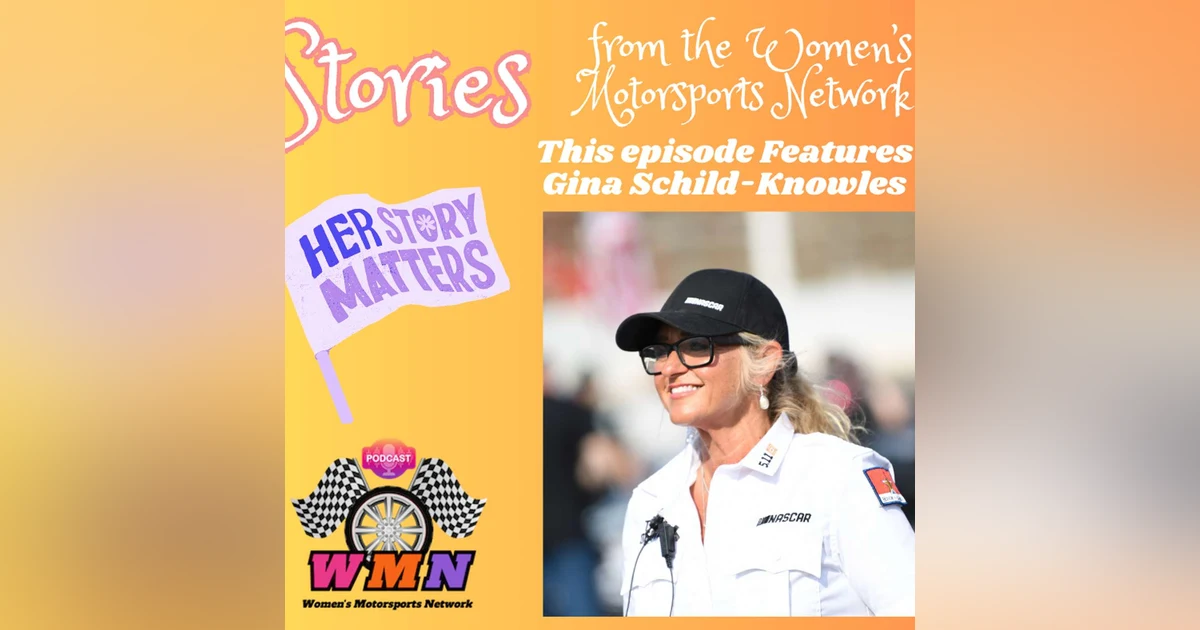

Send us Fan Mail Short tracks aren’t just where racing happens. They’re where careers start, families gather, and a whole town learns what a Saturday night feels like. I’m joined by Gina Schild Knowles, a lifelong motorsports pro whose path runs through Texas racing roots, sponsorship sales, and the high-wire act of keeping racetracks alive when the math doesn’t always work on paper. We talk about what it really takes to run and revive tracks like Houston Motor Sports Park and Mobile Interna...
Short tracks aren’t just where racing happens. They’re where careers start, families gather, and a whole town learns what a Saturday night feels like. I’m joined by Gina Schild Knowles, a lifelong motorsports pro whose path runs through Texas racing roots, sponsorship sales, and the high-wire act of keeping racetracks alive when the math doesn’t always work on paper.
We talk about what it really takes to run and revive tracks like Houston Motor Sports Park and Mobile International Speedway, and what Gina focuses on today at Hickory Motor Speedway: social media that actually connects, community outreach that brings people back, and building an intern pipeline that helps the next generation learn the good, the bad, and the ugly of racetrack operations. If you care about grassroots racing, racing promotion, and the business of motorsports, this conversation gets practical fast.
We also dig into Nashville Fairgrounds Speedway and why politics, money, and perception can decide a track’s future as much as the racing itself. Gina shares straight talk on motorsports sponsorship, including the most common mistake racers make when pitching partners, why young drivers need to learn to ask early, and how to keep sponsors by delivering real value beyond a logo on a quarter panel.
Finally, Gina lays out her vision for strengthening NASCAR’s Weekly Series and short track program so it produces champions and keeps local racing healthy. If this hits home, subscribe, share the episode with a racing friend, and leave a review so more fans can find the stories that keep short track racing alive.
FACEBOOK:
INSTAGRAM: https://www.instagram.com/womensmotorsportsnetwork/
LINKEDIN: https://www.linkedin.com/in/melindarussell/
TIKTOK: https://www.linkedin.com/in/melindarussell/
https://www.patreon.com/posts/womens-network-144773298
X: https://x.com/IWMANation
FACEBOOK Personal Page: https://www.facebook.com/melinda.ann.russell
00:00 - Local Sponsors And Support
04:23 - Meet Gina And Her Racing Roots
06:12 - Learning Sponsorship Through Family Racing
10:44 - Stepping Into Track Management In Houston
17:52 - COVID Pressure And Keeping Tracks Open
21:47 - Mobile Speedway And Growing A Class
26:36 - Bringing Shine Back To Hickory
31:40 - Daily Work Social Media Interns Sponsors
41:52 - Nashville Fairgrounds Politics And Possibilities
49:04 - The Real Sponsorship Mistake Racers Make
56:50 - Women In Motorsports And Being Heard
01:00:57 - Giving Back And Choosing Better Promoters
01:03:10 - Fixing The NASCAR Short Track Pipeline
01:06:20 - Final Advice And Closing
Local Sponsors And Support
Melinda RussellThis episode is sponsored by Snyder's Lawn Care and Property Maintenance in Kalamazoo, Michigan. If storms leave branches, debris, or damage in your yard, including down trees, their team offers reliable storm damage cleanup services. Reach out to Bob or Andrew at 269-775-1275. Or their website is Snyder'slawn Care.com. That's 269-775-1275. Have you recently hit a pothole? Did you end up with a bent wheel? The tire shop's gonna try to sell you a new one, but you don't need to drop hundreds of dollars. Call Mark at a cut above welding in Kalamazoo. He'll repair the wheel, sand it, paint it, and have it looking like new for a fraction of the cost. With over fifty years of welding and fabricating experience, a cut above welding gets it done right and fast. Call Mark at 2697. That's 269709. A cut above welding. No job too small, just big results.
SPEAKER_02The word is more important. One story at a time.
Melinda RussellThis episode is sponsored by Snyder's Lawn Care and Property Maintenance in Kalamazoo, Michigan. If storms leave branches, debris, or damage in your yard, including down trees, their team offers reliable storm damage cleanup services. Reach out to Bob or Andrew at 269-775-1275. Or their website is Snyder'slawncare.com. That's 269-775-1275. Have you recently hit a pothole? Did you end up with a bent wheel? The tire shop's gonna try to sell you a new one, but you don't need to drop hundreds of dollars. Call Mark at a cut above welding in Kalamazoo. He'll repair the wheel, sand it, paint it, and have it looking like new for a fraction of the cost. With over fifty years of welding and fabricating experience, a cut above welding gets it done right and fast. Call Mark at 269-7601109. That's 2697 with 1109. A cut above welding. No job too small, just big results.
Meet Gina And Her Racing Roots
Melinda RussellHello everyone, this is Melinda Russell with the Women's Motor Sports Network Podcast. And my guest today is Gina Schild Knowles. And Gina, I want to welcome you to the show. I'm happy to have you on today. And so, first of all, would you share a little bit about yourself?
SPEAKER_04Well, thank you for having me. I appreciate it. Um, a little bit about myself. I basically work in racing. I'm 55 years old. I've been in it my entire life, really. And uh I'm currently in Hendersonville, North Carolina, and I am from Texas.
Melinda RussellOkay, all right. And do you have any pets or family or anybody that um shares the love of racing with you?
SPEAKER_04Basically, everyone in my family loves racing. Um, it's a love-hate relationship for some, you know. Uh and yeah, all my family is really home in Texas. I have a racing family here, of course, that I've developed. Um, and I do have pets, but they're all home.
Melinda RussellOkay. All right. Sounds good. So, Gina, your family's involved, you know, loves racing. How did you really get started to where you knew that you loved racing?
SPEAKER_04Well, I was born into it, uh, really. My grandfather's race, both of them raced, um, uh at Playland Park in Houston. And my other grandfather, my mom's dad, was a factory driver for Indian motorcycle and ran flat tracks uh Daytona. And so I I really just was born into it and and grew up in it. My dad raced, uh, my uncle raced, my brothers, um, all of them. I mean, every male in my family just about was a race car driver. So we were at the racetrack a significant amount of time. I have been uh at a racetrack a significant portion of my life.
Melinda RussellYeah,
Learning Sponsorship Through Family Racing
Melinda Russellsounds like it. So um, what did you first do to know that you wanted to have a life in motorsports? How did how did you personally get started?
SPEAKER_04You know, um I was always at the track. Um, I I saw many cars being built from the frame and and got to watch it race uh because it was built by my grandpa or my dad or whatever, but I didn't really realize that how much racing meant to me until I went away from it. I went to school and came back. And like when I was at the racetrack, I realized, man, I really like this. My brother won a big race in Texas in like the late 90s, and uh I told my dad, I said, Why don't you try to get him in into like a truck ride or something like that? My dad said, Come on now. And so I it just kind of hit me that you have to find the money. I mean, I always knew it. Racing costs money, it has impacted every financially impacted every household I've ever been in. Racing has so I understood it, but it I really kind of jumped in not knowing uh the rules, just selling my brother's selling sponsorship and finding sponsors. And I kind of liked it. I enjoyed the challenge, I enjoyed uh doing it, and my understanding of racing, I realized what had a value. Never, you know, never understood what it meant to me until I really kind of started aggressively pursuing trying to get my brother into a truck ride.
Melinda RussellYeah. And so, as a person who probably had never done any kind of sponsorship work, how did you go about like tackling that? I mean, were you the one that kind of helped him get the sponsorship? Yes.
SPEAKER_04Uh, I had been in sales professionally, been a sales position, and then I'd always been at the racetrack and done little things like uh, hey, can you bring your brother's car here and do an appearance and you know, helping people like that? Logical things. And it just kind of was a natural thing. It's still it was a very natural thing selling racing because of how I understood it and how I understood the what you need to make work, and it just like I said, it was natural. I just kind of naturally went in it and stayed in it, and it just kind of led this led to this job, and this led to this. And before I knew it, I was you know running a racetrack, leasing a racetrack and running a show. So and my I have a family, of course, helped me do it.
Melinda RussellAnd so, where was that? Where was that track?
SPEAKER_04That was in Houston. Um, my dad raced a uh track called Meyer Speedway, and he had a wonderful promoter at that track. And I I think looking back, even though I was very young, looking back at how fun those races were and and being run by a successful promoter. I mean, he was the promoter that got Terry Lobonnie uh where he was because my dad raced against Terry Lobonny, my dad drove for AJ Foyt for many years. Um uh and and so I I think I learned it in a fun way. And as I got older, I would hear stories that I remember watching, and so it kind of um, I don't know, it just fed everything I I did, but it was all based in Houston, Texas at Meyer Speedway. My grandpa ran at Playland Park. Um, but that's kind of where it all really was rooted from is Meyer Speedway.
Melinda RussellSo when you found yourself running a racetrack, um, did somebody ask you? Did did they see that you had a talent for that? How did you land that role actually? Because you weren't probably looking for it. No, no, I was not.
SPEAKER_04Um I had always helped uh racetracks or racers with sponsors. After I stopped with my brother, um, I had a business, I was a wedding photographer for 15 years, and on non-wedding weekends I would help at the racetrack. But I they'd always call me, and inevitably someone would call me and say, Hey, can you come help us find a sponsor? A friend of mine, David Starr, he races. He called me and said, Look, there's a potential sponsor, um, Advanced Auto Parts. They want to sponsor Houston, and there's not really anyone that can help deliver what you need to deliver. You understand it, and will you call them? And I called them, and so I was working with the promoter at Houston Motor Sports Park and Advanced Auto Parts, and he got ill and um he did pass away, and I kind of stepped away from it because
Stepping Into Track Management In Houston
SPEAKER_04you know he was a good friend, and it it wasn't doing well, and it's the last asphalt track in Texas, and it it wasn't healthy, and so someone came to me and said, Look, would you consider coming back in and running it? And I was like, Wow, I didn't, I was clueless, you know. So we did. We just I mean, the alternative was it was gonna close, and a lot of people in Texas would have a garage full of equipment that was a quarter of the value because the closest track was 500 miles away, and not all classes ran there. So we just jumped in, and you know, your knowledge of racing and your understanding of how racing is for a racer, the finances, the the struggle, and everything. I just um ran a track the way that I would want uh it to be run if I was a racer coming to it. And and I already knew a lot of people in the industry. They all knew that my my family was from racing and rooted in racing. So it it was a positive movement. They they cut us some slack and we pulled it together. Now it went well and then COVID hit. Literally started this six months into the 2019 season. And yes, and then COVID in 2020. And I sanctioned in 2020, and NASCAR sanctioned the track. I did research because it was important to me to put the track on the map because it's in it was in Houston, or it's in Houston, Texas, you know. Right. So sanctioned it and then COVID. So we learned things really fast. We had to do a whole lot with very little, and we went through the COVID thing and then everything that followed it. So I really think that we were on like high speed learning. I can't you you had to learn, you didn't have a choice but to push forward, and I was about to quit. It was like we were too far in to quit, so we just kept going, kept going, kept going, and we had great friends help us. We had I had my son, my my husband, everybody. It was a a team effort, you know. It was it was interesting and stressful.
Melinda RussellI I was just gonna say it was interesting and exciting and stressful, yeah. Right, for sure.
SPEAKER_04I think I pulled my family into it. I know if it I took them and then we leased Mobile International Speedway and ran both tracks. Um, and it it just you you trip and stumble your way through it, you know, and and racing is just a part of my family's life, and um, I don't know, I it just drives me. I enjoy it, I very much enjoy being at the racetrack. I really do.
Melinda RussellYeah, there's no other place like it, that's for sure. And once you start making those relationships and that those people become family, it's the only place you want to be, you know. Yes, yeah, for sure. So you you con your family into helping you. So, how many years did you run that track?
SPEAKER_04Let's see, we did uh mobile three years in Houston, I think three, four, something like that. Uh uh when I got mobile, uh, we I lost my sponsor for the Houston track, and mobile stayed, so I dropped to mobile and ran mobile for a while, you know. And mobile was was not really up and running. COVID, it was it with COVID, it had closed, so we kind of had to open it up and and kind of reconnect, and I had to learn the community, learn the racers. And I was able to pull racers from Texas because it was about a six-hour drive and get them to race with us too. So it was a really good, I I think of it fondly. It was super, super stressful. Um, and but it still meant a lot, you know. We had a we had a good time, we really did. Looking back.
Melinda RussellLooking back now that you can put the stressful things behind you, definitely. You can look back and yeah. Did you did you ever have a day? I'm sure you did. Did you ever have a day that you got up and you just thought, I can't do this? And if so, what pushed you through?
SPEAKER_04Um, yes, many times I did, but it seems like anytime I have days like that, and you get them, where things are just hitting you, and and with racing, it's always heavy and it's always a punch, a super hard punch, and and you really have to process it. But I always get something immediately following because I always question why am I still doing this? You know, I I just I I'm probably gonna have to get out of it. I just can't take it. And something comes my way, whether it's a racer calls me and thanks me uh for what I've done, or um just something positive comes at me. And so I tell myself, until I'm that's not happening, I'll keep doing it. I mean, I'm 55. Um, and every single time that has something has come my way and someone's appreciated or called me and told me a story about what happened to them because of what I helped them do. So that drives me, that really does. And race days, race days definitely fill my bank back up.
Melinda RussellYeah, it definitely does. Right. Seeing seeing all the people who show up who wouldn't have a place to go if it wasn't for that track just fills your heart and then it gives you the energy to keep going, doesn't it?
SPEAKER_04Right, definitely. That's what drove me initially is I didn't want the the track to close. I mean, it was our home track, and to have one asphalt racetrack, one in a whole state as big of tech as Texas, it really weighed heavily on me because my son raced there too, and I can't imagine. I mean, he didn't race at the time, but all I could think about was when he was in high school and racing, if the track had closed, how crushing that would have been to him, you know, and and everything you have and everything you're trying to do, it to that truly did make me jump in with zero fear. I mean, I really did. So it meant a lot to it's still racing today, and so is mobile, and that means a lot to me because mobile was closed, and and the fact that they're both running and and thriving, I like it. Um, there was a class in Texas that was pretty much dying on the vine, and it was the Allison Legacy class, and it was because we were so far away from North Carolina, it was hard for them to get parts, so it was kind of going away. So when I went to Mobile, I brought them to Mobile, and that class just took off at Mobile. I love that fact. I love the fact that now they race at uh Houston, Mobile, five flags. They just raced at Freedom Factory last weekend. I love the fact that I was I had a part in that, you know. That is the reward that you look back and go, wow, that's pretty cool that they're racing. When I see it pop up and they're racing somewhere, it warms my heart.
Melinda RussellIt's kind of a legacy that you're leaving behind.
SPEAKER_04You know, I yeah, it's
COVID Pressure And Keeping Tracks Open
SPEAKER_04goofy because you you feel like you're you're cheating a little bit when everybody because you get the reward and you get the credit for a lot of things that it took a teen to do. And so sometimes I think you know, I didn't do I didn't do that. But my brother always says you that I have a bad habit of not stopping to smell the roses. He said, You've got to stop and look at this. He said, None of this would be here if you didn't keep doing what you're doing, and it's hard to remind yourself of that. Um sometimes you really you really do have to to remind yourself of that, but it I can't take all the credit, of course, because we had friends and family and and team members that racing means a lot to that work for very little and uh because they love the sport. People's love for sport drives them for this sport, drives them, literally.
Melinda RussellYeah, I I think it does too, and sometimes more so than other sports when you take a really close look at other, you know, baseball, football, basketball, all the way other like big sports, they're racing's just different, you know. The the um the fact that you go somewhere every weekend and you race the same people and your competitor on the on the track, and then if somebody needs something, you're the first one there to help them, even though you they're your biggest competitor. And and you don't see that as much, or at least we don't hear about it as much um in other sports. And so yeah, race racing's just special. And if it's hard to explain that to people because they don't really understand that you can that you can be competitive and then as soon as you get off the track, you know, somebody's broken and everybody's over there helping.
SPEAKER_04And so it's it's a it's a it's a definitely a different relationship, sport-wise.
Melinda RussellYeah, for sure. So what are you up to now, Gina? Uh take me from running the tracks to today. What have you been doing?
SPEAKER_04Um, I work at Hickory Motor Speedway in between mobile. I was working for a GM performance dealer out of Mississippi selling um engines and performance engines and performance parts, racing engines and performance parts. I worked at Nashville Fairground Speedway. Um, I kind of hopped around a little bit, and wherever I would land, I would still kind of be selling the engines and parts, but also helping the racetrack uh and the team at the racetrack to just kind of tweak things. I don't know. I have a knack of coming into a racetrack and and seeing how it what's going on and where it might need a little bit of love, where you need to touch it because uh that that's really kind of what makes a racetrack work. And if you have one like a GM, a GM can't do it by theirself and and you have to kind of learn the team and and maybe show them a different, you know, you have a fresh set of eyes coming in, you can kind of see maybe where they need need a little bit of tweaking, and that's how I landed at Hickory is it kind of um had a rough year, had a rough couple of years, and needed a little bit of loving. And that's that's what I do. I kind of always just say I kind of give it its shine back. I try to polish it back up and reintroduce it to people.
Melinda RussellYeah, yeah, I like that. So, you know, we hear a lot about Hickory. If you're involved in motorsports at all, I believe the Cars Tour runs there. Am I correct? Yes, ma'am.
SPEAKER_04The Cars Tour runs runs here. Uh the Pass series from up north, the Mayberries run it, they run here. Um, we've got uh ASA running here, come here on May 21st. Uh, we have let's see, ASA Cars Tour. We had the Smart Mods come. It's a it's a great track that has some really power big shows,
Mobile Speedway And Growing A Class
SPEAKER_04you know, and then it has strong local racing. To be perfectly honest, it has some of the best racing I've ever seen. This track really produces great racing. You can take a class of like eight cars on another track, it would not be a great show. show, but Hickory just it it it's phenomenal in that department and producing shows.
Melinda RussellThat's and that's fun, isn't it? To know that no matter how many show up, it's going to be a fun night.
SPEAKER_04It is. It is. And it has been. I have very much enjoyed the racing this year. Yeah, that's good.
Melinda RussellSo tell me what's your daily routine look like working at Hickory?
SPEAKER_04Well I've got a long drive so I go to the track usually kind of look at my schedule do a lot of social media. Um that kind of needed more attention than anything because everybody had a role and had regular jobs and the social media is a monster. It's really a a lot to manage. So I can be grabbing a hold of that. Yes and I grabbed a hold of that and had to change it. So I might I do that daily um come up with posts and develop different things for the track. You know race scheduling I get the race schedule and plug in what I have I work with a group of students uh at Belmont University in the motorsports program. So I went and touched on them and got them coming to the racetrack because I did that at Mobile with UNOH not at Mobile sorry Nashville with UNOH I just kind of implement things based off of the needs. At Hickory he's got a very um expensive lease so he there's not a whole lot to work with monetarily so interns I wanted to go establish an intern program and that's what I did. So killing two birds with one stone you have labor and you're also educating the future of the sport and how it works and and I like that part because I like to share the workings of of it because I know when I started and tripped and stumbled my way through it I didn't know a lot and I had to work for a lot of people I wouldn't have wanted to work for and learn things the hard way so I want to educate them on the good bad and ugly of it. So but that's that's part of what I do daily is is working with the students um going out talking to sponsors connecting with the community I go to a lot of chamber meetings I go to a lot of sports meetings um just plugging back in any way I can and getting people to come to the track that normally wouldn't come um or come back to the track. That's the key right there it's been out of the community for a bit you know and it's hicky it's been there forever it it's a a huge part of that community and it just had been uh neglected in a way to in the community community involvement you know and that's that's really kind of what I'm I'm doing because that helps your back gate your front gate when you get fans and you're showing the track some love and it's it's it's growing it helps racers see that they get on board and then you get more racers coming to work for you. I mean let's face it racers like to show off and uh the more people that you have in the stands that is a positive impact on getting them to come.
Melinda RussellYeah absolutely um yeah so before I forget about it I wanted we'll go back to that but I wanted to ask you about Nashville. So Nashville's kind of in the news as far as you know I I know there's a soccer stadium next door and they're you know wanting to get the cup series back there and all that.
SPEAKER_04What's your perspective on will Nashville ever hold a cup race you know I I really it's very very it's a very political environment there. I do know this the the cars tour race recently was a great success. And that track that track needed that desperately because it showed what it could do. Unfortunately politicians and in and where that track is when they evaluate it they look at it on paper and on paper it does not have a great representation it's not a positive thing on paper. So that race that cars tour race on paper will help that because it'll show what it can do. It might not be doing it regularly but it can do that. And Nashville is a city that has everything available to it. There's so much there that to have a racetrack and not only do you have a half mile but you have the quarter mile too it's two that is what Nashville needs. I mean it needs to keep a racetrack and and like I said I think that that the power that that race brought the numbers that it
Bringing Shine Back To Hickory
SPEAKER_04has on paper and then the looks of it and how everyone came out it it was that helped it and I I do hope that helps keep it there because that is such a special racetrack it really is in my day and it was where the north met the south and the east met this the west when you wanted to measure up because my parents took my brother there in a late model when you wanted to see where you stacked up that's where you would would go and see where where you you might be your local track you know uh winner but you go there and you might not be so right that history little reality check. Definitely I think definitely and and that's kind of the what the politicians wouldn't understand. They don't know how important that that track has been historically in racing um cup wise or cup race or or anything like that the logistics would be very hard there they would be because of the high rise you have a high rise just right out the back door of the the concourse there and then right on the other side of the high rise is a stadium but you could do it you would just have to have your egg bring your A game you know and be on top of that parking part I think that personally I think a truck race would be fantastic and I think bigger races uh bigger you know series races would be fantastic too yeah I I don't honestly I don't think it needs you know the the other two series put a truck race there why why can't a track just do that and I understand the concern of the the fan uh the sorry the surrounding neighborhood people and the traffic but it's not like you're doing it every single day no and it it would just be something that might be an inconvenience for like two or three days but it is it's investing in your community it's putting money in your community employing people you know it's providing a whole lot I mean well I'm there really unless unless it's the Chicago street race which I don't even think I'd much rather go to Nashville and enjoy racing and all the stuff around it there's just so much there to do and I can't under I can't understand as an outsider looking in why the city doesn't push a little harder to keep that track and to work something out because hotels food in entertainment all of that you know that when we go somewhere for a a race weekend we want to do something at night or whatever and to have some fun right and that's one of the few towns that the racetrack is really close enough that you can you can just combine everything and so you can and and and most recently that the at the car store they they were able to do they did the the thing about it is that's where the political side of this comes in and when someone with a lot of money doesn't want the track to thrive and can throw money to you know put some doubt in whether the place will work or not then that's gonna happen and and you can throw out all the negatives with that money and it may it makes that those negatives stick and I think that the you know the person with the money that doesn't want it to work is using his weight to lobby against it which is how politics work. At the same time the powers that be in the city don't have the I don't know for the lack of better word balls to stand up against them and voice their opinion so they don't pick a side you know right and so this thing is drawn out and they say little sound bites a positive that makes this group happy and a soundbite that makes that group happy let's let's make some decisions here. Let's let's look at what what we what just happened and let's move forward and that's it's everybody dragging their feet because nobody wants to be the bad guy to the guy with money.
Melinda RussellRight.
SPEAKER_04That's that's it and again on paper is well how it's going to be evaluated and it was really really in trouble. Yeah helped that now it has a fighting chance right and there's other series like those series you mentioned that come to your track um there's there's bigger series that would love to run there and it wouldn't be an every weekend thing you know it and so there has to be a way to to keep it but everybody has to be involved in working together and that's the problem right definitely and you know you get one big voice with the racers and and I think that uh that helped the car tour helped it you have you know junior junior helping his voice is pretty powerful but that that cars tour race definitely helped it they have a fantastic team there um I worked there and I just loved everybody there it was the racers were great um and they all love the place and it has a lot of people supporting it it's got a hall of fame group that look out for it um
Daily Work Social Media Interns Sponsors
SPEAKER_04you have a couple of people that one person in particular saved it from the first attempt at its demise and uh that brought a lot of uh that bought it extra life and it's just about keeping it keeping it going and honestly setting the right expectation uh of it it of its capabilities because politicians and the people are involved really don't understand racing and it's a dynamic that you can't apply normal rules to no you know your normal marketing rules don't work the same in racing your normal uh way to to make it profitable that does not work in racing you have to really have people that know racing involved so it's successful you know that's that's something that that that is still a struggle to this day on on almost everything in racing. You know that's true that do stuff and they think oh I can do racing and it's just a little bit different.
Melinda RussellYeah.
SPEAKER_04So have you ever driven a car or had a had a um you know had the itch to race yourself oh heck yes I did but see if I did if I raced it would take money away from my brothers you know or my brother racing so I I knew I knew that or if I drove his car what if I wrecked it you know or or did anything so I shook I shook down um his go-karts I he he carted for a long time we traveled with that and and I think I I shook his car down one time but I know I would have been good and I know my brother's tails but oh well my my dad told me one day he said I should have put you in a car I said you sure should have because we we'd be living in North Carolina regularly but no I I don't know it's just an instinct that I love it and um but I just I didn't want to take away from our program there just wasn't enough money yeah yeah and especially if you know it's one thing to keep one car on the track or one person on the track much less two or three and it's just it's just hard.
Melinda RussellIt's yeah it's a shame that it's such an expensive sport because it's very expensive.
SPEAKER_04Yeah well when I was younger I'm 10 years older than my my first brother so my dad was racing and and he wasn't ready to give it up you know and and he was racing and then my brother came into it so I just didn't have a a shot at it but I knew what my role was immediately and that was help help uh one brother in particular uh get get to another level you know I always thought that was where I was where I belonged you know well that's good because you felt that that was your part of the team yes yeah definitely so what's a good night at the racetrack when you go to the racetrack and everything happens and you're headed home and you say was that a good night or a bad night what makes a good night at the racetrack a good night at the racetrack would be good racing and a a good crowd for me and because it always is is um a positive impact I mean I like I I have a long drive back from the racetrack I love that that feeling of you're exhausted after a race night you're exhausted you're tired but you're still high from the adrenaline of the race because it was good racing uh positive people people stop me in the grandstands and thank me and all that that just kind of feeds it all you know you're doing something right and racing running a racetrack is very hard there's a lot to it you have a lot of challenges and you have to do things unexpectedly you have to be prepared for just about any scenario and like when I have my students that the college students that come I like to see them and talk to them after the race um I like the kids that I see and talk to about the race the fans it it all just that's a good race night I think is it it's the people all of that it's the people a hundred percent yeah because you just put a show on for them you know you put it together and they you see that they had a great time and the racers you're coming to you you know I mean it's not all kumbaya but it it is all still positive because it's all part of how racing works.
Melinda RussellRight. So let's talk about the sponsorship part just for a little bit before I let you go because I promise usually around 30 minutes but this is so interesting that I don't want to let you go yet. So um so you've done a lot with partnerships for racetracks. What do you think is the biggest mistake that a racer makes when he's trying to talk to a sponsor or trying to find a sponsor um putting the focus on the logo that goes on the race car.
SPEAKER_04That's the that is the gravy of the deal that's the simple thing and that's what everybody focus on focuses on. I will say this younger racers and I mean 18 and under need to be taught to ask for money because when they are younger that is a perfect opportunity opportunity to develop strong relationships with sponsors to take them with you as you progress into this sport. And it's very hard and I tell kids this all the time it's very hard to tell a kid no that has a passion as deeply as as uh racing runs. And I tell them all the time don't be afraid the worst they can say is no and for every 10 no's you get you're gonna get one yes. And then when you get it you put them on your race carpet you invite them to the races. You go to them and tell them Monday morning what happened give them a report there's so much more you need to do and it you need to start when you're young. If you have someone finding sponsors for you and you're not participating in it and you're under 18 you're doing yourself an injustice you will always need money to race always learn how to ask for it and then learn how to to keep that sponsor with you and grow. You have to find out and this is crazy but you have to find out what their cheese is and what I mean by that is what is it that motivates them and once you find that out then you want to keep them with you and grow them but ask for it asking for it is the hardest thing for racist to do that should not be that should be the most natural thing for them.
Melinda RussellEspecially as a kid because as a kid first of all you said just exactly right it's hard to say no to a kid and I interview a lot of girls under 18 and sometimes the younger they are the bigger list of sponsors they have and I'll ask them well how did you get so many people to sponsor your car my mom drove me there or my I get my hair done there or I do this that's my dentist that's whatever. And and so they overcome that fear I guess or they they here's the thing they haven't developed a fear of it's just natural and so as they get older you know those sponsors might stay with them which is a great thing or they might need some new ones but they know the process and they've already been told no however many times and so that's nothing new and they can get past that. And so I love that that you said that because I just think the younger they are the better and you can as a parent you can teach them at home what to say how to act and all those things and that's not just for racing Gina that's for life how to talk to an adult how to treat people how to say thank you show gratitude those are all life lessons that you learn through racing and another thing I love asking you know sometimes a little bit older gal that I would interview is what life what has racing taught you as far as life lessons and a lot of times it'll be confidence and and things that you know I just see it.
SPEAKER_04Young gals that race tend to be way more mature and able to talk on a podcast or to excuse me to an adult or whatever than kids who don't because that's the female part of it truly yes true you have to as a woman in this this industry you have to first of all have a very thick skin but um you have to apply yourself harder um and consistently than in in than any man than any man because it's harder for you to get noticed. So yes I would think that the younger women would learn faster uh than than anyone than the the males which is a good thing and it kind of sucks too but yeah it you you're kind of forced to learn fast I will say this back to the youngsters whether male or female you need to practice in the mirror look at and go in the bathroom and talk to yourself and talk about yourself and get comfortable talking about yourself. It's very hard to talk about yourself but when you're a race car driver you have no choice but to do it and and believe it or not when you do it in a mirror a lot of times do it in the car do whatever it you get comfortable with it and it becomes more natural because that is very important too not only in asking for money but being able to to communicate well and are to articulate well in this and I always tell racers in fact I told one Saturday night talk get in the mirror talk to yourself talk about yourself you know let you laugh and it feels so dumb but you'll be ahead of every everyone in your in in your racing area or you know that you're competing with it'll put you ahead of them put yourself in the top five percent is what you have to do as a racer so how do you think being in motor sports has strengthened you or made you who you are today
Nashville Fairgrounds Politics And Possibilities
SPEAKER_04you know it's funny at this age um I was pretty aggressive when I was younger but I didn't know as much I was still learning you know but I was still very aggressive now it's like I I feel like I I've validated my experience if that when I give an opinion it's it's based on experience actual experience and knowledge and understanding of the sport um it's still really hard it's still real hard to to be taken seriously as a female um because now when I go to a racetrack I'm probably like the oldest one or have more experience than everyone there because of how long I've been around the sport. And that's kind of a I didn't come to that realization until like the past couple of years when I realized you know how old I am and and and how long I've been doing things. And um I kind of wear that as a badge of honor now. Where before I would let it be taken away from me when someone would give me their opinion or uh you know I'd be telling a uh a guy about something that happened and they kind of make a joke out of it and I would I would shrug it off but I I don't let them get away with that as much anymore because I I have a I have an opinion and it's based on experience. And when we're a teen and I'm giving you know a recommendation I I want it considered because I come from the industry and uh it's experience. I find that when you bring an opinion or a uh something to the table with someone else in the industry you come up with something even better with their input input a lot of times in this industry there's a lot of males that don't even consider what you're saying. You're kind of um category you're kind of put off oh and they'll call around for other opinions I worked for a promoter and Um, in my past that was not a good promoter of the sport. If you don't promote the sport first, you're you're doing yourself a disjust uh an injustice as a promoter, because whatever move you make has to be based on the good of the sport and and that it helps the sport thrive. And I I worked for one that that did not look at it that way. Excuse me. It was a business, and I get it. You have to run it as a business too. But if the choices you make are draining and you're draining the sport and you're not giving back to it, then I I will not work for someone like that. I I cannot. It's it's not a good look, and and it's it's there's no value there. I feel like everyone who loves racing and who is in racing should give back somehow. If you're a racer and you run a local show and you they already give, they say, Oh, I give, I pay at the gate and I pay to this, and I'm not even making enough to cover my racing. I get all that, but you know what? Put your driver's suit on and walk to the grandstands to get your hot dog. You know, don't don't go to the concession stand in the pits. Put your driving suit on and walk up those grandstands and get a hot dog. If that's all you're giving back, that's giving back because you just don't know what you're gonna do. You have ever all of us have to give back somehow to the sport to keep it in balance because this sport takes a lot out of everybody that's involved in it. And if nobody gives back, then it's it doesn't balance out and it won't last. It'll, you know, your track will close or your class, your class will die out, or or whatever it may be, you'll burn out. But we all have a responsibility to somehow give back, do an appearance with your car. Tell your neighbor who you've been who's lived next to you for 20 years, hey man, I race here at this racetrack, come see me. You know, talk about the racetrack. You've got to do that.
Melinda RussellWe all have to do that. It's so so Gina. My last question for you is if everything goes right the way you want it to, what's the next chapter next chapter of your life look like? What what are your goals? What do you want to see yourself doing now? I just turned 70, so you're just a you're just a young pup to me. So what are you what do you want to do the next few years as far as racing? What's what's your dream job? What are your goals?
SPEAKER_04Oh that's kind of um because makes me vulnerable. My dream job. Yeah, kind of afraid to say it, but I love running racetracks, I love being out of track and running it. I absolutely love uh especially tracks like Hickory and Mobile or Nashville, they have souls. Um, but truly, um, and this is gonna sound crazy. I can't believe I'm gonna say it. My dream job would be to work for NASCAR's short track program because I feel like I disagree with how they sell it to the tracks. And and and it's and I know it's because they're spread thin, they don't really just focus on their short track program. I think they have to encompass a lot more to it, but I would love to be on that team and and be a part of the decisions and and explain the racing short track side of it because how how they try to grow it is is not the correct way to make it strong. And this is my opinion, you know, and I'm not saying anyone that works here is bad or whatever, but I've been a part of it since I sanctioned Houston and I understood how things work. But that short track program is very, very important. And NASCAR, I don't think they realize how they have it structured and set up is very smart. And whoever did that years ago, because they they've tweaked it along the way, it will strengthen short track racing. Oh, the short track sanction that points fund, uh, the investment that the track has to make is significant, but it's the value is there double the value you get back for what your investment is. But the they don't educate the tracks on all the different classes, they kind of let the tracks decide how to sanction. And and I I get that the track should decide, but if you have a track an hour from you that's sanctioned, then you you need to work together and sanction the divisions together. And then if you get another track an hour away, that's how you produce champions, that's how you grow the sport because it it keeps the competition healthy. But that I would love to be a part of NASCAR short track program. I have no desire to be at any other part of NASCAR. I love NASCAR, I love the trucks. Trucks really is my favorite favorite, always has been because that's where I was trying to get my brother into years ago when you had what uh sprague and and Setzer and all them were the hot dogs, and it was fantastic racing, and in my opinion, still great wrestling. I I love it, but um, I would love to be a part of that short track program.
The Real Sponsorship Mistake Racers Make
SPEAKER_04I'd love to be able to well.
Melinda RussellSo, Gina, we've put it out into the atmosphere.
SPEAKER_04Now you have all the ones in the office there hating me already.
Melinda RussellNow you've said it out loud, and so um no, it I don't think so. I think NASCAR is really trying to get back to its roots right now. I think the things that went on with the um, you know, they got they got pretty exposed. Yes, they did. And so I think you know it's time that they gave back. I think it's time that they look to see where where is the strength of NASCAR? It's in the short tracks, it's in the it's in the grassroots racing. It's where that started from. It's if that dies, it's always been there. It's always been there. If that dies, where are we gonna get our next crop of really good racers? Um, you know, I uh I'm a huge fan of Carson Hosevar. He's from my local town. I've known him since he was little and raced quarter midges. I was a huge huge, I still am a huge Kyle Bush fan. I love Denny Hamlin. I mean, there's just a whole group of them. Eric Jones is from Berlin, Michigan. I could go on and on. But without racing, if Eric Jones hadn't raced at Berlin, if Carson hadn't raced at Kalamazoo and he raced at Berlin and he raced, you know, uh quarter midges all over the country. He was a national champion over and over. Um if we didn't have those guys as feeders up into the net up into NASCAR, who knows what it would be like. And we need to find a way to get the best drivers into the sport regardless of how much money they bring. And you know, I just heard uh I listen to a lot of podcasts and I just heard them talk about you know what other sport bases who is on their team by how much money they can bring. Football doesn't do that. My son-in-law is a baseball pitching coach, they don't do that. You know, Tarx Google is one of my son-in-law's good friends. He's the number one pitcher for the Detroit Tigers, but it's not because he brought millions of dollars of sponsorship with him. It's because he's the best at what he does. NASCAR racing, the higher levels of racing have gotten so far away from that that's a lot of our racing. Yeah, and and not to say that the guys that are racing aren't good. They wouldn't they wouldn't be capable of competing every week if they weren't good. But are they the very best of everybody that's out there? I don't think so. I think I think there are some of the best, and I think there's some that are probably waiting for an opportunity and it may never come. And that's the sad thing for me.
SPEAKER_04Yes, it is sad. And in to be honest with you, the short track program, the points fund that NASCAR has set up, if they would invest in and selling it to the tracks, going around visiting the tracks and evaluating and looking at how can we take a map of the United States? How can where are all of our short tracks? How can we get this going and focus on growing it that way? I don't understand why they don't, because it is such a great points find and it creates it creates champions. If you look at your schedule, like right now, Bowman Gray uh pretty much produces the champions because they race so much and and they can earn points faster, and you'd have to race at multiple tracks to get the championship. But if if NASCAR focused on the tracks that it structures and sets up and puts them locally, and then you tell the tracks, look, we need to evaluate all your classes and how we're gonna structure it division one, division two, division three. Because if you have one track that has division one as late models, and then the track 30 minutes up the road has the division one as modified, you're not gonna produce a champion, and it kind of defeats a purpose. I understand it serves the purpose of that short track, but if you explain it to them that it's gonna grow their car counts and strengthen their their racing, I think they would re-evaluate it.
SPEAKER_03I do too.
SPEAKER_04And it's not something that that is, you know, I'm not trying to say everyone's doing it wrong, and but it just needs a little tweaking and focus. I don't think anyone at NASCAR goes, man, we need to look at this short track program and really dive into it because it would build short tracks back up, it would build short, it would strengthen short track racing, it would help the short tracks that are struggling. Um, and because as you have all these parents out there of kids that they're running legends programs and they're traveling and doing whatever, they don't know what the next phase is. And you know what they do? Okay, let's go. Man, maybe we should run for a championship in the cars tour, maybe we should run for a championship here, maybe we should do this. Instead of we need to run for a championship at our local track because it's NASCAR sanctioned. That's the mentality we need to get back to because going and running for all these big series is big, big money. And it just makes the odds of making it even harder. But if they say, you know what, we can run, we can go here and run these two racetracks and go for a championship, a national or regional or whatever it may be, that's that's a huge kudos. We need to get back to that. That's that's what we're gonna do. We're gonna run for like what Josh Barry did, you know, and and um because that was right when I sanctioned, and I had to understand it. And I learned this because I had advanced auto parts as a sponsor at Houston Motors Motor Speedway or Houston Motor Sports Park, sorry. And when I decided to sanction, I went to my sponsor, Advance, and I explained to him that what I was doing, and it was an investment. What did he think? And he said, I think it would be a very good idea, and so I did. Like a month later, Advanced Auto Parts became the the title sponsor of the short track program. You had the NASCAR Advanced Auto Parts Weekly series. He knew that they were doing that, and I didn't know it. And that's why he said, I think it would be a very good idea. So I learned a lot about it. And like I signed up, I didn't know how it worked. I get a package and I great, and I had all my signs printed and everything. And like right before my season started, I get all these signs. They send you as part of your package, they send you these signs. Well, that could have saved me probably five thousand dollars. I didn't know that, so I was kind of upset with them about hey, educate, work with me. I'm a newbie here, you know. I'm I spent a lot of money, you know, help me out here. I didn't know how to leverage things, I didn't know what I got, I didn't really understand uh things fully. Um, and as I started understanding him and I would always call my advanced autoparts contact, who I was fortunate enough, he was very high up in the company, um, and he was a significant part of the weekly series stuff, he would help me along. And so anytime like NASCAR, I wasn't their favorite uh because I could call their boss, so to speak. But like um back then the live stream thing was kind of a new thing. So when I got sanctioned, they said, okay, here's how the live stream works, and you have to have this and you have to have that. And it was like a $10,000
Women In Motorsports And Being Heard
SPEAKER_04additional investment in the equipment they were requiring me to have. And I was like, How do you expect these short track people to do this? You know, I said I can't afford to do it. Well, you kind of have to. So I would I called advanced auto parts and said, Look, you're not gonna grow more tracks because of these restraints. I said, they kind of need to lighten up and understand that $10,000 more dollars, and so he would call and kind of walk. We kind of he would say a recommendation, we would find a different way and a happy medium. So I might not have been NASCAR's favorite, but it ultimately helped them, you know.
Melinda RussellWell, it's it's not about being their favorite, it's about helping do what you see as progress to make that better. You know, I was just thinking when you were talking, I don't know how many it's been maybe two, three, four years ago. You remember when they they had the hashtag grassroots racing?
SPEAKER_04Yes. Yes.
Melinda RussellWhat happened to that? Because they were they were showcasing different short tracks and different things. And if I if I'm a a woman that's sitting, you know, watching NASCAR and I don't realize that the cars tour is going to be at Berlin, let's say, uh, you know, because I don't keep track of Berlin. It's a little over an hour away. I don't ever go to Berlin, is my thought. I just watch NASCAR on TV. Well, if they start talking about Berlin and what's going to be there, it makes me more interested in maybe going to the track and seeing those people. Yep, very true. Or, you know, my home track is Kalamazoo Speedway, it's less than 30 minutes, 20 minutes from me.
SPEAKER_03Right.
Melinda RussellYou know, there's people in Kalamazoo I know that have no idea about the racetrack or what a great value it is for your family and how much fun it can be for your kids and stuff. And so, you know, but if they saw hashtag grassroots racing on a NASCAR race and they were highlighting Kalamazoo Speedway, right? Okay, and that's and that costs them nothing, it's air time, right?
SPEAKER_04And and I think that having a rep more and working with you, and and again, I think their short track reps are spread thin. I think they have I think they also have to focus on bigger stuff, and other than short track, um, I think that's very much needed, that relationship and that that working with them because they understand short track racing, and sometimes the track owners might not fully understand it from a regional or a national level. I know they don't because of how I can pull up a map and and look at how tracks are sanctioned and no nobody explain them to them because I can see who their division one is, you know, and sometimes they don't know. I mean, and maybe they don't have a late model class and then they can't make a late model class division one or whatever, but it still needs to be a close relationship. Their short track program should have um the rep should have very close relationships and and always be be in touch with them. You know, our our NASCAR short track rep recently visited Hickory. I kind of walked out and he was walking in. And you know, there's logo changes because O'Reilly's is now the sponsor of the short track program. And he was saying, we were talking about branding. How are we branding? And I walked him around. I said, Look, see this sign, this big sign, and you have the little O'Reilly's sticker we put on it. And I said, This can be replaced. You want us to brand you better, you've got to send us. Maybe you can help afford to do this. And they did, they replaced our signs, you know, they send you good banners. So it's about that coming to the track, and what are the needs of this racetrack? They're all gonna be different, they're all gonna, you know, if a rep walked around and saw that maybe they could use a coat of paint on something, you know, use that budget. I'll send you the paint or repaint this, or your victory lane kind of needs to do little things like that. And all these series that travel to the tracks can do the same thing, do the track better
Giving Back And Choosing Better Promoters
SPEAKER_04than when you left it, you know. Do something different. How can we come in and help you? Because you just never know what that track needs that might not be a big ticket item that you could help with, you know, and it would make your show better too.
Melinda RussellWell, and wouldn't be big ticket for O'Reilly's or NASCAR, but it would be a huge ticket for Galesburg Speedway that's right down the road from me. So definitely Gina, you definitely need to to uh get somebody's ear and get on that committee because I think you would be a huge help and benefit to being on some of that, you know, and about promoting them and sharing and growing it. It's all about growing the sport, and so um this has been a lot of fun. I enjoy you today. Anytime I talk about racing, I love it. Me too. Me too. I love it. That's like too much. No, it's not too much. Is is there anything we haven't talked about that you really wanted to share that I didn't ask you about?
SPEAKER_04No, uh not really. The youth part is is really big. Um as a as a female, I would like to tell the other younger females to just keep digging. It is hard. It is you do get you do get muzzled, you do get muffled. Being uh how much I I understand racing and coming from it, I find that I know a lot more than a lot of the men I work with, and I will outwork them, that's for sure. And that intimidates them. And so I would have to package up what I have to say and present it differently so I didn't intimidate someone or rub them the wrong way. It's a pain in the butt to do it, but I find that it's a must. But now that I'm older, I'm a little more aggressive in how I present something to get my point across. But you know, you don't want to become a whiner, so you always have that in the back of your head that oh, I'm just whining, or you know, I don't want as a female. Man, if if you know something and and you know it and you understand it, you need to put it out there, you need to communicate understanding
Fixing The NASCAR Short Track Pipeline
SPEAKER_04of it. Um, yeah, and and you have to do it in a way that's professional always. Um, but I'm kind of relentless. I'll wear people down. I'm the squeaky will, the squeaky will gets the grease 150 percent. Exactly I don't have any fear when I present something. I've always present it as my opinion uh because I want their opinion. Because, like I said, usually you come up with an even better way to do something when you find people that work together to come up with something, it is a beautiful thing, yeah, really it is. And I know that from I've worked at a lot of different racetracks, I've worked with a lot of different teams, and it gives you an insight of really good things that you can do when you you put your ideas with someone else, and it's not about you being in charge, it's not about being your idea, it's not because in racing, there's not one thing, there's not one thing that is done alone, nothing, and so you always have to be open to that because the best, the best, most successful projects I've ever been a part of came from multiple people's input. I mean, male and female, multiple people's input. But I definitely would like to tell the women don't waste your time where nobody's listening to you. Don't waste your time. There's no growth there. You can work to prove yourself till your palms are bloody and your feet ache. Don't waste your time. I wasted a lot of time with a lot of people that use my love for racing to benefit them. I won't do it anymore. And it's a complete and utter waste of time, and all you're doing is helping them get ahead. Uh, and one more thing I want to leave with is I'm gonna tell the racers stop racing for crappy promoters, stop racing for promoters that uh are not good for this sport because just by complaining about them and going and racing with them, you're keeping them in business. Right. Let let race for the people or the tracks or the series that earn your business, let them earn your business. If racers would do that, racing would be in a in a healthier place. But racers keep showing up because they love racing for promoters that are not good for this sport, because the promoters that aren't good for the sport are not good for the tracks, they're not good for the racers, it's not good for the fans. Racers hold the cards. If everybody's complaining about a track or a promoter or whatever, stop racing for them. Period. Let them let them hurt a little bit so they can change what it is they're doing wrong for the sport. That's a great advice.
Melinda RussellGood advice. Yeah, Gina. This has been a real Pleasure today to talk to you. We've covered a lot of different subjects, and I know it's gonna be a popular lesson because uh this has been really, really interesting. So thanks for being on. I really appreciate it. And um any any last words at all that you want to share?
Final Advice And Closing
SPEAKER_04That's good. I I appreciate uh taking the time to do this. I really do. It was fun.
Melinda RussellIt was fun. Thank you. Thank you.
SPEAKER_02This is the women's motor for next track nights to the bright race lights From the garage to victory lane Women arising Chasing the dream With power running through Women's Motors, voice network you those band Stories of courage, feeding heart Like you never heard before You future, your dreams After laugh we fell in the break Women's Motors, voice network Let's get the track Women's Motors and Lincoln One story at a time